Direct Answer: An activated carbon Certificate of Analysis (COA) is only meaningful when each parameter is tied to its standard analytical method and the pore-size region it probes. Iodine Number (ASTM D4607) measures micropore surface area (<2 nm) for small molecules; Methylene Blue Adsorption (GB/T 12496.10 / CEFIC) measures mesopore capacity (2–20 nm) for medium organic molecules and dyes; Caramel/Molasses Number measures wide mesopores and macropores (>20–50 nm) for polymeric color bodies; CTC / Butane Activity (ASTM D3467 / D5742) measures gas-phase vapor pore volume; and Ball-Pan Hardness (ASTM D3802) quantifies mechanical attrition resistance during backwashing, pneumatic transfer, or CIP/CIL gold agitation.
1. Complete ASTM & GB/T Activated Carbon Testing Reference Table
Before approving a bulk shipment or comparing quotes from multiple manufacturers, procurement teams should lock the exact test method alongside the numerical tolerance on their Technical Data Sheet (TDS) and Certificate of Analysis (COA):
| Parameter | Standard Method | Unit | What It Measures in Your Process | Typical DXD Factory Range |
|---|---|---|---|---|
| Iodine Number | ASTM D4607 / GB/T 12496.8 | mg/g | Micropore surface area (<2 nm) via three-point iodine isotherm titration at 0.02 N residual filtrate concentration. | 800 – 1,150 mg/g |
| Methylene Blue Value | GB/T 12496.10 / CEFIC | mg/g (or mL/0.1g) | Mesopore adsorption capacity (2–20 nm) for medium-sized organic molecules, dyes, and humic substances. | 120 – 220 mg/g |
| CTC / Butane Activity | ASTM D3467 / ASTM D5742 | wt% | Gas-phase pore volume for volatile organic compounds (VOCs) and solvent vapors (CTC ≈ 2.55 × Butane Activity). | 50% – 80% CTC (20–31% Butane) |
| Ball-Pan Hardness | ASTM D3802 / GB/T 12496.6 | % | Resistance to mechanical degradation, attrition, and fines generation under steel-ball impact and shaking. | 90% – 99% |
| Particle Size (Mesh) | ASTM D2862 / ASTM D5158 | US Mesh / mm | Granular sieve distribution (oversize/undersize) governing filter bed ΔP, backwash expansion, or screen retention. | 4x8, 6x12, 8x30, 12x40, 200/325M |
| Total Ash & Moisture | ASTM D2866 / ASTM D2867 | wt% | Inorganic mineral residue after muffle-furnace ignition (Ash) and water weight as packed (Moisture). | Ash ≤3–12% · Moisture ≤5% |
| Apparent Density | ASTM D2854 | g/L (kg/m³) | Bulk volumetric weight determining how many metric tons fill a fixed filter vessel volume. | 380 – 550 g/L |
2. Why Unit Conversions & Test Conditions Matter on International COAs
When comparing a domestic Chinese COA (tested under GB/T 12496 for wood carbon or GB/T 7702 for coal carbon) against an international specification (ASTM or AWWA), engineers should check three common unit and procedural nuances:
- Methylene Blue (mL/0.1g vs. mg/g): Some legacy laboratory reports state methylene blue in mL of standard test solution decolorized per 0.1 g of carbon, where 10 mL/0.1g equals 150 mg/g (and 12 mL/0.1g equals 180 mg/g). Always specify mg/g on your purchase contract to eliminate ambiguity.
- Butane Activity vs. CTC Activity: Because carbon tetrachloride (CTC) is restricted in many western laboratories, ASTM D5742 measures n-butane adsorption and converts to equivalent CTC using the standard empirical relationship (CTC wt% ≈ 2.55 × Butane Activity wt%). A 60% CTC 4 mm extruded pellet carbon (DXD-PEL-4060) corresponds to approximately 23.5% butane activity.
- Apparent Density & Vessel Fill Calculations: Activation degree inversely affects apparent density. Over-activating a coal or coconut GAC to push iodine number higher reduces apparent density and mechanical hardness—meaning fewer kilograms of carbon fit into your adsorber vessel and volumetric capacity may actually drop.
3. How DXD Verifies Every Export Batch Before Shipment
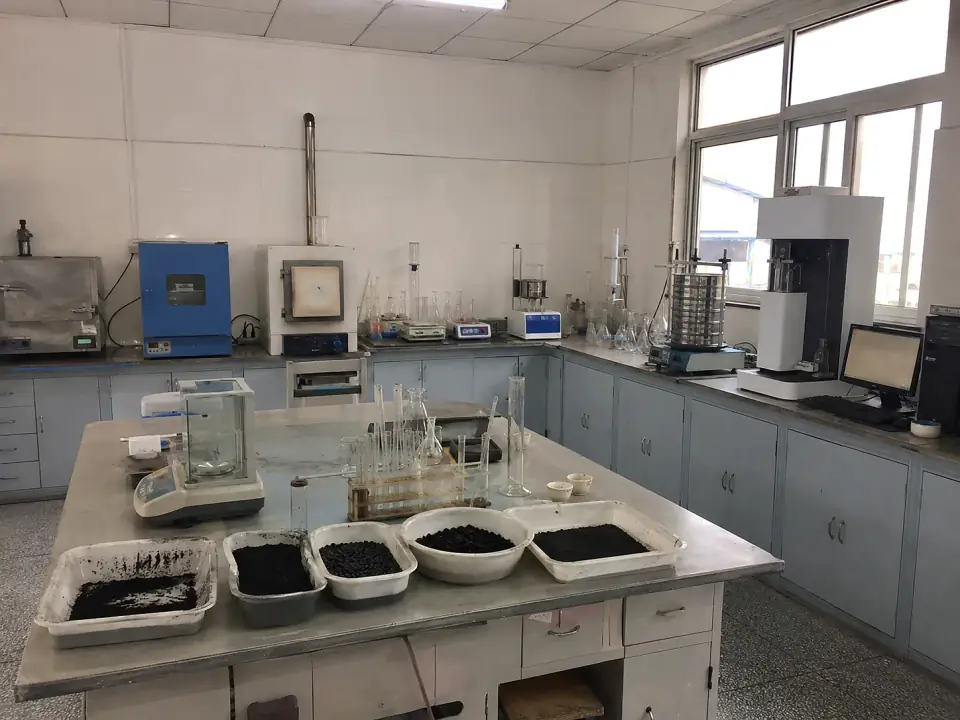
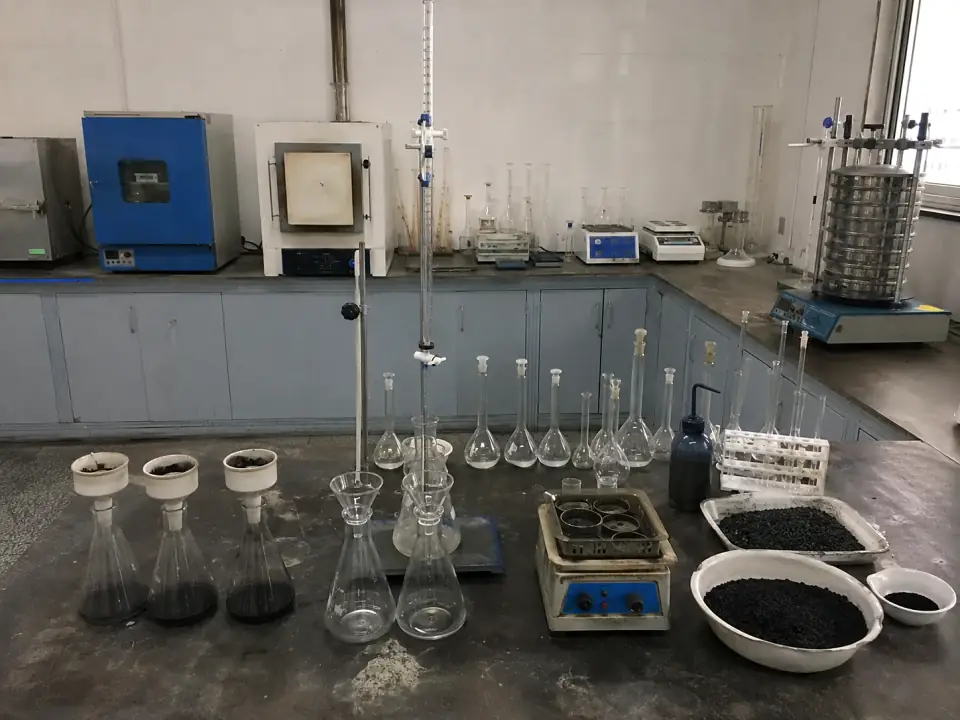
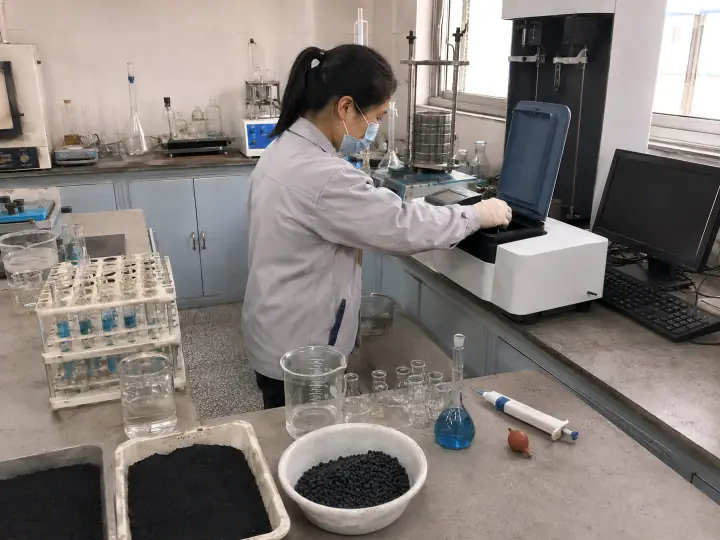
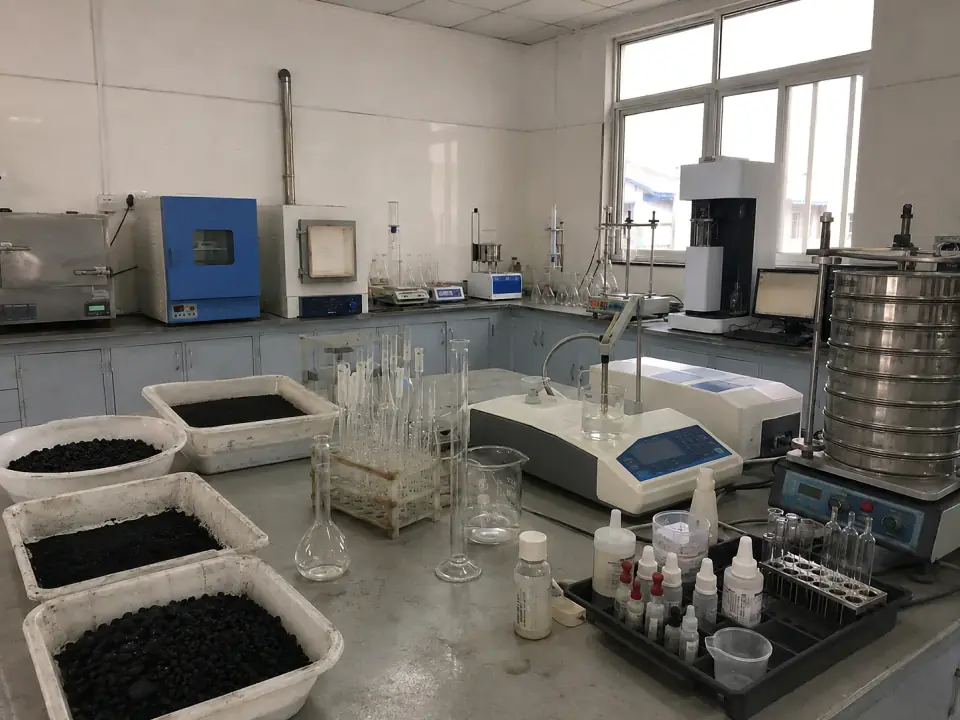
At our 50,050 m² Ningxia production facility, every export lot undergoes in-process kiln sampling and final composite bag sampling prior to container stuffing. Buyers can download representative specification sheets and sample batch COAs directly from our TDS & Sample COA Center or request third-party pre-shipment inspection (SGS, BV, or Intertek) prior to vessel dispatch.