
Image 1 of 5: Decolorization powdered activated carbon sample pile
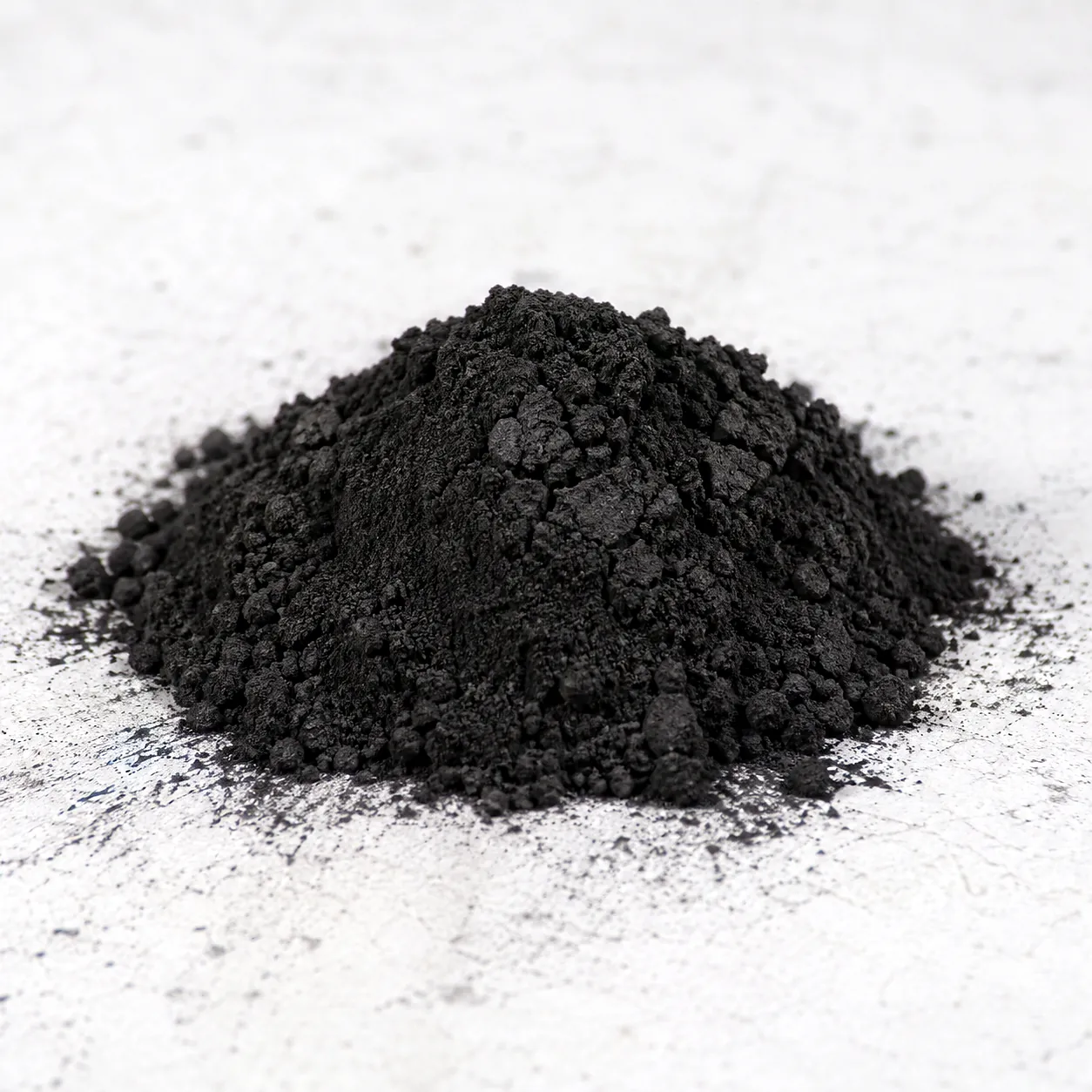
Product views for material identification. Confirm the grade with a sample and your order specification.
Powdered activated carbon
Powdered Activated Carbon for Decolorization
Fine powdered activated carbon for liquid decolorization, specified by target liquid, mesh passing rate, methylene blue, pH, ash and filtration behavior.
- Methylene blue
- Common target range: 150-200 mg/g
- Ash
- Common target range: <=5-10%
- pH
- Unneutralized phosphoric grades may be 2-5; washed or neutralized grades are commonly 4-7
- Application-specific fields
- Caramel decolorization, molasses value, iron, chloride, phosphate and filtration time
Standard sizing · Review grading & confirm particle size
Common 200 or 325 mesh grades, normally specified with a minimum passing rate
Prefer to chat? WhatsApp an engineer · +86 181 3567 0683
- MOQ
- 1 metric ton (1,000 kg) for standard products
- Packing
- 25 kg bags · 500 / 1,000 kg FIBC
- Free sample
- Normally 5-7 business days for an available standard sample
- Lead time
- Typically 15–25 days
01
Decolorization PAC at a glance
What sets it apart, and where it is used.
-
Material & pore structure
High-mesopore and macropore wood-based decolorization PAC featuring 150–220 mg/g methylene blue adsorption and high caramel/molasses decolorization efficiency for large color-body molecules.
-
Washing & grade options
Tightly controlled trace impurities (low ash <=5%, low acid-soluble iron <=0.02–0.05%, controlled chloride and pH) for sugar syrups, citric acid, MSG, edible oils, glycerin, and fine chemical intermediates.
-
Direct Shizuishan plant supply
Optimized particle size distribution (200/325 mesh with controlled ultrafines) to prevent filter-cloth blinding and maintain fast pressure-leaf or plate-and-frame filtration rates.
02
Decolorization PAC specifications
Typical and configurable ranges, with the test method for each property.
Raw materialPrimarily wood based and commonly phosphoric-acid activated; selected economic grades may be coal based · Powdered activated carbon
| Raw material | Primarily wood based and commonly phosphoric-acid activated; selected economic grades may be coal based |
|---|---|
| Physical form | Powdered activated carbon |
| Standard sizing | Common 200 or 325 mesh grades, normally specified with a minimum passing rate |
| Methylene blue | Common target range: 150-200 mg/g |
| Iodine value | Typical supporting range: 800-1,050 mg/g |
| Ash | Common target range: <=5-10% |
| Moisture | Typically <=5% |
| pH | Unneutralized phosphoric grades may be 2-5; washed or neutralized grades are commonly 4-7 |
| Bulk or tapped density | Typical reference range: 250-450 g/L; method must be stated |
| Application-specific fields | Caramel decolorization, molasses value, iron, chloride, phosphate and filtration time |
| Custom manufacturing | Raw material, activation route, particle size, methylene blue, caramel decolorization, pH, iron, phosphate, chloride and filtration time. |
Food-contact or drinking-water suitability is grade-specific and must be supported by the applicable current documents. No blanket compliance claim is made for every grade. Final guaranteed values and test methods must be agreed in the order specification.
03
COA reference & quality documents
Illustrative ASTM test parameters and the quality checks behind every shipment.
Factory & ISO 9001 documents
Illustrative COA only — batch confirmation required. These example values have no identified lot or test date. They are not a certificate for supplied material or a statement of batch acceptance. Request a dated, batch-specific COA against your signed specification.
| Parameter | Unit | Test method | Example limit | Illustrative value |
|---|---|---|---|---|
| Methylene Blue Adsorption | mg/g | GB/T 12496.10 | >= 180 (configurable 150–220) | 195 |
| Caramel Decolorization (A-Grade) | % | GB/T 12496.9 | >= 95.0 | 98.5 |
| Iodine Number | mg/g | ASTM D4607 | >= 950 | 1,010 |
| Total Ash Content | wt% | ASTM D2866 | <= 5.0 | 3.8 |
| Iron Content (Fe) | wt% | GB/T 12496.19 | <= 0.05 (<=0.02 acid-washed) | 0.028 |
| pH Value | pH units | ASTM D3838 | 3.0 – 5.5 (or 5.0 – 7.0 washed) | 4.6 |
| Fineness (Passing 200 Mesh) | wt% | ASTM D5158 | >= 95.0 | 96.8 |
Batch-specific COA is issued against your signed contract specification.
Quality review
- Minimum passing rate at the contracted mesh
- Methylene-blue or caramel-decolorization test
- pH with the preparation method stated
- Iron, ash and filtration time when required
- Actual-liquid sample comparison before a bulk order
ISO 9001ASTM Lab
Specify the grade, not just the material
Target liquid, initial and target color, dosage, contact time, temperature, filtration process, required compliance documents, quantity and packing.
Third-party inspection: SGS, Intertek, Bureau Veritas, TUV or CCIC arranged by contract.
Retained samples & loading records
Each export lot is cross-checked against the agreed benchmark sample and archived in sealed sample jars for post-shipment reference.
How an order is specified and checked 6 steps
- Requirement reviewConfirm application, form, particle size, target indexes, quantity and destination.
- Specification agreementSeparate guaranteed values from typical values and state each applicable test method.
- Sample evaluationUse a standard or project sample with a test plan relevant to the buyer's process.
- Batch confirmationReview the agreed production-batch results in the COA before shipment.
- Inspection optionArrange SGS, Intertek, Bureau Veritas, TUV, CCIC or another agreed inspector if required.
- Loading recordLoading photographs, container number and seal details can be supplied when agreed in the order.
04
Grading & operating references
Standard gradings, equipment fit and typical process design ranges.
| Grade direction | Particle-size reference | Pore / filtration reference | Application reference | Process fit |
|---|---|---|---|---|
| Phosphoric-Acid Wood PAC | 90%–95% < 200 Mesh (75 µm) | High Macropore | Caramel ≥ 98% | Cane/beet sugar syrup, molasses, caramel, MSG & fermentation broth decolorization |
| Steam-Activated Acid-Washed Wood PAC | 90%–95% < 325 Mesh (45 µm) | Balanced Mesopore | Ultra-Low Ash/Fe | Active Pharmaceutical Ingredients (APIs), citric/lactic acid, amino acids & fine chemicals |
| Edible Oil & Glycerin Grade PAC | Custom Filter-Press PSD | Fast Cake Drainage | PAH / Color Removal | Removal of polycyclic aromatic hydrocarbons (PAHs, Benzo[a]pyrene) and chlorophyll from oils |
Operating design references
| Typical Process Temperature | 60 – 85 °C (reduces liquid viscosity and accelerates pigment diffusion) |
|---|---|
| Typical Contact Time | 20 – 45 minutes under continuous mechanical agitation |
| Typical Dosage Range | 0.1% – 1.5% wt/wt based on dry solids content of process syrup/solution |
| Optimal pH Window | pH 4.0 – 6.5 (grade-matched to prevent sugar inversion or product degradation) |
| Filtration Equipment | Pre-coated candle filters, rotary vacuum drum, or plate-and-frame filter press |
| Purity & Leachables | Acid-washed options with ultra-low soluble iron (≤100 ppm), calcium, and heavy metals |
Operating ranges are selection references, not system-performance guarantees. Confirm suitability using the actual feed, equipment and treatment target.
05
Where Decolorization PAC is used
Typical applications and process selection checks.
-
Test the carbon against the actual process liquid because color bodies, impurities and competing solutes vary by feedstock.
-
Define initial and target color, dosage, contact time, temperature, pH and the downstream filtration process.
-
Use methylene blue, caramel decolorization, filtration time, iron and ash where they reflect the purchasing objective.
-
Confirm destination-specific food, beverage or process documents for the exact grade before making a suitability claim.
What to check for your process
- Test the carbon against the actual process liquid because color bodies, impurities and competing solutes vary by feedstock.
- Define initial and target color, dosage, contact time, temperature, pH and the downstream filtration process.
- Use methylene blue, caramel decolorization, filtration time, iron and ash where they reflect the purchasing objective.
- Confirm destination-specific food, beverage or process documents for the exact grade before making a suitability claim.
06
Packing, MOQ & delivery
Commercial terms to compare quotations on the same basis.
- MOQ
- 1.0 metric ton
- Free sample
- 5–7 business days
- Lead time
- 15–25 days
- Reply
- 24 hours
Orders below 1 metric ton are reviewed against the grade, available stock, packing and freight cost.
Standard samples are normally free; the buyer usually covers international courier cost. Sample quantity is matched to the product and test method.
Typically 15-25 days after specification, packing, order documents and agreed payment conditions are confirmed
Standard inquiries receive a reply within 24 hours on business days.
-
25 kg bags
Inner PE moisture barrier with an outer PP woven or multi-wall kraft paper bag. Palletized or loose.
Neutral export markings or custom OEM labels
-
500 kg / 1,000 kg FIBC
Heavy-duty PP jumbo bags with 4 lifting loops, top filling spout and bottom discharge spout.
Matched to receiving hoppers and pallet requirements
-
Container loads
- 20GP
- 9 – 11 MT
- 40HQ
- 20 – 24 MT · 20–22 pallets
Empty-container inspection, pallet strapping and seal photographs available by agreement.
| Packing | 25 kg bags, 500 or 1,000 kg FIBC bulk bags, and pallet options by order |
|---|---|
| Standard MOQ | 1 metric ton (1,000 kg) for standard products |
| Trial orders | Orders below 1 metric ton are reviewed against the grade, available stock, packing and freight cost. |
| Samples | Standard samples are normally free; the buyer usually covers international courier cost. Sample quantity is matched to the product and test method. |
| Sample lead time | Normally 5-7 business days for an available standard sample |
| Production lead time | Typically 15-25 days after specification, packing, order documents and agreed payment conditions are confirmed |
| Ports | Qingdao or Tianjin are commonly used; the final loading port is confirmed with the route and trade term. |
| Trade terms | EXW, FCA, FOB, CFR and CIF under Incoterms 2020; DAP, DDP, CIP or another term requires route-specific review. |
Stock, final MOQ, production date, guaranteed values, packing cost, freight, payment terms and inspection scope are confirmed for the specific quotation and contract.
07
Calgon, Norit & Jacobi equivalents
Reference grades for specification review and lab matching.
References support a specification review, not a claim of identical performance, certification or affiliation. Confirm suitability by comparative testing in your process.
| Reference brand / grade | Proposed specification / application | Comparison criteria |
|---|---|---|
| Norit (Cabot) Darco S-51 / CA1 / SX Ultra | Mesoporous Decolorization Wood PAC (Acid-Washed)Sugar refining, sweeteners, citric acid & pharmaceutical APIs | Matched on high mesopore/macropore volume, methylene blue (180–220 mg/g), and caramel decolorization |
| Jacobi Carbons ColorSorb 620 / ColorSorb 500 | Food & Beverage Liquid Decolorization PACEdible oils (PAH removal), glycerin, wine/juice & fermentation | Matched on rapid filter-press cake drainage, controlled pH, and low acid-soluble ash/iron |
| Calgon Carbon CPG / Cane Cal / BL Pulverized | High-Molasses-Number Decolorizing PACColor body and high-MW organic polymer adsorption | Matched on large-pore color body uptake and low product retention in filter cake |
All third-party brand and grade names are trademarks of their respective owners. They are used for identification only; no affiliation, endorsement or authorization is implied.
08
Decolorization PAC sourcing questions
Answers use the same values as the tables on this page.
Which data is more useful than iodine value for decolorization?
Methylene blue, caramel or molasses decolorization, iron, ash, pH, filtration time and testing against the buyer's actual liquid are usually more informative.
Can pH be customized?
Yes. Washing and neutralization can be reviewed, but the pH test method, carbon-to-water ratio and contact time must be stated in the specification.
Are food-contact documents available?
Documents are reviewed for the specific grade and destination regulation. Suitability is not assumed from the product name alone.
09
Other activated carbon lines
When another raw material or form fits the job better.
- Coconut Shell GAC 6x12, 8x16, 8x30, 12x40 or 20x40 mesh; approximately 0.45-3.35 mm Hard coconut shell GAC for water, air and precious-metal recovery systems, supplied in common mesh ranges with batch-specific quality confirmation.
- Coal Based GAC 4x8, 6x12, 8x16, 8x30, 12x20, 12x30, 20x40 or 30x60 mesh Coal based GAC with configurable mesh, iodine value, CTC, hardness and washing options for industrial filtration and adsorption beds.
- Gold Recovery Carbon Common sourcing directions: 6x12, 6x16 or 8x16 mesh; final range must match the CIP/CIL equipment High-hardness coconut shell GAC for CIP, CIL and CIC circuits, reviewed for mesh retention, abrasion, ash and mine-specific gold adsorption testing.
- Wood Based PAC Common 200 or 325 mesh grades; target screen passing rate is specified by order Wood based PAC with configurable fineness, methylene blue, pH, ash and filtration properties for liquid-phase dosing and decolorization.
- Pellet Activated Carbon Common diameters: 1.5, 2, 3, 4, 5, 6 or 8 mm; 4 mm is widely requested Columnar activated carbon for gas-phase beds, available in common 1.5-8 mm diameters with CTC, hardness and pressure-drop requirements reviewed by system.
- Data revision
- sha256-92b7265bc25d1fd5
Data revision identifies the content, not a batch or approval. View the printable technical sheet.