
Trademark Notice: Jacobi, AquaSorb, EcoSorb, AddSorb, GoldSorb, PicaGold, and ColorSorb are registered trademarks of Jacobi Carbons AB (an Osaka Gas Chemicals company). DXD Carbon (Ningxia Yongruida Carbon Co., Ltd.) is an independent primary manufacturer and is not affiliated with, authorized by, or endorsed by Jacobi Carbons AB. All trade names appear strictly for engineering specification comparison.
Water plants, gold mines, biogas contractors, and sugar refineries across Europe, Southeast Asia, Australia, and the Middle East often use manuals listing legacy trade names. When buyers under U.S. EPA drinking water rules or industrial supply contracts face distributor delays, open tenders permit "or approved equal" media. Buying an alternative based on mesh size and price alone, however, can trigger pH spikes, high filter-press pressure drop, or gold-loaded fine losses.
Our adsorption process engineers and lab team at the DXD Carbon Shizuishan plant (50,050 m2 site, 10,000+ MT/year) built this guide. It maps five major reference series into line-by-line RFQ limits. Buyers comparing multiple global brands can check our Calgon, Norit, and Jacobi cross-reference guide. You can also review our Norit alternatives guide and Interactive TDS and COA Center.
| Legacy Reference Series | Feedstock & Form | Direct-Kiln Manufacturing Specification Match | Core ASTM / GB Matching Parameters | Primary Industrial Application |
|---|---|---|---|---|
| AquaSorb 1000 / 2000 | Bituminous Coal GAC (8x30 / 12x40) | Re-Agglomerated Bituminous Coal GAC (8x30 / 12x40 Mesh, 950-1050 Iodine) | >= 900 to 1,050 mg/g Iodine; >= 160 to 190 mg/g MB; >= 90% Hardness; UC <= 1.9 | Municipal surface water TOC, PFAS contactors, wastewater COD |
| AquaSorb CS / CX | Coconut Shell GAC (12x40 / 8x30) | Acid-Washed Coconut Shell GAC (12x40 / 8x30 Mesh, 1000-1100 Iodine) | >= 1,000 to 1,100 mg/g Iodine; >= 96% Hardness; Ash <= 3% (AW, pH 6.5 to 8.0) | Potable groundwater VOCs, THMs, RO dechlorination, POE filters |
| EcoSorb GX / AddSorb Sulfox | Extruded Pellet Carbon (3mm / 4mm) | 3mm / 4mm Extruded Coal Pellet (CTC 60%+ / KOH-KI Impregnated) | >= 60% CTC (ASTM D3467); >= 23% BWC; >= 95% Hardness; >= 0.20 g H2S/cm3 (Sulfox) | Industrial VOC scrubbers, solvent recovery, biogas H2S removal |
| GoldSorb 5500 / 6000 / PicaGold | Pre-Attritioned Coconut GAC (6x12 / 8x16) | Pre-Attritioned Coconut Gold GAC (6x12 / 8x16 Mesh, 98%+ Hardness) | >= 1,050 to 1,150 mg/g Iodine; >= 98% Hardness (Batch 98.7%); Undersize <= 2% | CIL, CIP, and CIC cyanidation gold leach circuits |
| ColorSorb 620 / 500 / G5 | Acid or Steam Wood PAC (200 / 325 Mesh) | Phosphoric-Acid & Acid-Washed Steam Wood PAC (200 / 325 Mesh) | 165 to 220 mg/g MB; >= 95% Caramel A-Grade; Soluble Fe <= 0.02% to 0.05% | Sugar syrup, citric acid, edible oil PAH4, pharmaceutical APIs |
Translating AquaSorb 1000, AquaSorb 2000, and AquaSorb CS Into Water GAC Specs
Transport-pore coal GAC is a steam-activated coal adsorbent with a bimodal network of 2 to 50 nm mesopores and < 2 nm micropores built to capture humic acids and trace organics. Within the AquaSorb line, engineers must separate coal grades (AquaSorb 1000 and 2000) from coconut grades (AquaSorb CS and CX). Mixing up the two feedstocks in a tender causes early breakthrough or heavy startup backwash water waste.
When treating surface water with dissolved organic carbon (DOC) above 2.0 mg/L under U.S. EPA PFAS drinking water rules, coal media stops large humic molecules from plugging inner micropores. When treating low-TOC groundwater (< 1.5 mg/L) for VOCs, short-chain PFAS, or free chlorine ahead of reverse osmosis (RO) membranes, coconut GAC gives higher capacity and hardness.
- Replacing AquaSorb 1000 & 2000 (Bituminous Coal GAC): Specify re-agglomerated bituminous coal GAC (950-1,050 mg/g iodine) in
8x30or12x40US mesh (ASTM D2862). Lock in ASTM D4607 iodine >= 950 to 1,050 mg/g and GB/T 7702.6 methylene blue >= 165 to 190 mg/g. Pair that with ASTM D3802 hardness >= 90% to 92%, density 450 to 540 g/L (ASTM D2854), and uniformityUC <= 1.9(AWWA B604) for 25% to 35% backwash expansion. - Replacing AquaSorb CS & CX (Coconut Shell GAC): Specify acid-washed coconut shell GAC (1,000-1,100 mg/g iodine) in
12x40or8x30US mesh. Require ASTM D4607 iodine >= 1,000 to 1,100 mg/g, hardness >= 96% to 98% (batch:97.2%), and undersize fines <= 4.0% (batch:2.1%). For RO pre-filters or strict pH permits (6.5 to 8.5), specify the acid-washed (AW) grade (ash <= 3.0% wtper ASTM D2866,pH 6.5 to 8.0per ASTM D3838) to stop initial pH spikes.
Matching EcoSorb GX and AddSorb Sulfox in Gas-Phase Pellet Scrubbers
Chemically impregnated pellet carbon is a cylindrical extruded carbon (3.0 mm or 4.0 mm diameter) loaded with alkaline (KOH, NaOH), catalytic (KI), or sulfur salts to lock reactive gases into the pores. Air and biogas engineers specify virgin EcoSorb GX pellets for physical VOC recovery. They specify impregnated AddSorb Sulfox and AddSorb MGR grades for reactive gas scrubbing under U.S. EPA Clean Air Act stationary source rules.
- Replacing EcoSorb GX (Virgin Vapor-Phase Pellets): Specify 3.0 mm and 4.0 mm extruded coal pellet carbon (CTC >= 60%) in
3.0 mmor4.0 mmdiameter (4.0 +/- 0.3 mm, batch:4.02 mm). Require ASTM D3467 CTC activity>= 60.0% wt(batch:63.5% wt, or up to75%for solvent recovery). Also lock in ASTM D5742 butane working capacity>= 23.0% wt(batch:24.8% wt) and ASTM D3802 hardness>= 95.0%(batch:96.8%). Uniform pellets keep clean-bed pressure drop near 640 Pa/m at 0.30 m/s gas velocity. - Replacing AddSorb Sulfox & AddSorb MGR (Biogas & Mercury Pellets): For digester biogas and sewage odor control (40% to 80% RH), specify alkali- or iodide-impregnated extruded pellet carbon (
>= 0.15 to 0.25 g H2S / cm3capacity). For natural gas or syngas mercury (Hg0) guard beds, specify sulfur-impregnated extruded pellet carbon with 8% to 12% sulfur to bind mercury as stable cinnabar (HgS). Check vessel velocities on our industrial gas treatment hub.
Specifying GoldSorb 5500, 6000, and PicaGold Alternatives for CIL/CIP Circuits
Gold mines running Carbon-in-Leach (CIL), Carbon-in-Pulp (CIP), and Carbon-in-Column (CIC) circuits judge carbon by gold kinetics (K-value), capacity (R-value), and attrition resistance. Coconut shell pieces naturally split along grain lines into flat platelets during crushing. Unpolished carbon shears fast in agitated leach tanks and loses gold-loaded fines through 0.8 mm interstage screens.
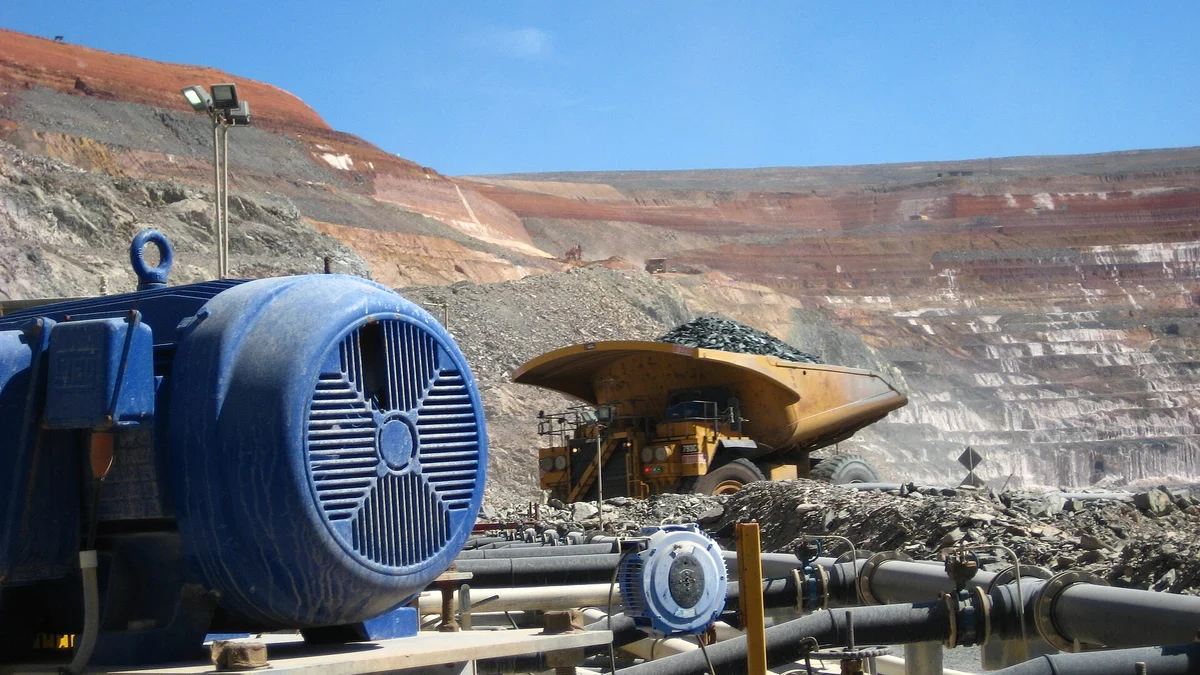
Check our gold recovery activated carbon line and CIL/CIP gold carbon selection guide when qualifying alternatives to GoldSorb 5500, 6000, or PicaGold. Always lock in three metallurgical floors:
- Platelet-Free Pre-Attritioning & Hardness: Specify ASTM D3802 ball-pan hardness
>= 98.0%(DXD batch:98.7%). Our Shizuishan mill tumbles and wet-screens every gold lot to round sharp edges and strip weak flakes before packing. - Tight US Sieve Retention (ASTM D2862): Choose
6x12(3.35 to 1.70 mm),6x16(3.35 to 1.18 mm), or8x16(2.36 to 1.18 mm) US mesh. Keep undersize fines strictly<= 2.0% to 3.0% wt(DXD batch:1.4% wt) and apparent density at480 to 530 g/L(batch:502 g/Lper ASTM D2854). - High-Micropore Gold Kinetics: Specify
>= 1,050 to 1,150 mg/giodine (ASTM D4607, batch:1,075 mg/g) and>= 55% to 60%CTC (ASTM D3467, batch:58.4%). High micropore density speedsAu(CN)2-uptake in preg-robbing ores and survives 700 C kiln reactivation.
Cross-Referencing ColorSorb 620, 500, and G5 in Liquid Decolorization
Mesoporous wood powdered activated carbon (PAC) is a finely milled wood adsorbent (90% to 96.8% passing 200 or 325 US mesh per ASTM D5158) built with wide 2 to >50 nm pores for liquid pigment removal. Within the ColorSorb line, buyers must match pore width and activation pH to stop sugar inversion or iron leaching under U.S. FDA food ingredient purity standards.
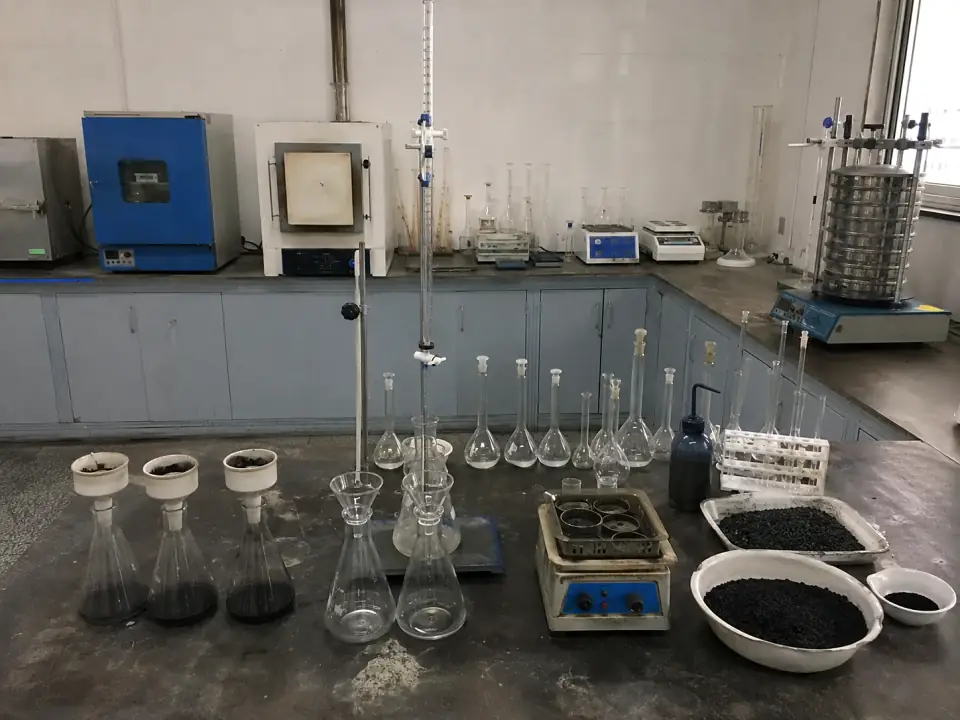
- Replacing ColorSorb 620 & 500 in Sugar, Molasses & MSG: Specify phosphoric-acid activated wood decolorization PAC (200 mesh) (phosphoric-acid wood PAC). It delivers
180 to 220 mg/gmethylene blue (batch:195 mg/gper GB/T 12496.10) and>= 95.0% to 98.5%A-grade caramel removal (batch:98.5%per GB/T 12496.9). Total ash stays<= 5.0% wt(batch:3.8% wt) with a clean 200-mesh cut (< 75 um) for fast filter-press drainage. - Replacing ColorSorb G5 & AquaSorb PAC in APIs, Acids & Water: Specify acid-washed steam-activated wood PAC (325 mesh) (steam-activated acid-washed wood PAC). It gives a neutral pH (
5.5 to 7.5per ASTM D3838), zero residual phosphate, and low soluble iron (Fe <= 0.02% wt/<= 100 to 200 ppmper GB/T 12496.19) to protect APIs and citric acid from yellowing.
How Do You Qualify Direct-Kiln DXD Grades Across All Six Product Lines?
At our 50,050 m2 complex in Shizuishan, Ningxia (10,000+ MT/year output since 1990), we run rotary carbonization (450 to 600 C), steam activation (850 to 1,000 C), phosphoric-acid wood lines, and acid-wash mills under ISO 9001 quality control. Note that regulated medical, pharmacopeial, or permit-locked plants bound to an approved vendor list must keep buying their registered brand until formal change-control testing clears. For open industrial tenders, we run a four-step audit across all six DXD activated carbon product lines:
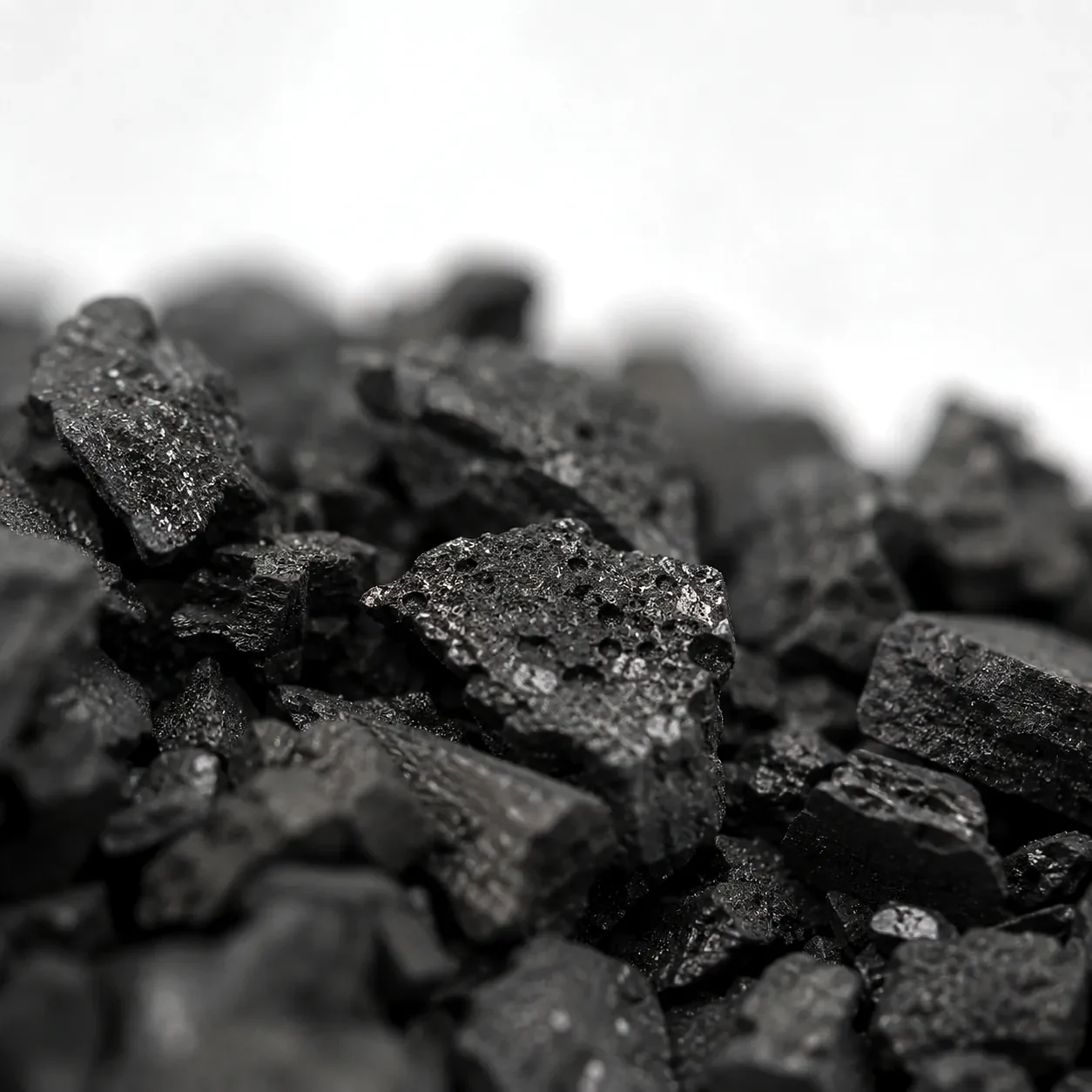
- Test Method Verification: We align every COA metric to global standards, including three-point ASTM D4607 iodine isotherms at
C = 0.02 Nfiltrate normality, ASTM D3802 hardness, and ASTM D2862 Ro-Tap sieve checks. Read full lab steps in our ASTM activated carbon laboratory testing guide. - Free 500 g to 2 kg Bench Sample Split: We ship kiln-lot samples for blind side-by-side tests. Run RSSCT columns for water GAC, Freundlich jar isotherms for decolorization PAC, or bottle-rolls for gold carbon.
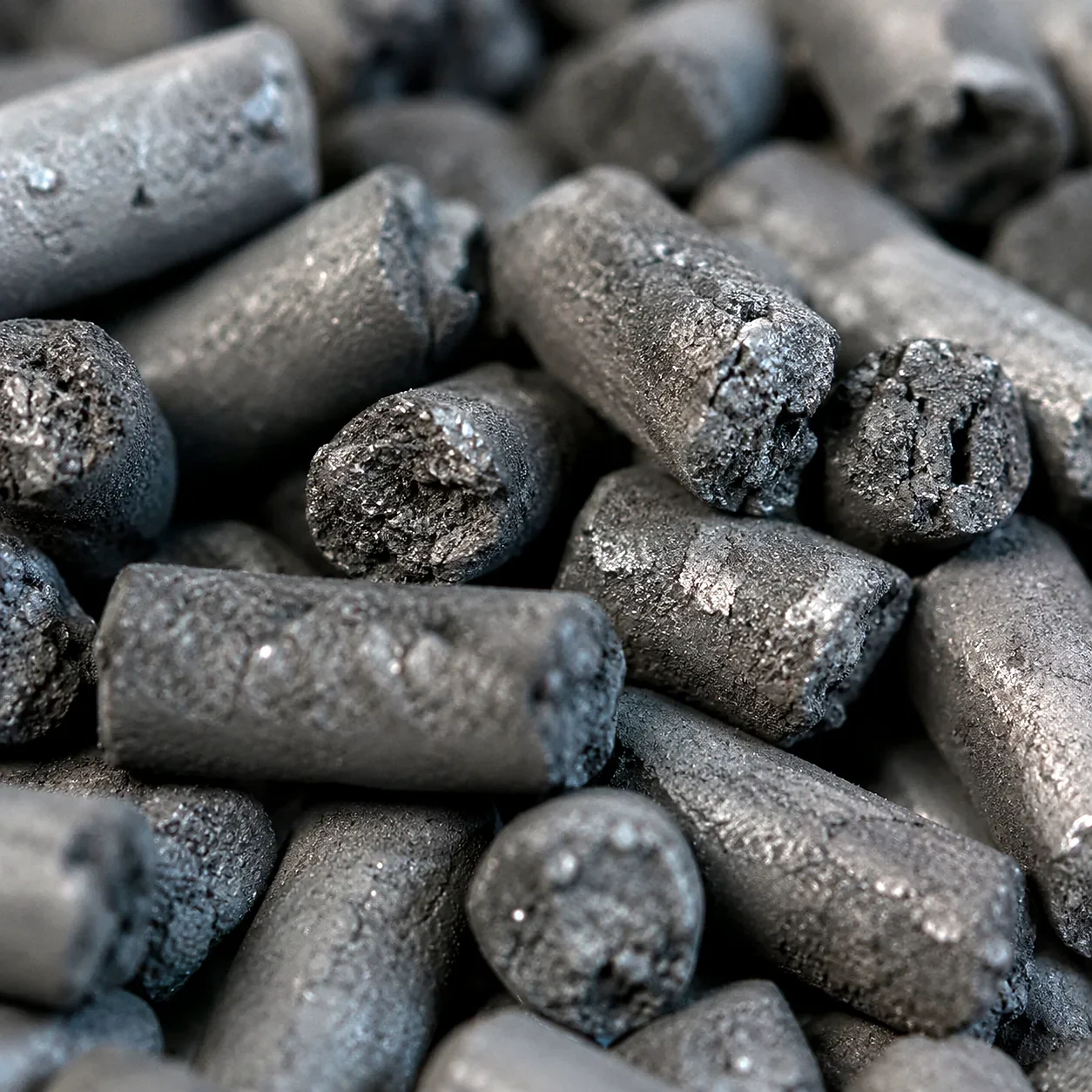
- Contract-Locked Proforma COA Limits: Approved minimum floors (iodine, MB, CTC, BWC, hardness) and maximum ceilings (ash, moisture, iron, undersize fines) go straight into your proforma invoice.
- FCL Export Packaging & Logistics: Orders ship from a 1.0 MT trial MOQ up to full containers (
9 to 11 MTper20GPor20 to 24 MTpalletized per40HQ) in 25 kg PE-lined bags or 500/1,000 kg FIBC super sacks. Check packing specs in our bulk activated carbon buying guide or contact our engineering desk for a 24-hour technical quote.
| Verification Stage | Test Standard | Target Acceptance Tolerance | Pre-Shipment QA Deliverable |
|---|---|---|---|
| 1. Pore & Activity Audit | ASTM D4607 / D3467 / GB/T 12496 | Iodine, MB, or CTC meets or exceeds legacy TDS floor | Three-point isotherm curve & batch COA |
| 2. Sieve & Hydraulics | ASTM D2862 / D2854 / AWWA B604 | Effective size d10, UC <= 1.9, and density within +/- 5% | Ro-Tap sieve distribution sheet |
| 3. Attrition & Purity | ASTM D3802 / D2866 / D3838 | Hardness >= 95% to 98%, ash, pH, and Fe inside contract cap | Muffle ash & water-extract pH log |
| 4. Container Retention | ISO 9001 Lot Traceability | Tamper-sealed 500 g sample retained per 20GP/40HQ lot | Lot COA, SDS, and UN N.4 test report |