
TL;DR: Standard steam-activated coconut shell GAC retains
3.0 to 5.0 wt%total ash (ASTM D2866), including1.5 to 2.5 wt%water-soluble potassium carbonate (K2CO3). Upon wetting, carbonate hydrolysis pushes filter effluent pH to9.5 to 11.0. That alkaline surge triggers calcium carbonate (CaCO3) scaling (LSI > +1.5), trace arsenic elution, and80 to 150 bed volumes (BVs)of wasted rinse water. Hydrochloric acid (HCl) washing and deionized rinsing cut total ash to<= 1.0 to 3.0 wt%and soluble ash to<= 0.2 wt%on our TDS specifications. Contact pH then stabilizes at6.5 to 8.0(ASTM D3838) within5 to 12 BVs, while preserving950 to 1,100+ mg/giodine activity (ASTM D4607). At our Shizuishan manufacturing base, we supply both standard and acid-washed grades for potable water, RO skids, beverage lines, and ultrapure water loops.
| Engineering Parameter | Test Standard | Unwashed Coconut Shell GAC | Standard Acid-Washed Coconut GAC (<= 3% Ash) |
Custom Ultra-Low-Ash GAC (<= 1% Ash, by confirmation) |
|---|---|---|---|---|
| Water-Extractable pH | ASTM D3838 / GB/T 12496.7 |
8.5 to 10.5 (9.5 to 11.0 initial bed) |
6.5 to 8.0 (neutralized) |
6.0 to 7.5 (DI-water polished) |
| Total Ash Content | ASTM D2866 (650 deg C) |
3.0 to 5.0 wt% |
<= 2.5 to 3.0 wt% |
<= 1.0 wt% |
| Water-Soluble Ash | AWWA B604 / Cold Extract |
1.5 to 2.5 wt% (high K2CO3) |
<= 0.2 to 0.3 wt% |
<= 0.10 wt% |
| Iodine Number | ASTM D4607 |
950 to 1,100+ mg/g |
950 to 1,100+ mg/g |
1,000 to 1,150 mg/g |
| Ball-Pan Hardness | ASTM D3802 |
>= 96.0% to 98.0% |
>= 96.0% to 98.0% |
>= 97.0% to 98.5% |
Startup Rinse to pH < 8.5 |
Contactor Forward Flush | 80 to 150 Bed Volumes |
6 to 12 Bed Volumes |
3 to 8 Bed Volumes |
| Initial Conductivity Delta | Filtrate vs. Feed (uS/cm) |
+250 to +900 uS/cm |
< +25 uS/cm after 10 BVs |
< +5 uS/cm after 8 BVs |
| Primary Process Fit | Industry Benchmark | Gas/VOC, CIL/CIP gold, acidic waste | Potable water (NSF 61), RO pre-filter, beverage |
Semiconductor UPW, boiler condensate, pharma |
Why Does Unwashed Steam-Activated Coconut Shell GAC Spike Effluent pH to 9.5 to 11.0?
Operators starting up fresh coconut shell granular activated carbon often watch online pH meters jump to 10.2 or 10.8. Pure graphitic carbon is chemically neutral, yet unwashed coconut char acts like a strong alkaline buffer for days.
This behavior starts with tropical soil minerals and kiln chemistry. Coconut palms (Cocos nucifera) draw potassium (K+), sodium (Na+), calcium (Ca2+), and magnesium (Mg2+) ions into their hard endocarp shells. Bituminous coal ash consists mostly of insoluble silica (SiO2) and alumina (Al2O3). By contrast, 50% to 70% of mineral ash in raw coconut shell activated carbon consists of soluble alkali potassium salts.
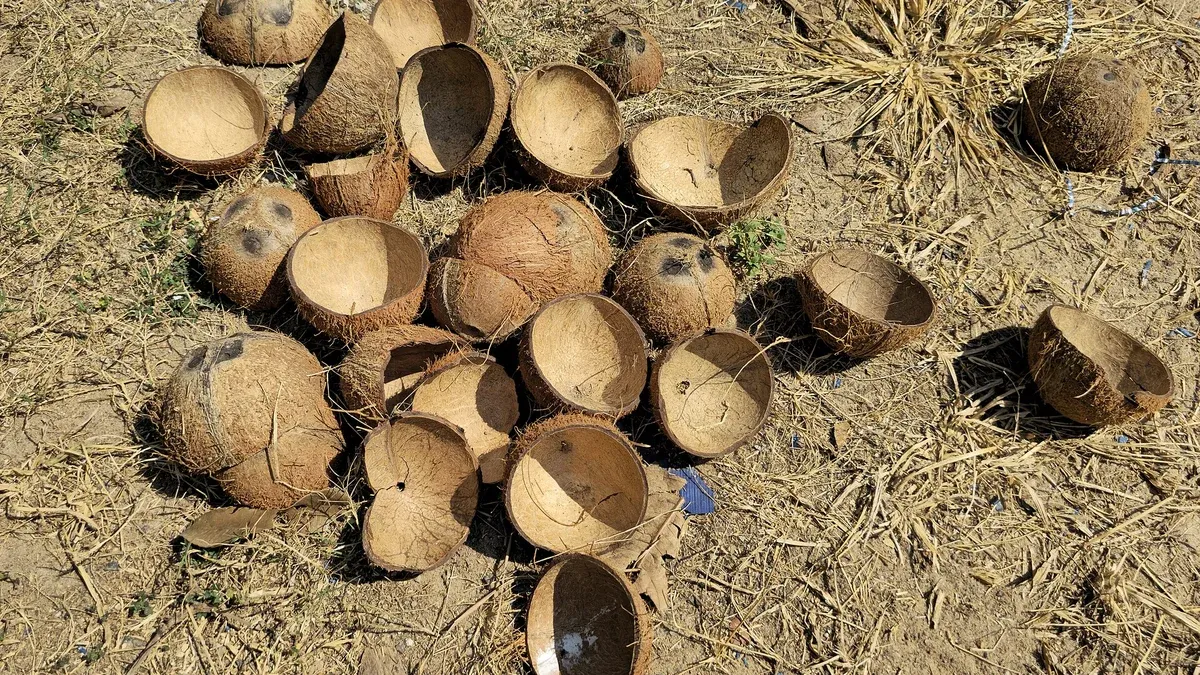
In rotary kilns, shells undergo carbonization (450 to 600 deg C) followed by steam activation (850 to 1,000 deg C). During high-heat activation, organic potassium reacts with steam (H2O) and CO2 to form solid potassium carbonate (K2CO3) inside the pore walls. High-temperature cooling in oxygen-free steam also builds basic pyrone and chromene functional groups along the graphitic edges.
Water-Soluble Ash is the mass fraction of inorganic salts (K2CO3, Na2CO3, and soluble chlorides) leached out by boiling deionized water, separate from insoluble ASTM D2866 silica ash.
Water-Extractable Contact pH is the filtrate pH (ASTM D3838 or GB/T 12496.7) measured after boiling 10.0 g of carbon in 100 mL of deionized water for 900 seconds.
When feedwater first floods a dry unwashed bed, K2CO3 dissolves fast (solubility > 1,100 g/L at 20 deg C) and hydrolyzes inside the stagnant pores.
- Primary Dissolution: Solid
K2CO3dissociates rapidly into2K+ (aq)andCO3^2- (aq)inside pore water. - Carbonate Hydrolysis (
pKb1 = 3.67): DissolvedCO3^2- (aq)reacts withH2O (l)to formHCO3^- (aq)and free hydroxide ionsOH^- (aq). - Basic Surface Protonation: Basic pyrone oxides on the carbon surface bind
H+ions from water and release additionalOH^- (aq).
A packed filter vessel holds roughly 500 kg of carbon per cubic meter, while interparticle void water occupies only 0.40 to 0.45 m3. That solid-to-liquid ratio is 10 times denser than a standard ASTM D3838 laboratory beaker extract. For example, a carbon lot reading pH 9.4 in a beaker routinely generates pH 10.2 to 11.0 in early plant effluent. That alkaline surge exceeds the pH 6.5 to 8.5 limit under the US EPA Secondary Drinking Water Standards.
Three Commissioning Hazards of Unwashed Coconut GAC: Carbonate Scaling, Trace Metal Elution, and Rinse Water Waste
Flushing an unwashed vessel to drain looks inexpensive during bid comparisons. In operating water treatment plants, however, unwashed media startup introduces three severe engineering hazards.
1. In-Bed Calcium Carbonate (CaCO3) Scaling and Downstream RO Fouling
Langelier Saturation Index (LSI) is a water-balance metric (LSI = pH - pHs) that predicts whether water will dissolve (LSI < 0) or deposit (LSI > 0) solid calcium carbonate scale.
For instance, take a municipal groundwater RO feed at 25 deg C with pH = 7.4 and TDS = 350 mg/L. Assume calcium hardness is 120 mg/L as CaCO3 and bicarbonate alkalinity is 140 mg/L as CaCO3. Its saturation pHs is 7.55, giving a safe, non-scaling LSI = -0.15 ahead of the carbon vessel.
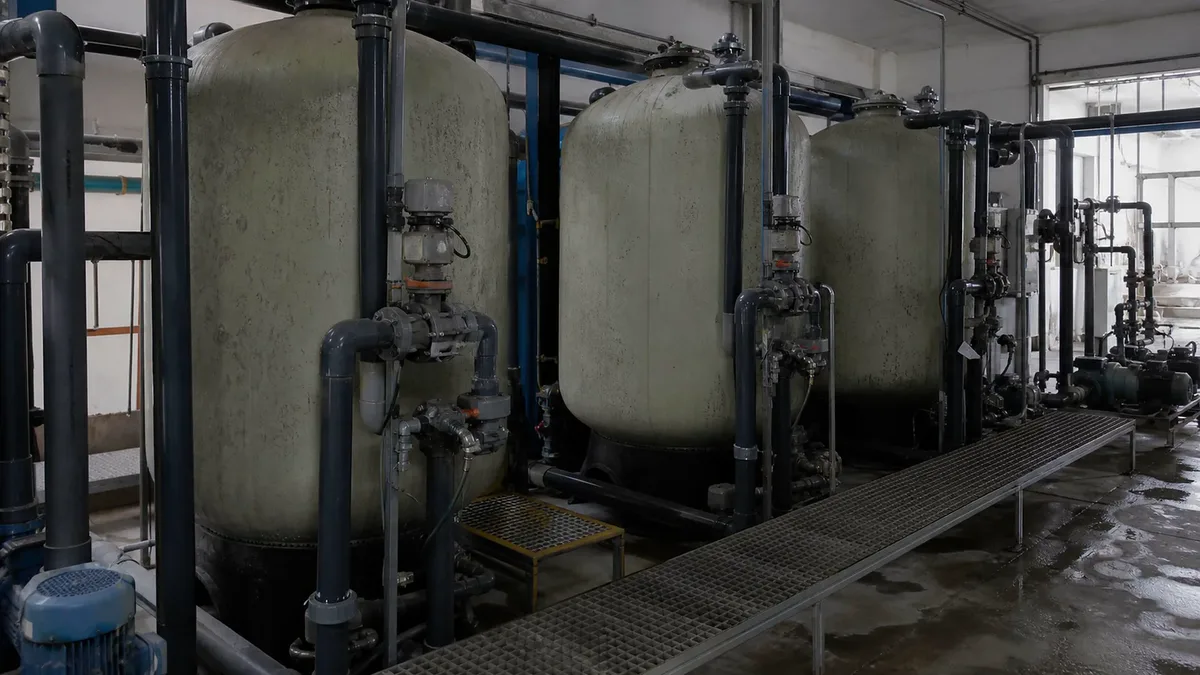
Inside an unwashed coconut GAC bed, pore-water pH jumps to 10.2. Bicarbonate ions (HCO3^-) convert into carbonate ions (CO3^2-), driving local LSI above +2.6. Solid CaCO3 then crystallizes inside mesopore entrances and cements 12x40 mesh grains into channelized clumps. Escaping micro-crystals also blind 5 um guard cartridges and foul downstream polyamide RO membranes within hours. Once CaCO3 hardens inside carbon pores, water backwashing cannot remove it.
2. Alkaline Elution of Trace Arsenic, Silicate, and Aluminum
Natural shells and kiln refractories carry trace levels of arsenic (As), silicon (Si), and aluminum (Al). Cationic heavy metals (Pb2+, Cu2+) precipitate at high pH, whereas oxyanions behave in the exact opposite way.
Between pH 9.5 and 11.0, negatively charged carbon walls electrostatically repel arsenate (HAsO4^2-), silicate (H3SiO4^-), and aluminate (Al(OH)4^-). Unwashed beds can therefore release a transient pulse of soluble arsenic and reactive silica during the first 10 to 50 BVs. Under NSF/ANSI/CAN 61, single-product arsenic extraction cannot exceed 1.0 ug/L. That limit equals 10% of the 10 ug/L MCL in the US EPA Drinking Water Arsenic Rule and National Primary Drinking Water Regulations. A startup spike can force plant operators to quarantine the contactor. In boiler and microelectronics loops, alkaline silica elution (> 50 to 200 ug/L SiO2) also fouls mixed-bed ion-exchange resins.
3. Startup Rinse Water Volume and Commissioning Downtime Math
Because K2CO3 sits deep inside branched < 2 nm micropores, slow intraparticle diffusion governs alkali leaching during forward flushing. Even after bulk potassium flushes out, basic surface oxides keep effluent pH tailing between 8.6 and 9.2 for many hours.
Compare a 10.0 m3 pressure contactor loaded with 5.0 metric tons of 12x40 mesh GAC (500 g/L apparent density). At an empty bed contact time (EBCT) of 10 minutes, the vessel flow rate is 60 m3/h.
Commissioning Metric (10 m3 / 5.0 MT GAC Vessel) |
Unwashed Coconut GAC (Ash <= 5%) |
Acid-Washed Coconut GAC (<= 3% Ash) |
Net Commissioning Savings (Acid-Washed) |
|---|---|---|---|
Bed Volumes to Reach pH <= 8.5 & Stable EC |
95 BVs (80 to 150 range) |
8 BVs (5 to 12 range) |
87 BVs eliminated (91.6% reduction) |
| Total Treated Flush Water Sent to Drain | 950 m3 (251,000 US gal) |
80 m3 (21,130 US gal) |
870 m3 water conserved per vessel |
Continuous Flushing Duration (EBCT = 10 min) |
15.8 hours |
1.33 hours (80 minutes) |
14.5 hours faster return-to-service |
Flush Water + Sewer Cost ($2.20 / m3 combined) |
$2,090 per media changeout |
$176 per media changeout |
$1,914 direct utility savings ($383/MT) |
| Acid Neutralization Dosing Required at Startup | Yes (HCl / CO2 pH trim) |
None | Zero chemical handling or RO scale risk |
Where combined treated-water and sewer fees reach $1.80 to $2.50/m3, wasting 870 m3 of rinse water costs $310 to $430 per metric ton of carbon. That hidden commissioning cost exceeds the upfront price difference of factory acid-washed media.
How HCl Acid Washing Neutralizes Alkaline Ash Without Degrading Micropore Activity or Stainless Vessels
Acid-Washed Granular Activated Carbon is steam-activated carbon post-treated in warm dilute hydrochloric acid (HCl) and deionized water rinses to remove soluble alkali salts and stabilize pH.
Industrial plants use reagent-grade hydrochloric acid (3 to 6 wt% HCl at 50 to 70 deg C) instead of nitric (HNO3) or sulfuric (H2SO4) acid for three clear reasons.
- Non-Oxidizing Pore Protection: Nitric acid (
HNO3) is a strong oxidant that converts hydrophobic carbon walls into hydrophilic carboxylic (-COOH) groups. That surface oxidation lowers capacity for non-polar VOCs,THMs, and PFAS while weakeningASTM D3802hardness. By contrast,HCldissolves mineral ash (K2CO3 + 2HCl -> 2KCl + H2O + CO2) without attacking graphitic carbon. Unblocking ash-plugged micropores even raisesASTM D4607iodine numbers by15 to 35 mg/g. - High Chloride Salt Solubility: Sulfuric acid (
H2SO4) reacts with calcium ash to form sparingly soluble gypsum (CaSO4,2.1 g/L), trapping sulfate solids inside the pores. Chloride salts (KCl,CaCl2,FeCl3) dissolve freely in warm water and flush cleanly out of the bed. - Deionized Rinsing Against Stainless Pitting: Poor rinsing after acid treatment leaves free acid (
pH < 5.0) and chloride ions (Cl-) inside the granules. Excess chloride can pit304and316Lstainless steel underdrain nozzles and vessel welds. Counter-current deionized rinsing lowers extractable chloride below0.05 to 0.10 wt%(<= 500 to 1,000 mg/kg) and holdsASTM D3838pH at6.5 to 8.0on our published TDS sheets.
As detailed in our ASTM activated carbon testing guide, buyers should never audit acid washing by total ash (ASTM D2866) alone. Insoluble silica (SiO2) locked inside the carbon matrix does not dissolve in HCl. Even after 95% of soluble K2CO3 is leached out at our Shizuishan acid-washing facility, ASTM D2866 combustion at 650 deg C still reads 1.5% to 2.8% total ash. Always specify ASTM D2866 total ash alongside ASTM D3838 pH (6.5 to 8.0) and water-soluble ash (<= 0.25 wt%).
Field Vessel Wetting, Deaeration, and Backwash Protocol
Even factory acid-washed 12x40 mesh coconut GAC requires disciplined hydraulic commissioning to prevent air binding and media attrition. Dry micropores hold roughly 0.50 to 0.65 cm3/g of trapped air. Rushing high-pressure downflow water onto dry GAC compresses air bubbles inside the grains, causing floating carbon pockets, channeling, and false differential-pressure alarms.
Follow this four-step startup sequence on stainless or lined pressure vessels.
- Bottom-Up Slow Flooding: Fill the loaded contactor slowly from the bottom underdrain with dechlorinated or permeate water until water sits
300 mmabove the carbon surface. - Static Deaeration Soak (
12 to 24 Hours): Hold the flooded bed stagnant so pore water displaces air from< 2 nmmicropores without mechanical agitation. - Gradual Upflow Backwash (
25% to 35%Expansion): Ramp upflow velocity to20 to 30 m/hfor12x40 meshat20 deg Cper our GAC filter media checklist. Run15 to 20 minutesto flush transport fines (< 0.5 wt%) and stratify the bed without violent air-scour. - Forward Rinse to Online Release (
5 to 12 BVs): Switch to downflow rinse until turbidity drops below0.3 NTUand pH reads6.5 to 8.2. Release the filter to service once conductivity matches feedwater within20 uS/cm.
When Is Standard Unwashed Coconut Shell GAC the Better Engineering Choice?
Acid washing requires lined leaching tanks, deionized rinse water, and thermal drying to <= 5 wt% moisture (ASTM D2867) on bulk coconut shell GAC. When soluble alkali does not harm downstream equipment, standard unwashed GAC cuts media cost with zero loss in adsorption speed.
- Dry Gas-Phase VOC & Odor Scrubbers: Vapor vessels running alongside pellet activated carbon have no liquid water to leach
K2CO3. In fact, alkaline ash improves chemisorption of traceH2S,SO2, and mercaptans. - Gold Cyanidation (
CIL / CIPCircuits): Gold leach plants add quicklime (CaO) to hold slurrypH at 10.0 to 11.0and prevent toxicHCNgas evolution. Coarse6x12and8x16gold recovery carbon needs no pre-acid wash because alkaline ash aids circuit pH stability. - Acidic, Low-Hardness Wastewater (
pH 4.5 to 6.2): When industrial effluent has negligible calcium (< 30 mg/L as CaCO3), initial carbon alkalinity self-neutralizes within hours without scaling.
On the other hand, acid-washed GAC is mandatory for municipal drinking water (NSF/ANSI 61) and food and beverage filtration in breweries, soft drinks, and organic acid purification. It is also required ahead of polyamide RO membranes, aquaculture tanks, and semiconductor or pharmaceutical ultrapure water (UPW) polishers.
Specifying DXD Carbon Acid-Washed vs. Standard Coconut Shell GAC Grades
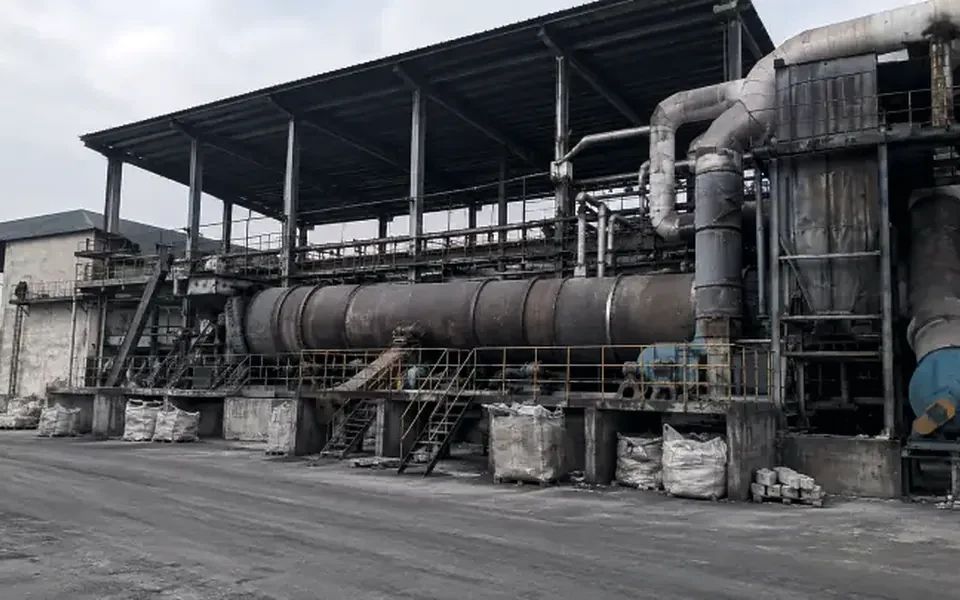
At DXD Carbon (Ningxia Yongruida Carbon Co., Ltd., founded in 1990 in Shizuishan), our 50,050 m2 plant produces 10,000+ MT/year across rotary steam kilns and automated polypropylene HCl acid-washing lines. Every export shipment handled by Henan Dingxinda Import & Export Co., Ltd. includes dual ASTM and GB/T 12496 Certificates of Analysis.
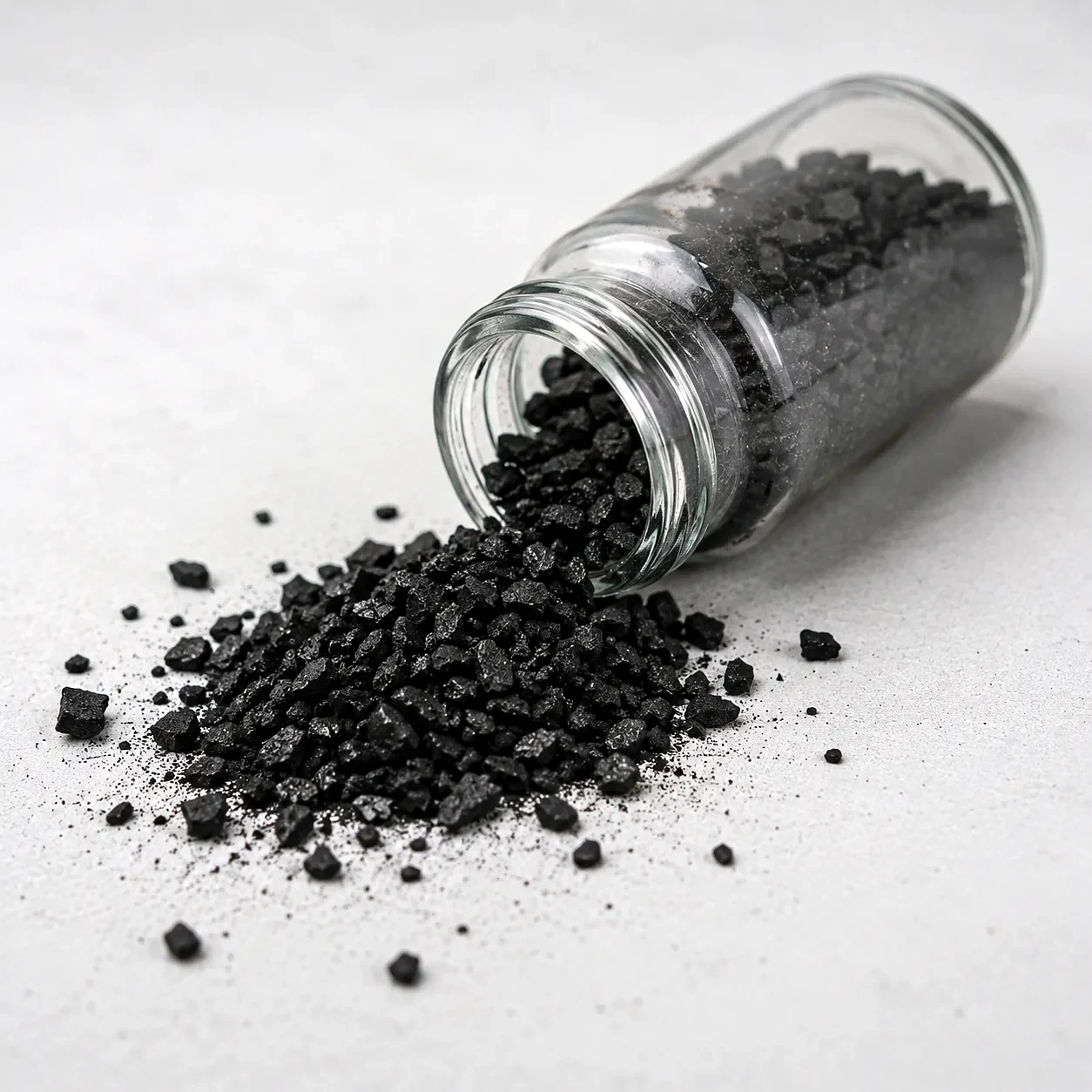
Match your vessel specs using our Technical Data Sheets (TDS) hub and Calgon, Norit, and Jacobi cross-reference guide.
| Specification Configuration | Mesh Sizes (ASTM D2862) |
Iodine (ASTM D4607) |
Total / Water-Soluble Ash | Contact pH (ASTM D3838) |
International Brand Cross-Reference |
|---|---|---|---|---|---|
| Standard Coconut Shell GAC | 6x12, 8x16, 8x30, 12x40, 20x40 |
950 to 1,100+ mg/g |
<= 3 to 5 wt% / 1.5 to 2.5 wt% |
8.5 to 10.5 |
Calgon OLC 12x40, Norit GCN 1240, Jacobi AquaSorb CS |
Acid-Washed Coconut Shell GAC (<= 3% Ash) |
8x30, 12x40, 20x40 |
950 to 1,100+ mg/g |
<= 3.0 wt% / <= 0.25 wt% |
6.5 to 8.0 |
Calgon OLC 12x40 AW, Norit GCN 1240 PLUS, AquaSorb CX-MCA |
Custom Ultra-Low-Ash Coconut GAC (<= 1% Ash) |
12x40, 20x40 |
1,000 to 1,150 mg/g |
<= 1.0 wt% / <= 0.10 wt% |
6.0 to 7.5 |
Ultra-low-ash semiconductor, condensate & pharma grade |
| Acid-Washed Coal-Based GAC | 8x30, 12x40 |
900 to 1,050 mg/g |
<= 6.0 to 8.0 wt% / <= 0.30 wt% |
6.5 to 7.8 |
Calgon Filtrasorb 400 AW, Jacobi AquaSorb 2000 AW (high-TOC waters) |
Procurement & RFQ Checklist (MOQ 1.0 Metric Ton)
Review vessel hydraulics in our water filter media GAC checklist before placing your order. Next, include these five details on your RFQ via our engineering contact page.
- Feedwater Chemistry & Compliance: List raw water
pH, calcium hardness (mg/L as CaCO3), downstream membranes (RO/EDI), andNSF/ANSI 61needs under US EPA Chemical Contaminant Rules. - US Mesh & Backwash Expansion: Pick
12x40 US Mesh(1.70 to 0.425 mm) for pressurized filters (EBCT 5 to 15 min). Use8x30 US Mesh(2.36 to 0.60 mm) for gravity basins with higher suspended solids. - Dual Ash & pH Limits: Specify
ASTM D3838contactpH 6.5 to 8.0andASTM D2866total ash (<= 3.0 wt%or<= 1.0 wt%). Also lock in water-soluble ash (<= 0.25 wt%) and extractable chloride (Cl- <= 0.10 wt%). - Moisture-Barrier Export Packaging: Select
25 kgPE-lined woven PP or kraft bags, or500 kg/1,000 kgFIBC bulk bags. A20GPcontainer holds9 to 11 MT, while a palletized40HQloads20 to 24 MTat<= 5 wt%moisture (ASTM D2867). - Pre-Shipment Rinse Verification: Request a
500 glot sample before container loading to verify10-BVcolumn pH and conductivity curves in your lab.