Coconut Shell Activated Carbon as a Source Material, Not a Single Product Form
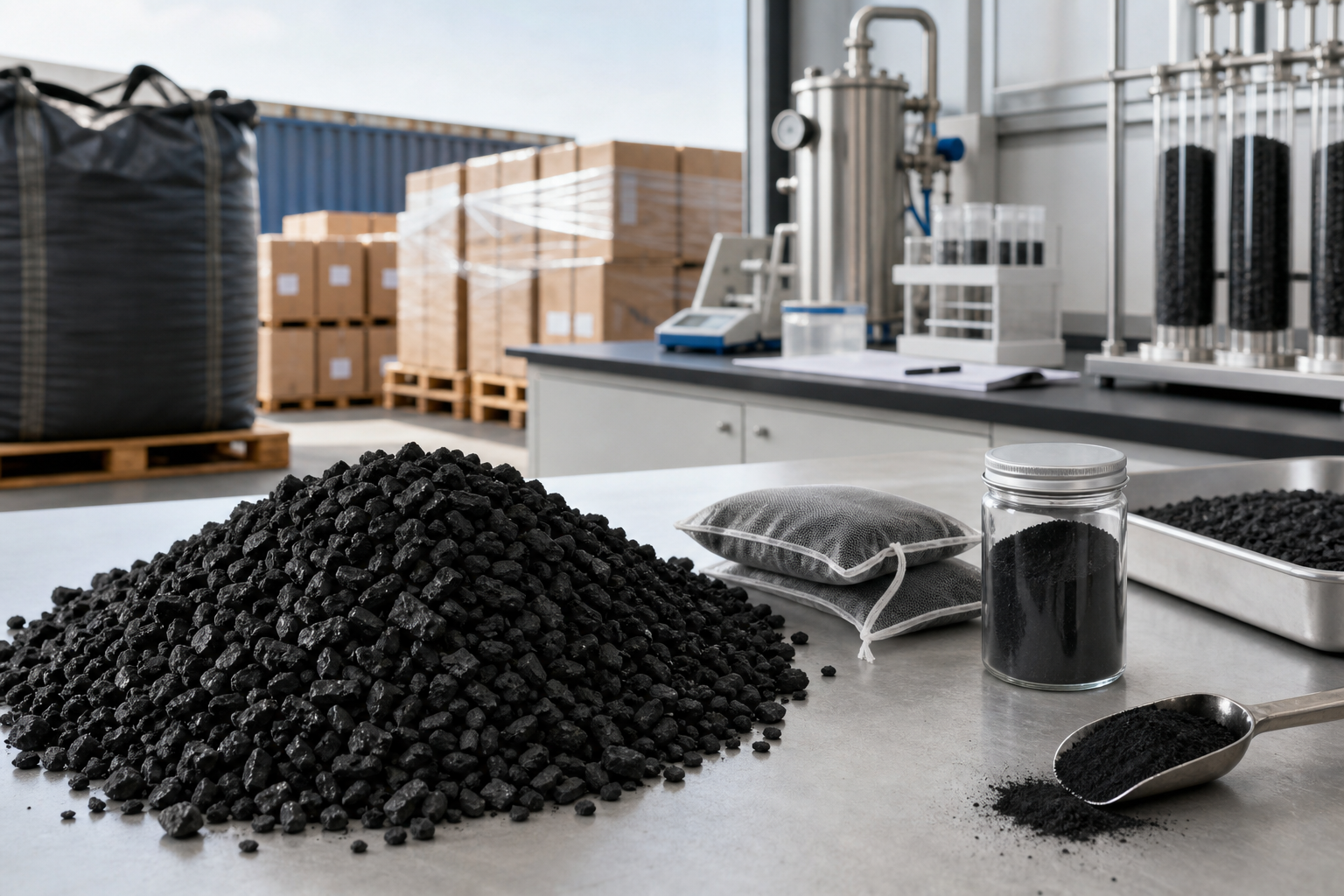
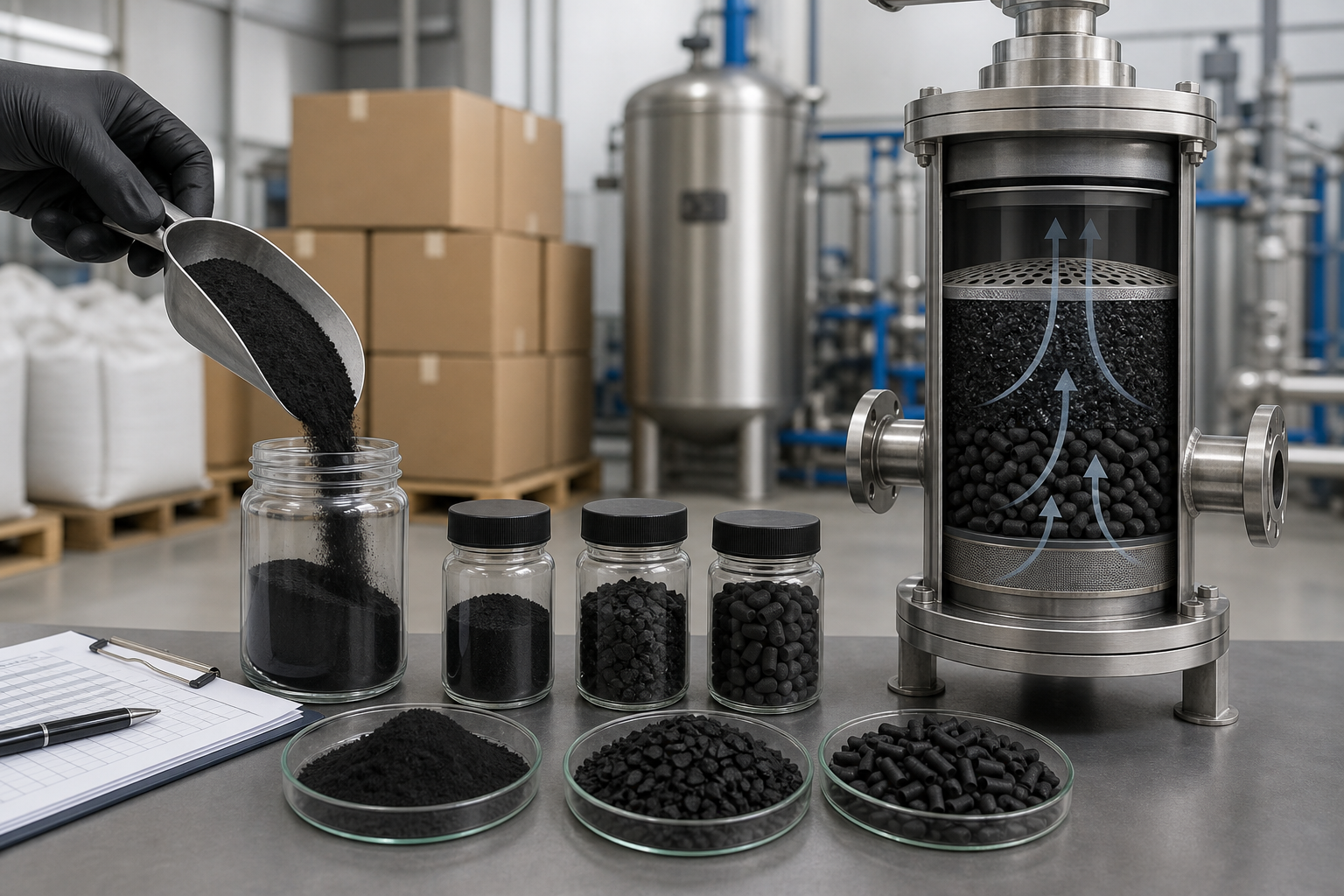
Coconut shell activated carbon is defined by its feedstock: coconut shells are carbonized and activated to create a porous adsorbent. For procurement, this distinction matters because “coconut shell” does not automatically tell a buyer the particle size, form, activity level, packaging, or application suitability. It can be supplied as granular activated carbon, powdered activated carbon, pelletized media, or specialty grades depending on the system requirement.
Buyers should therefore treat coconut shell as one specification field, not the whole specification. A water cartridge may need a different mesh range than a vapor-phase odor vessel, even if both use coconut-derived carbon. A dosing system may require powdered media, while a packed bed may require granular or pelletized material with appropriate hardness and fines control.
Use the feedstock decision alongside application data, form, documentation, and receiving requirements. If your team is still defining the broader activated carbon category, this activated carbon supplier guidance can provide context without replacing a coconut-shell-specific review.
Where Coconut Shell Carbon Fits: Liquid-Phase vs Vapor-Phase Applications
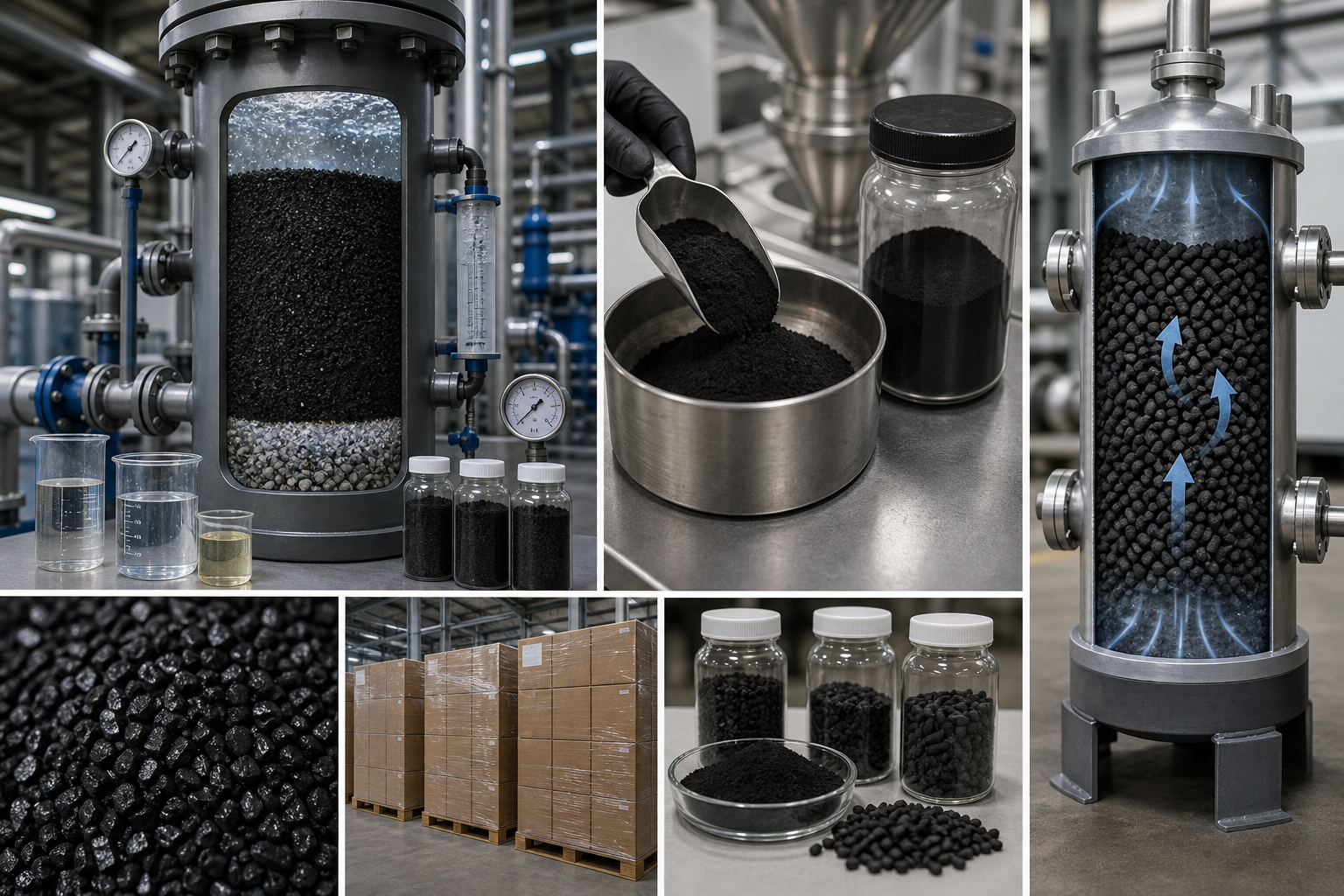
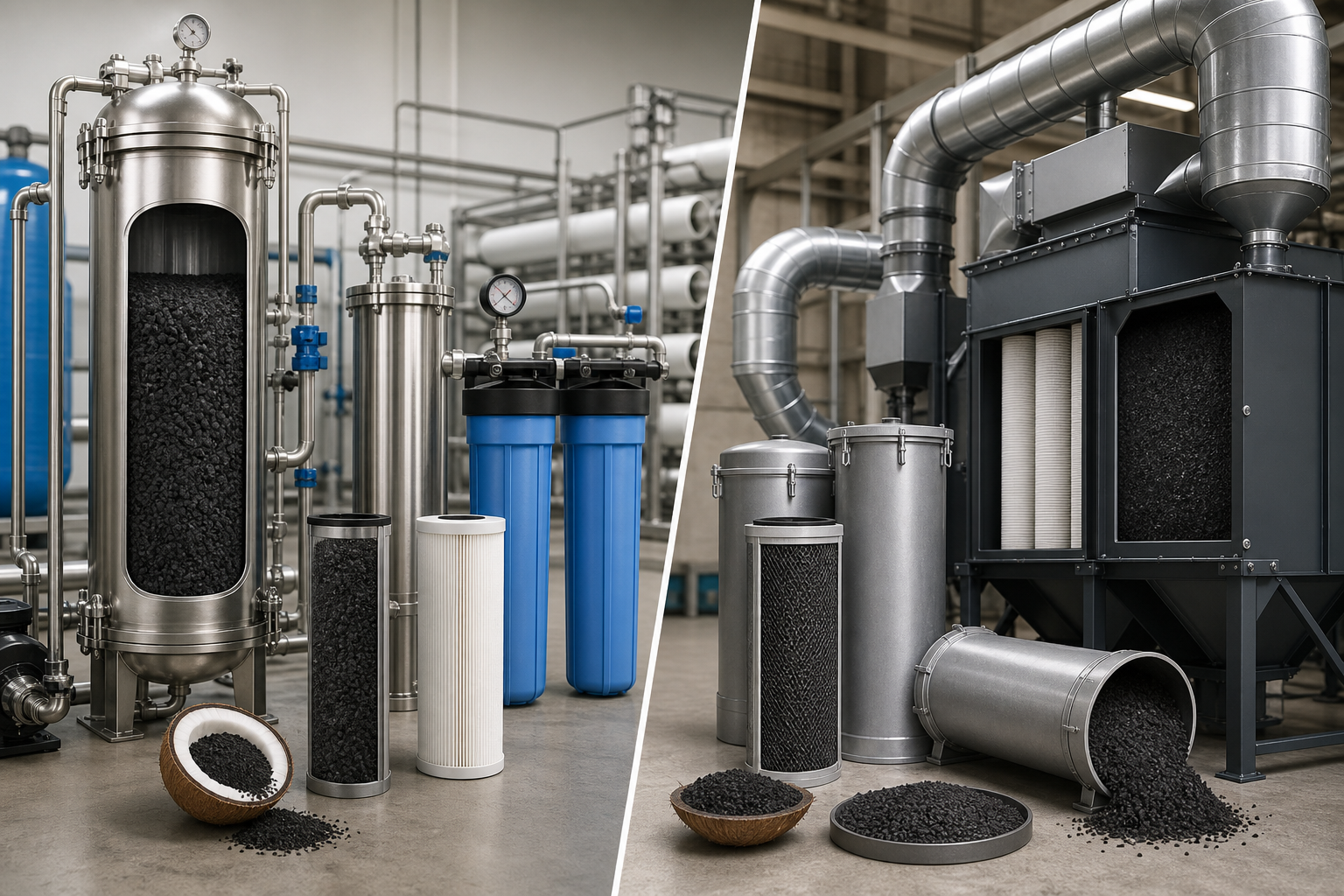
Coconut shell activated carbon is commonly evaluated for liquid-phase uses such as drinking water filtration, taste and odor improvement, and adsorption of certain light organic compounds. In water systems, the key variables are not only carbon source but also flow rate, empty bed contact time, cartridge or vessel geometry, pH, pretreatment, and the contaminant class being targeted. A product that looks acceptable on a listing may still underperform if contact time or bed depth is unsuitable.
In vapor-phase service, coconut shell carbon may be considered for odor control, VOC adsorption, and general air stream polishing. Here, buyers must review airflow, temperature, relative humidity, bed depth, pressure drop, and whether the odor or vapor class requires untreated, impregnated, or alternative media. High humidity or unknown vapor mixtures can change the selection conversation significantly.
The practical takeaway: do not approve coconut shell carbon based on “water” or “air” alone. Define the phase, loading pattern, contact conditions, and changeout expectations before comparing grades or requesting samples.
Coconut Shell vs Coal-Based Carbon: A Fit Decision, Not a Winner
Coconut shell carbon is often associated with a pore structure suited to smaller molecules, while coal-based carbon may be considered for a broader range of pore sizes depending on grade and activation method. That does not make either source universally superior. Application testing, supplier review, and system design still matter.
| Decision factor | Coconut shell carbon | Coal-based carbon |
|---|---|---|
| Typical buying assumption | Often reviewed for water taste, odor, light organics, and vapor polishing | Often reviewed for broader industrial liquid or vapor applications |
| Specification checks | Iodine value, ash, moisture, hardness, mesh, fines, grade notes | Activity indicators, pore distribution, ash, hardness, particle size |
| Risk trigger | Assuming source alone guarantees removal | Assuming lower-cost alternatives fit every contaminant class |
For procurement, the best comparison is application-based: target molecule or odor class, contact time, pressure-drop limit, replacement plan, and documentation needs. If contaminant loading is unclear, request a sample or technical review instead of switching feedstock purely on marketing claims.
Product Specs Buyers See for Coconut Shell Activated Carbon
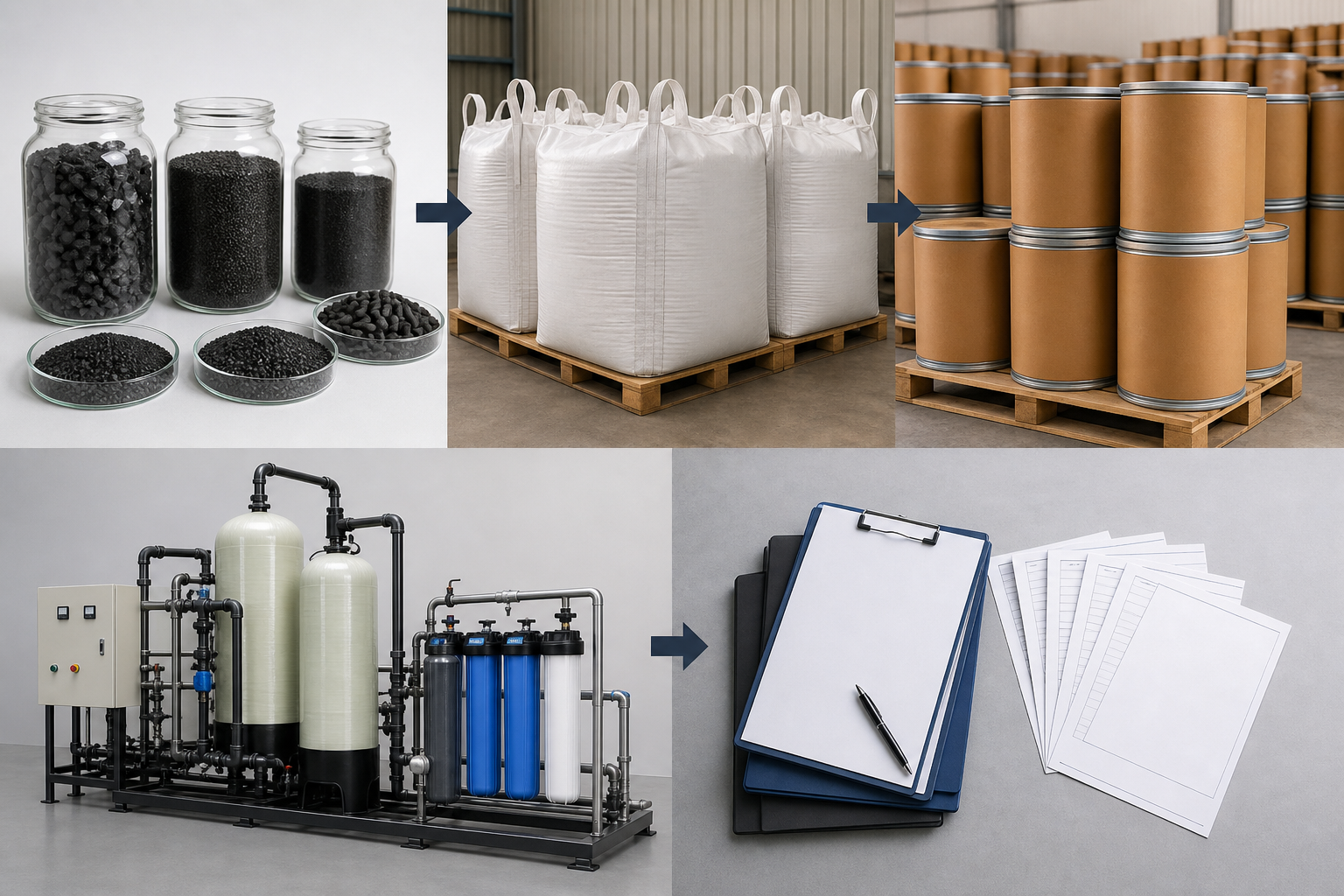
Listings and quotations for coconut shell activated carbon often show mesh size, activity indicators, moisture, ash, hardness, packaging, and documentation availability. Mesh examples such as 6x12 describe a particle-size range, not a performance guarantee. Coarser particles may reduce pressure drop but change contact behavior; finer particles may provide more surface exposure but can increase fines, dust, or hydraulic restriction depending on equipment.
Activity indicators such as iodine value, CTC, or methylene blue can help compare grades, but they should be interpreted against the target contaminant class. Ash and moisture affect receiving inspection and handling expectations. Hardness and attrition resistance matter when carbon is transported, loaded, backwashed, or used in systems where fines could cause downstream problems.
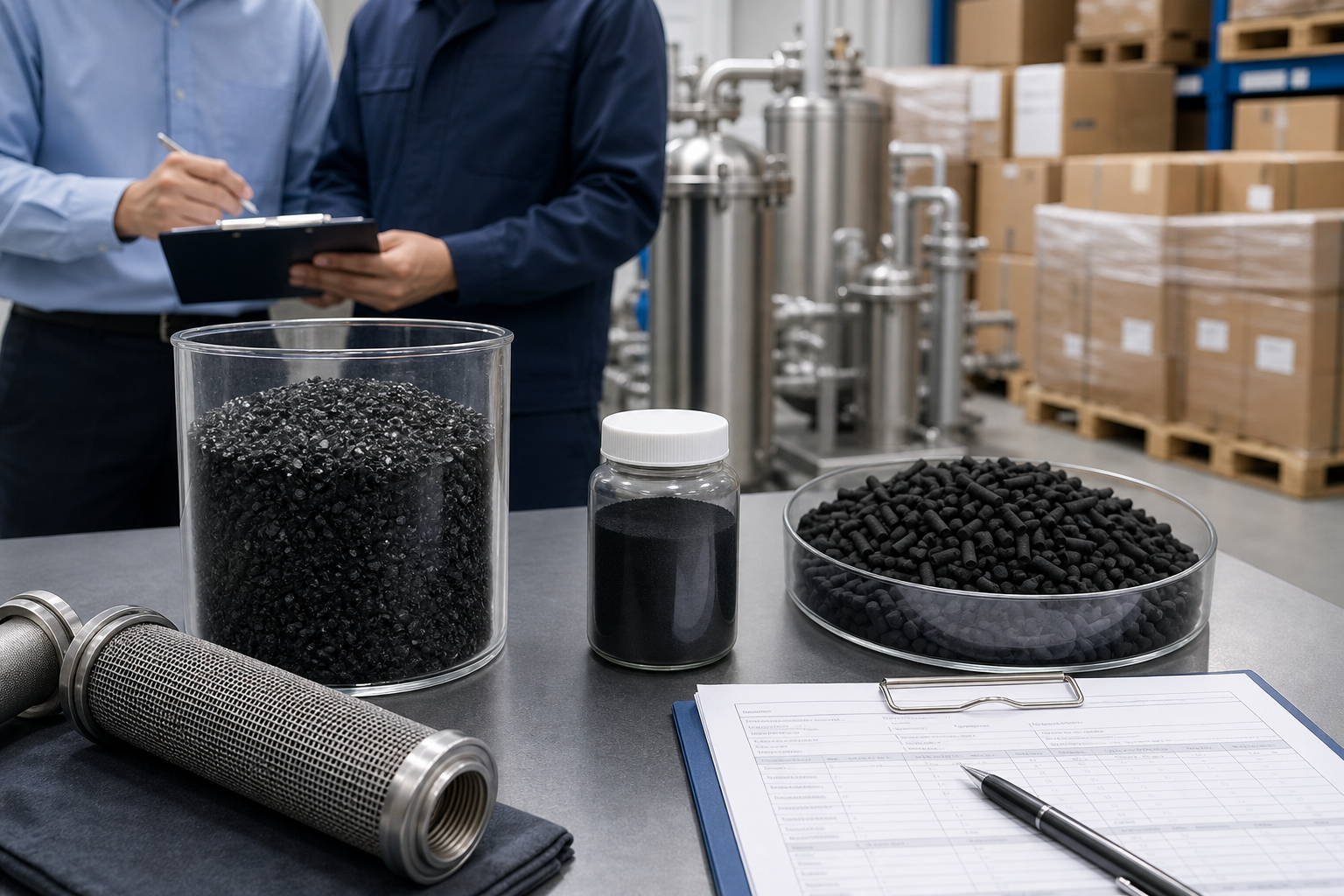
Procurement should request the current TDS, SDS or MSDS, COA if applicable, packaging format, lot identification, and any grade notes that affect use in water or vapor-phase service. For vessel and cartridge applications, buyers comparing coconut-shell GAC can also review granular activated carbon for vessel and cartridge applications.
From Form Choice to Purchase Readiness: GAC, PAC, Pellets, Samples, and Documents
Coconut-shell GAC is typically evaluated for packed beds, cartridges, and pressure vessels where mesh, backwashing behavior, pressure drop, and fines control matter. Coconut-shell PAC is selected for dosing into liquids or processes where mixing, wetting, dust control, and downstream separation are part of the operating plan. Pelletized coconut carbon may be reviewed for vapor-phase beds where airflow and pressure drop need close attention. For PAC-specific handling issues, see these powdered activated carbon dosing considerations.
Buying channels range from small-package ecommerce listings to filtration suppliers, industrial adsorbent distributors, and manufacturers handling bulk requirements. Cost varies with form, mesh, grade, treatment, origin, quantity, packaging, and documentation expectations. For larger orders, align sacks, drums, bulk bags, palletization, labeling, and receiving checks before purchase; this bulk activated carbon buying considerations resource can help.
To move from research to a useful recommendation, share the application phase, target contaminant or odor class, flow conditions, preferred form or mesh, packaging quantity, and documentation requirements. If the loading is unknown, ask whether sample testing or technical review is appropriate. HS code and customs classification should be confirmed with the supplier, customs broker, or official authority.