Granular Activated Carbon as a Media Form, Not a Complete Filter
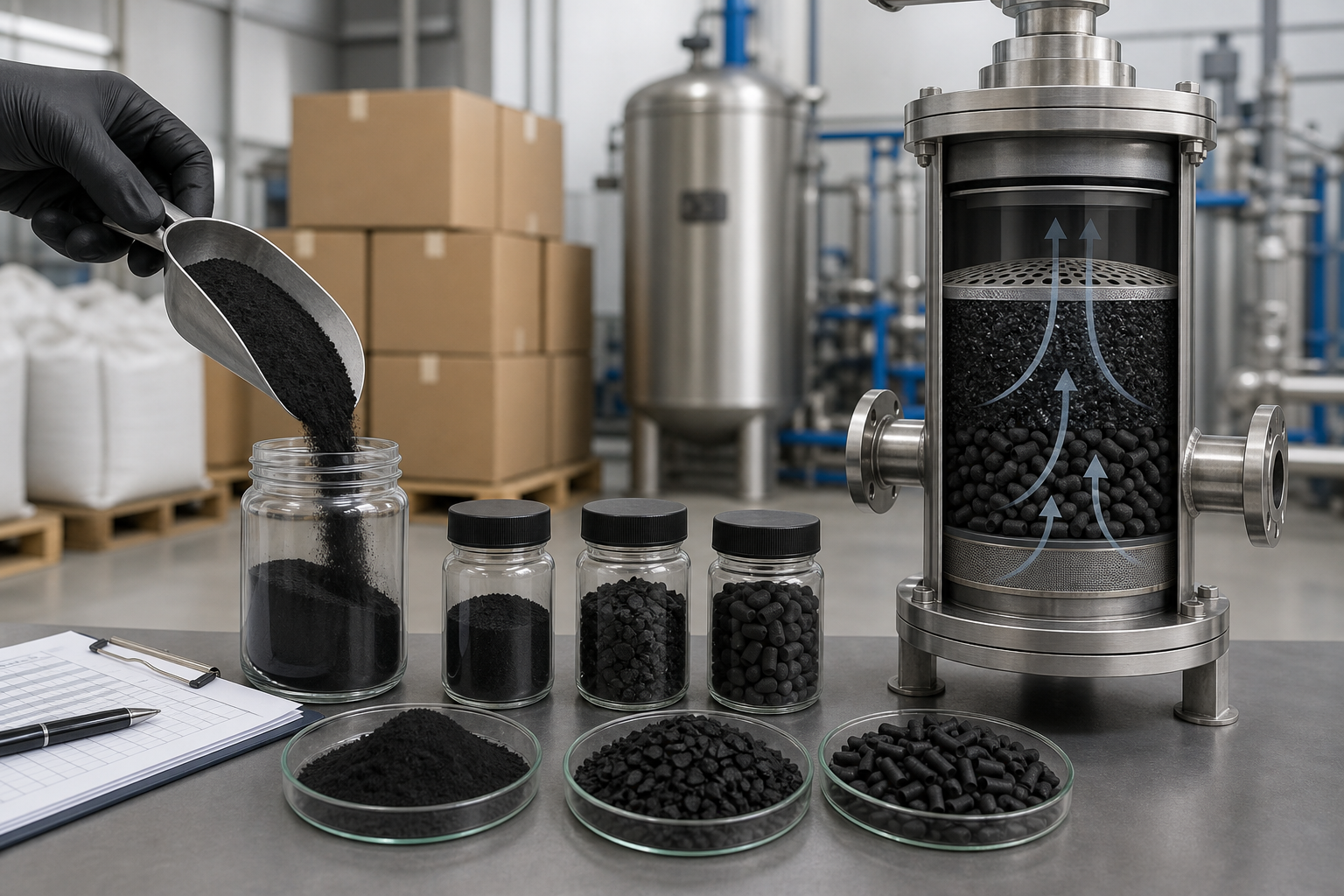
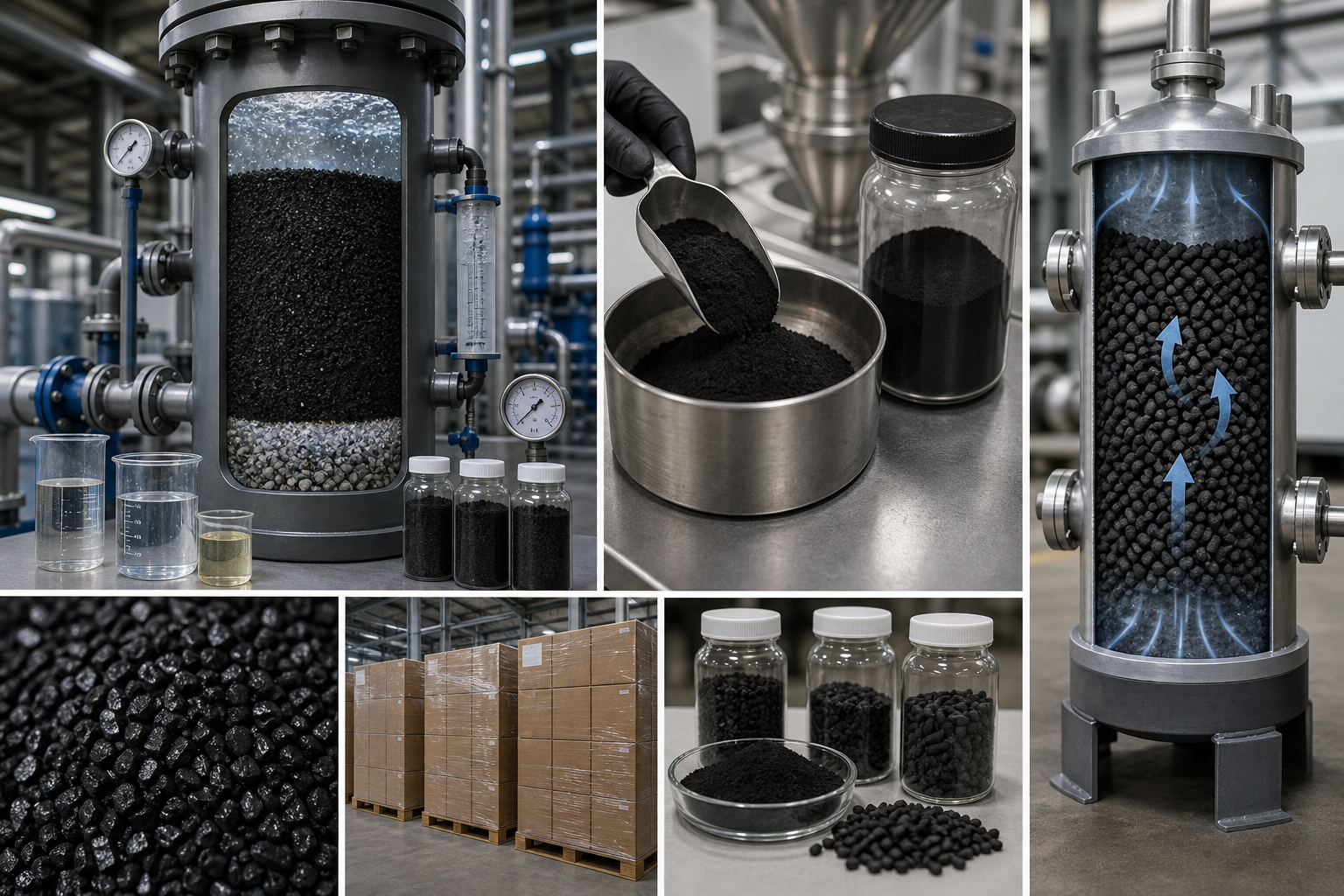
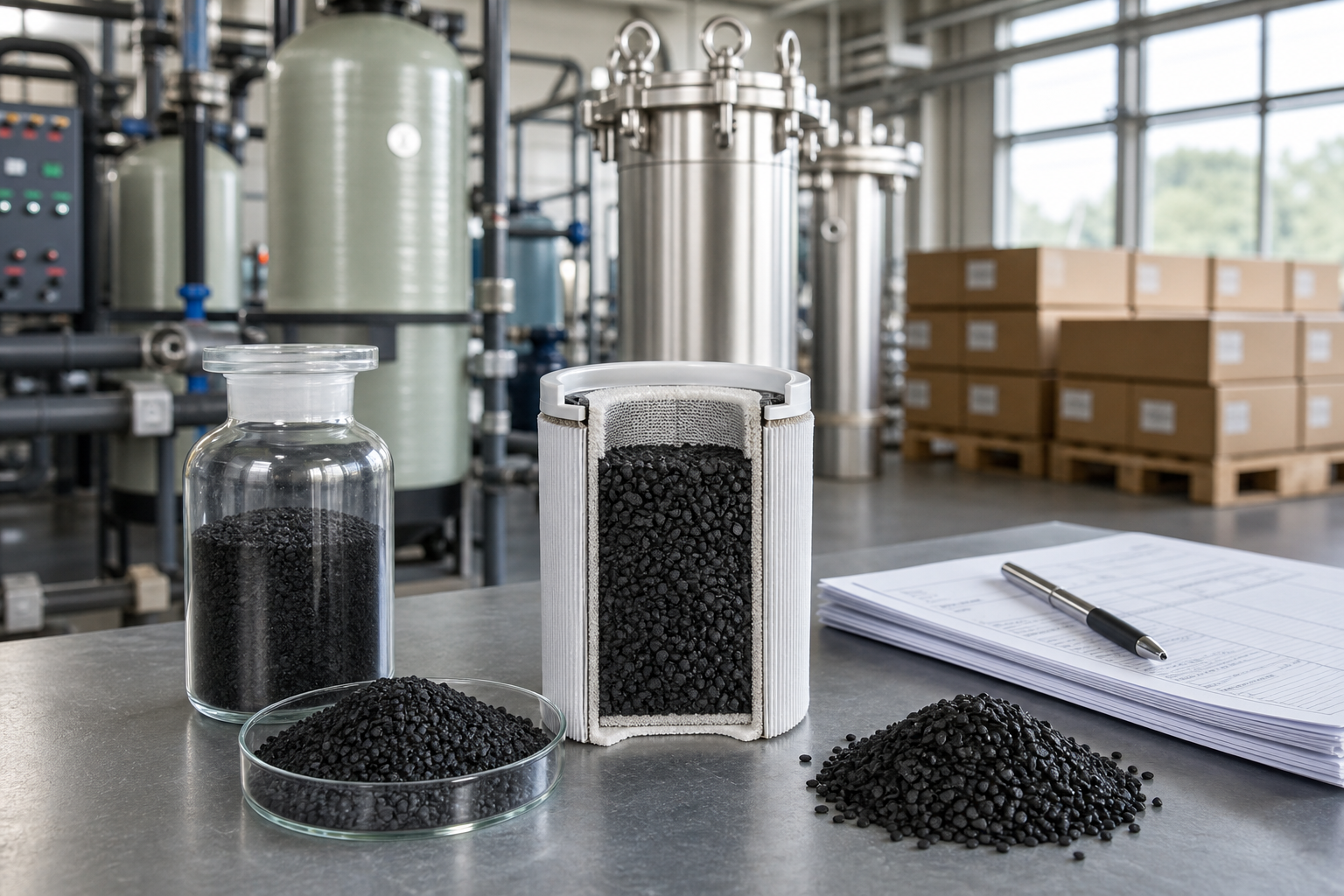
Granular activated carbon, often shortened to GAC, is activated carbon supplied as granules for use inside filtration equipment. The key distinction for buyers is practical: GAC media is the loose adsorptive material, while a GAC filter is the cartridge, tank, vessel, column, or housing that holds the media and controls flow through the bed.
The phrase “granular activated charcoal” is commonly used in the market, but procurement teams should evaluate the specification rather than the wording alone. Base material, particle size, mesh range, ash, moisture, hardness, iodine value, and documentation all matter more than whether a listing says carbon or charcoal.
GAC is usually selected when a buyer needs a replaceable media bed in a fixed flow path. It can support water treatment, liquid purification, vapor-phase service, odor control, and industrial filtration systems, but it should not be assumed to remove every contaminant. For a broader comparison of activated carbon forms and applications, see this activated carbon supplier guidance.
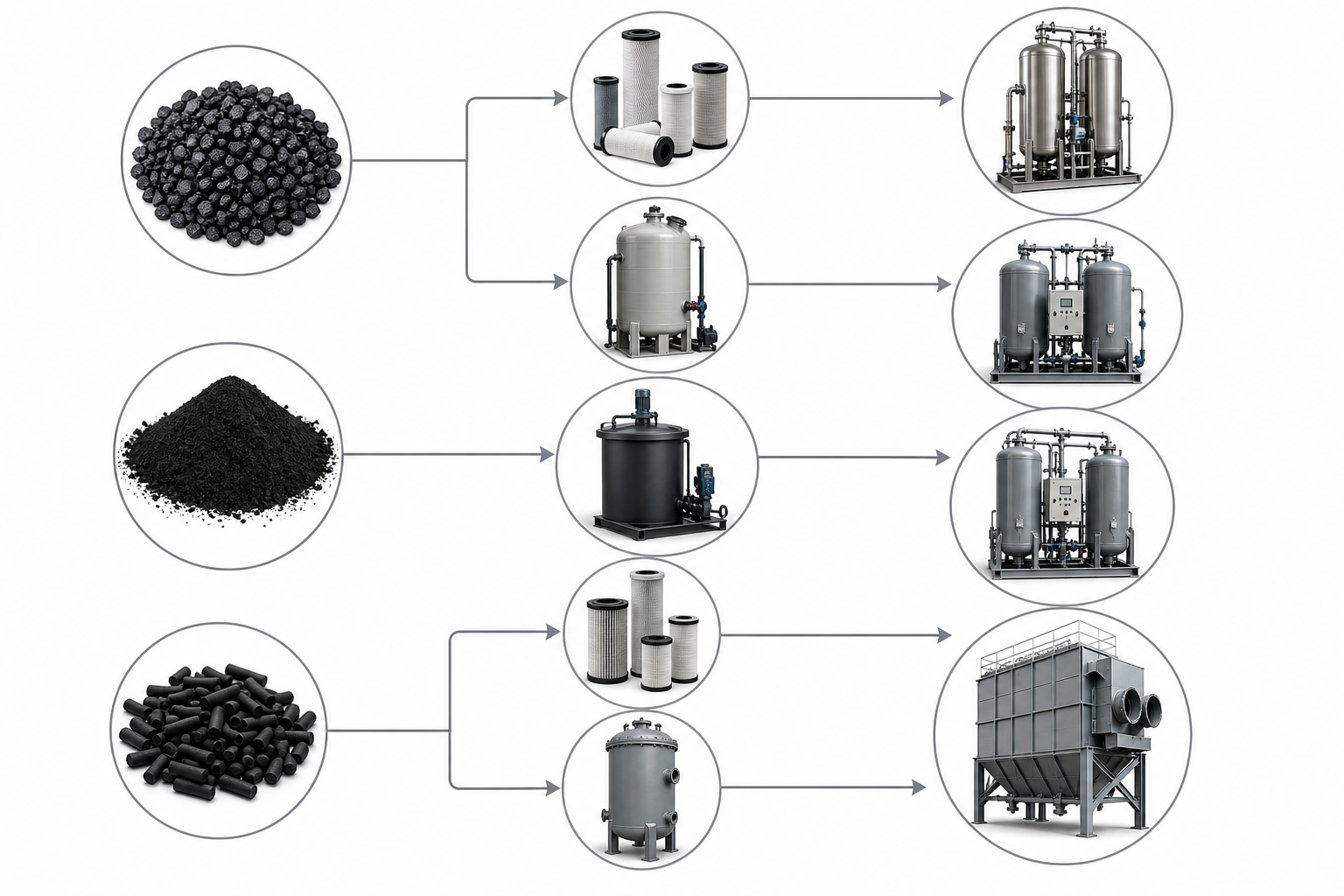
Media-Form Decision Tree: GAC vs PAC vs Pelletized Carbon
Choosing granular activated carbon is often an equipment decision before it is a chemistry decision. The buyer should ask how the carbon will be held, contacted, removed, and replaced.
| Decision point | GAC | PAC | Pelletized carbon |
|---|---|---|---|
| Best fit | Fixed beds, cartridges, vessels, columns | Dosing into liquid process streams | Gas-phase beds, low-dust handling needs |
| Replacement workflow | Remove spent bed and refill or swap cartridge | Separate spent powder from process | Replace structured bed or adsorber fill |
| Dust consideration | Moderate fines possible; rinsing may be needed | Higher dust and dispersion risk | Typically easier to handle than powder |
| Pressure drop concern | Depends strongly on mesh and bed design | Not usually used as a packed bed | Often considered where airflow resistance matters |
If your system already has screens, distributors, underdrains, or cartridge retainers designed for granules, GAC is usually the first form to evaluate. If the process requires slurry dosing or rapid mixing, PAC may be more suitable. If the duty is vapor-phase and low dust is a priority, pellets may deserve review.
Why Mesh Size Changes Flow, Fines, and Replacement Risk
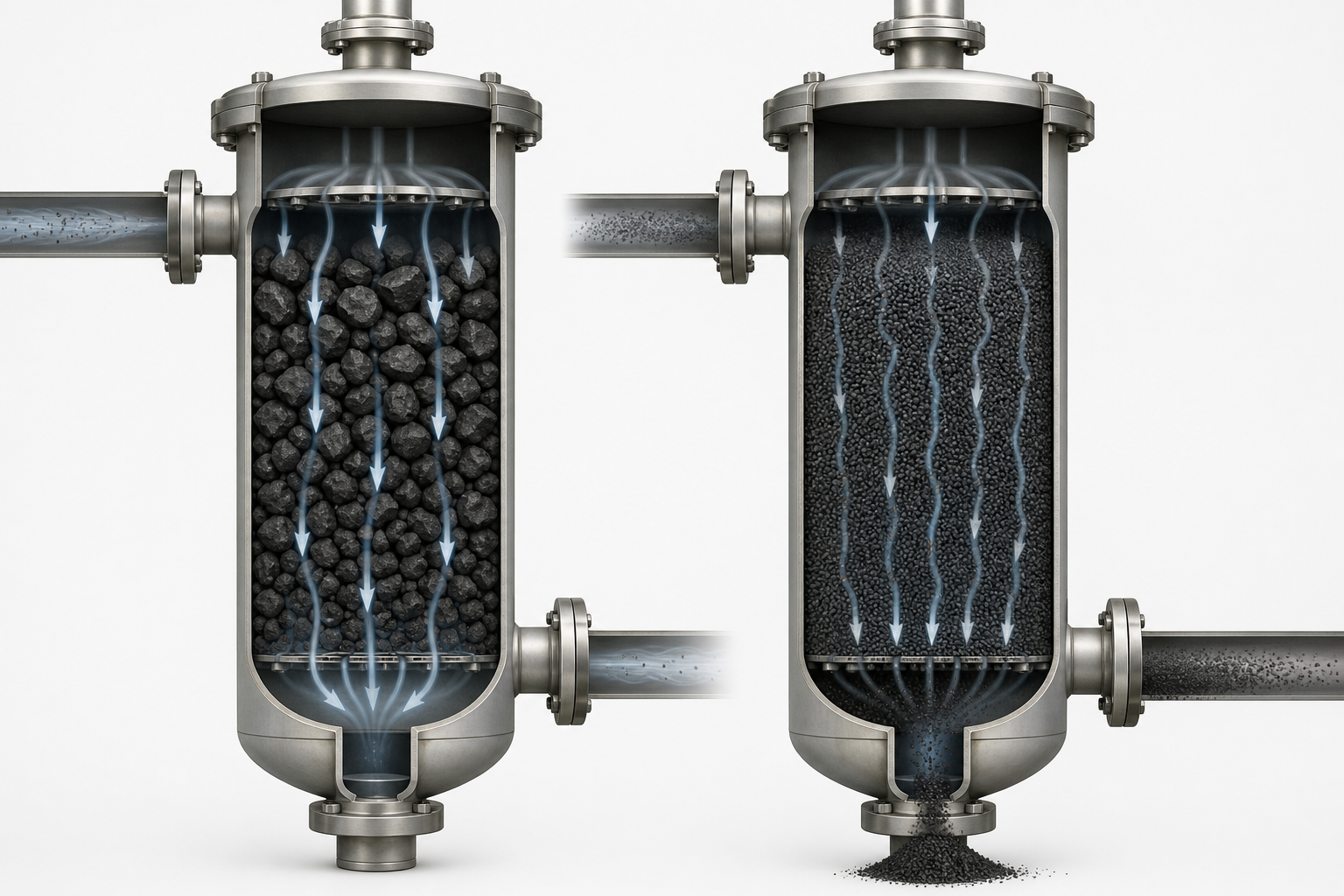
Mesh size is one of the most important specification fields for granular activated carbon because it connects the media to the equipment. A smaller granule may offer more contact surface within the bed, but it can also increase resistance to flow and may create higher pressure drop in some systems. A larger granule may be easier for certain distributors or screens to retain, but it may not behave the same in compact cartridges or shallow beds.
Procurement teams replacing an existing GAC grade should not change mesh size casually. Check vessel drawings, cartridge dimensions, retaining screens, backwash capability, and allowable pressure drop before approving a substitute. In water systems, startup rinsing or backwashing may be required to remove fines where the equipment design allows it. In vapor-phase or dry adsorber use, dust control during filling and changeout can affect workplace handling and downstream cleanliness.
Ask suppliers to confirm the particle size range on the TDS and match it to the equipment manufacturer’s guidance. If the previous media performed acceptably, keep a record of its mesh, base material, and lot documentation before testing alternatives.
GAC Spec-Field Glossary for Procurement and Engineering Review
A GAC data sheet should help buyers compare media without treating any single number as a guaranteed removal result. Use the following fields to guide technical review and receiving checks.
- Iodine value: A common indicator related to micropore adsorption capacity; useful for comparison, not a universal performance guarantee.
- CTC: Often used in vapor-phase carbon discussions; relevant when comparing gas adsorption grades.
- Methylene blue: Indicates adsorption behavior for larger molecules and can matter in some liquid applications.
- Ash: Inorganic residue content; may affect application suitability and buyer acceptance criteria.
- Moisture: Important for net received material condition, storage, and handling expectations.
- Hardness: Helps assess resistance to attrition, fines generation, and media loss during handling or backwashing.
- Particle size and mesh: Ties directly to pressure drop, retention screens, and bed behavior.
- Base material: Coconut shell, coal-based, wood-based, or other sources may differ in pore structure and ash profile.
- SDS, TDS, COA: Request these documents to support safety review, specification confirmation, and lot-level receiving control.
For larger-volume packaging and repeat-order document control, this bulk activated carbon guide adds procurement context.
Equipment-Fit Matrix and Receiving Checks Before Buying GAC
Granular activated carbon should be matched to the equipment that will hold it. Cartridges need media that will not escape through retainers or create excessive initial fines. Whole-house housings and small tanks require attention to fill volume, distributor design, and startup flushing. FRP or steel vessels may need compatible mesh, bed depth, support media, and backwash behavior. Industrial columns and liquid treatment systems often require tighter documentation because pressure drop, bed settling, and changeout planning affect operations. Vapor-phase adsorbers may require review of CTC, pellet alternatives, dust, and airflow resistance.
Receiving checks should include bag or drum condition, label consistency, lot identification, SDS, TDS, and COA review where required. Packaging may include sacks, drums, or bulk bags depending on handling equipment and storage constraints. Store GAC in a dry, clean area away from incompatible materials and confirm whether pre-rinse, screening, or other startup steps apply to the system.
If you are replacing an existing granular activated carbon grade, share the current TDS, mesh size, vessel or cartridge type, target application, and preferred packaging with the supplier. That information helps check media-form compatibility before purchase; supplier qualification topics can be handled separately through an activated carbon suppliers review.