Before Shortlisting Activated Carbon Suppliers: Identify the Supplier Model You Actually Need
A search for activated carbon suppliers can return manufacturers, distributors, wholesalers, brokers, and application-focused suppliers. Procurement teams should separate these models before comparing quotes, because each model changes how specifications, substitutions, documentation, and repeat orders are handled.
A manufacturer may be closer to production and grade development, while a distributor may offer regional coordination and access to multiple product lines. A wholesaler may fit larger-volume purchasing, while a broker may help source product but may require closer review of origin, documentation, and consistency. None of these models is automatically better; the right choice depends on application risk, required support, and purchasing pattern.
If the use case is still being defined, prioritize an activated carbon supplier that can discuss application requirements before pushing a single grade. If the grade is already approved, procurement may focus more heavily on packaging, documentation, repeat-order consistency, and destination terms. The goal is to shortlist suppliers whose operating model matches the buying need, not just suppliers with a broad catalog.
Application-to-Supplier-Fit Matrix for Water, Air, Gas, Odor, and Industrial Filtration
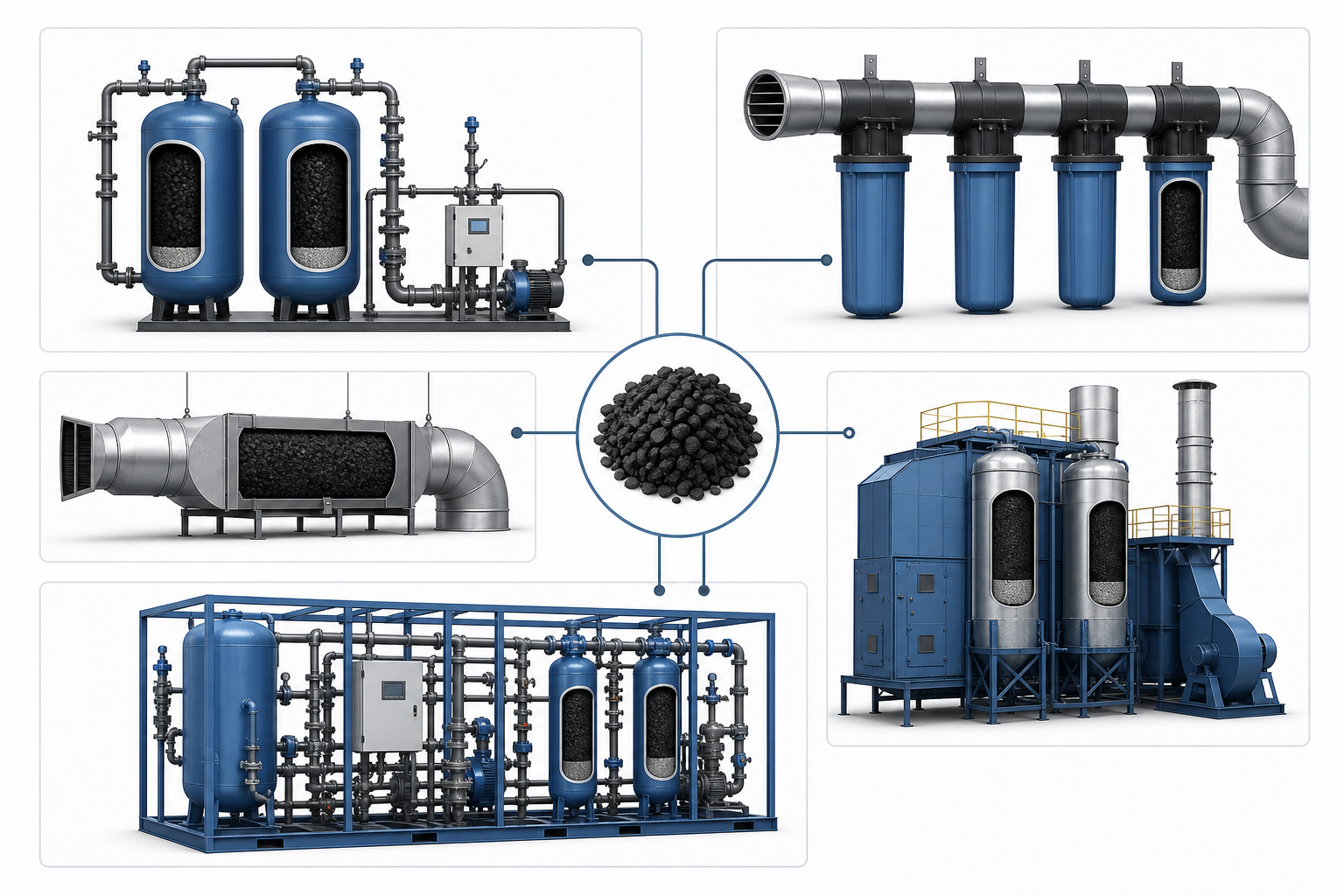
The same activated carbon supplier may not be equally suited to every filtration project. Buyers should translate the application into supplier-evaluation questions before asking for a quote. For a broader technical background on activated carbon for B2B filtration applications, review media formats and sourcing considerations alongside supplier responses.
| Application | Supplier-fit questions |
|---|---|
| Water and wastewater | Can the supplier discuss vessel design context, target use case, replacement planning, and documentation needs without assuming one grade fits all systems? |
| Air purification and odor control | Can the supplier address form factor, airflow context, bed depth or filter configuration, and packaging that protects media during handling? |
| Gas treatment | Can the supplier support technical clarification around contact time, operating environment, and whether treated or specialized media should be considered? |
| Industrial filtration | Can the supplier coordinate with engineering, maintenance, EHS, and procurement teams on documentation, handling, and repeat-purchase requirements? |
When the application involves regulated processes, sensitive emissions, unknown contaminants, or existing equipment constraints, do not compare activated carbon suppliers on price alone. Ask each supplier what additional process information they need before recommending a grade.
What an Activated Carbon Supplier Needs to Know About GAC, Pellets, PAC, or Packaged Media
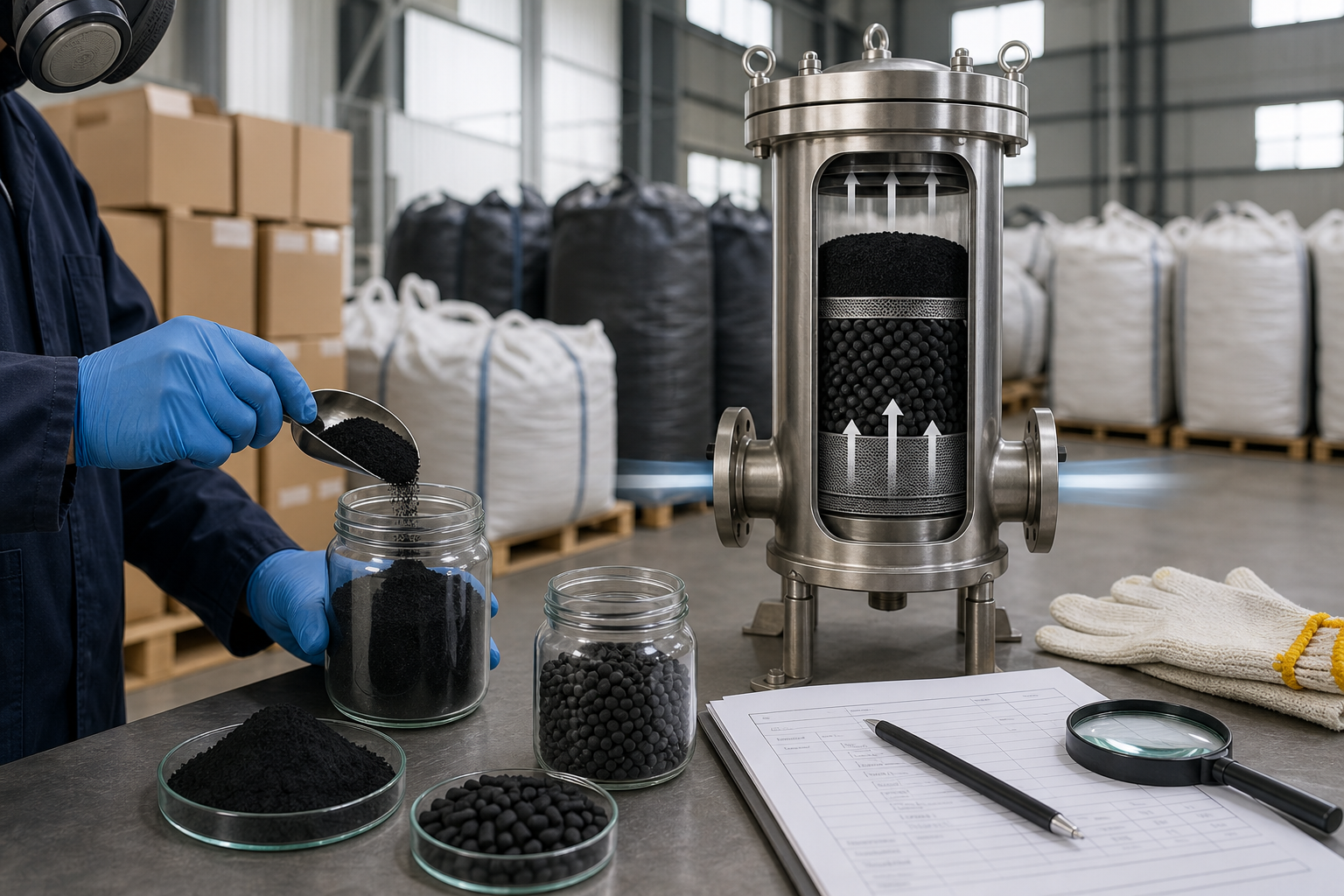
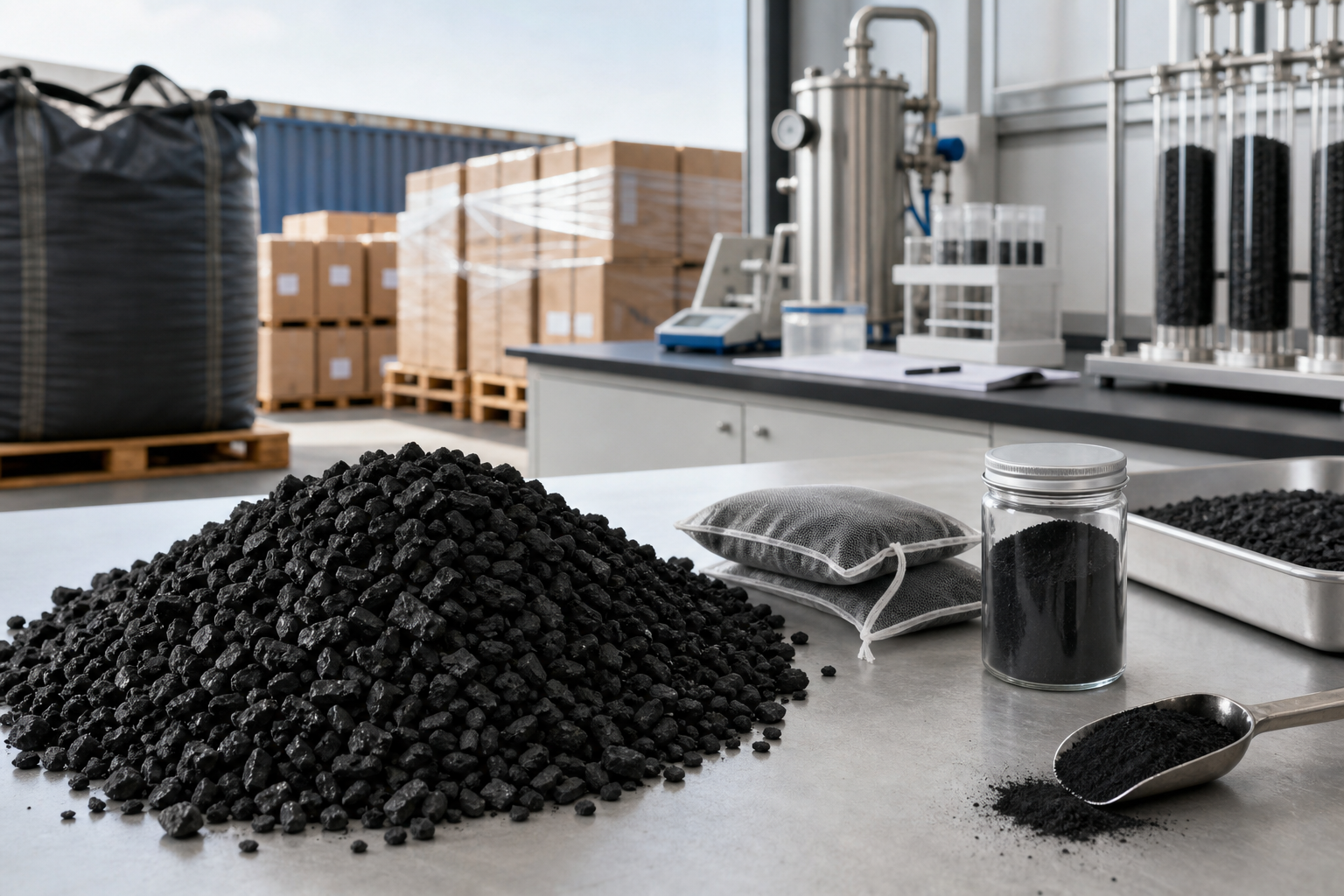
Product form is not just a catalog category; it affects quote structure, handling, system compatibility, and freight assumptions. Granular activated carbon is often discussed for vessel-based liquid-phase systems, but a supplier still needs details such as application, equipment context, desired particle size range if known, and whether media changeout planning is part of the purchase.
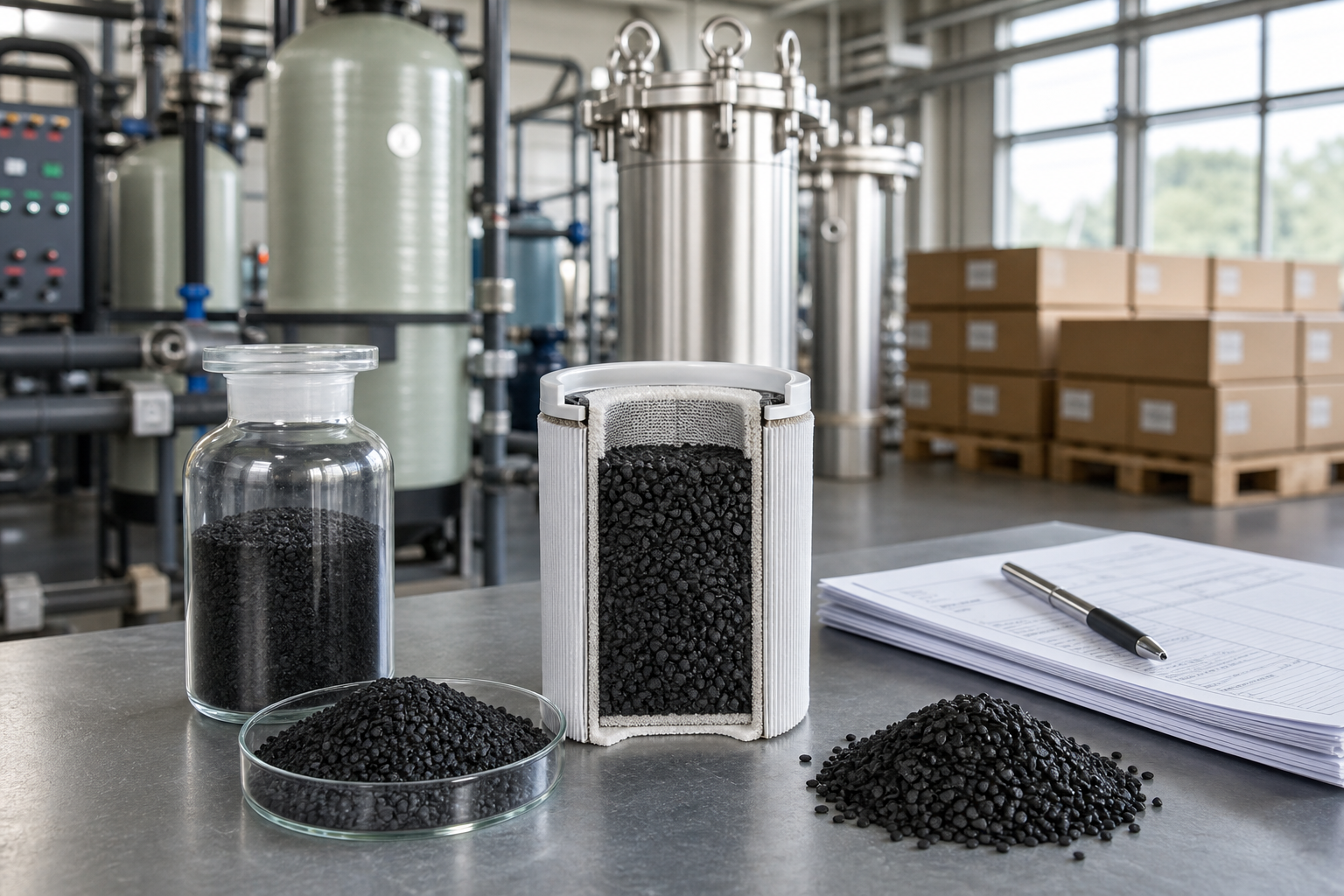
Pelletized activated carbon is commonly evaluated for air, gas, and odor-control configurations where pressure drop, contact time, and filter geometry may matter. Powdered activated carbon raises different questions around dosing, batch use, dust management, storage, and operator handling. Packaged media, cartridges, sacks, drums, bulk bags, or other formats can change the practical comparison even when the underlying carbon appears similar.
Before asking activated carbon suppliers to quote granular, pelletized, powdered, and packaged activated carbon formats, clarify whether the form is fixed by existing equipment or still open to supplier recommendation. Also ask whether substitutes are being offered as exact matches, functional alternatives, or preliminary recommendations requiring technical confirmation.
RFQ Inputs Activated Carbon Suppliers Need Before They Can Quote Responsibly
A vague request such as “send pricing for activated carbon” usually produces hard-to-compare responses. A stronger RFQ gives suppliers enough context to recommend, quote, or ask the right clarification questions. Start with the application: water treatment, wastewater, air purification, gas treatment, odor control, industrial filtration, or another defined use case.
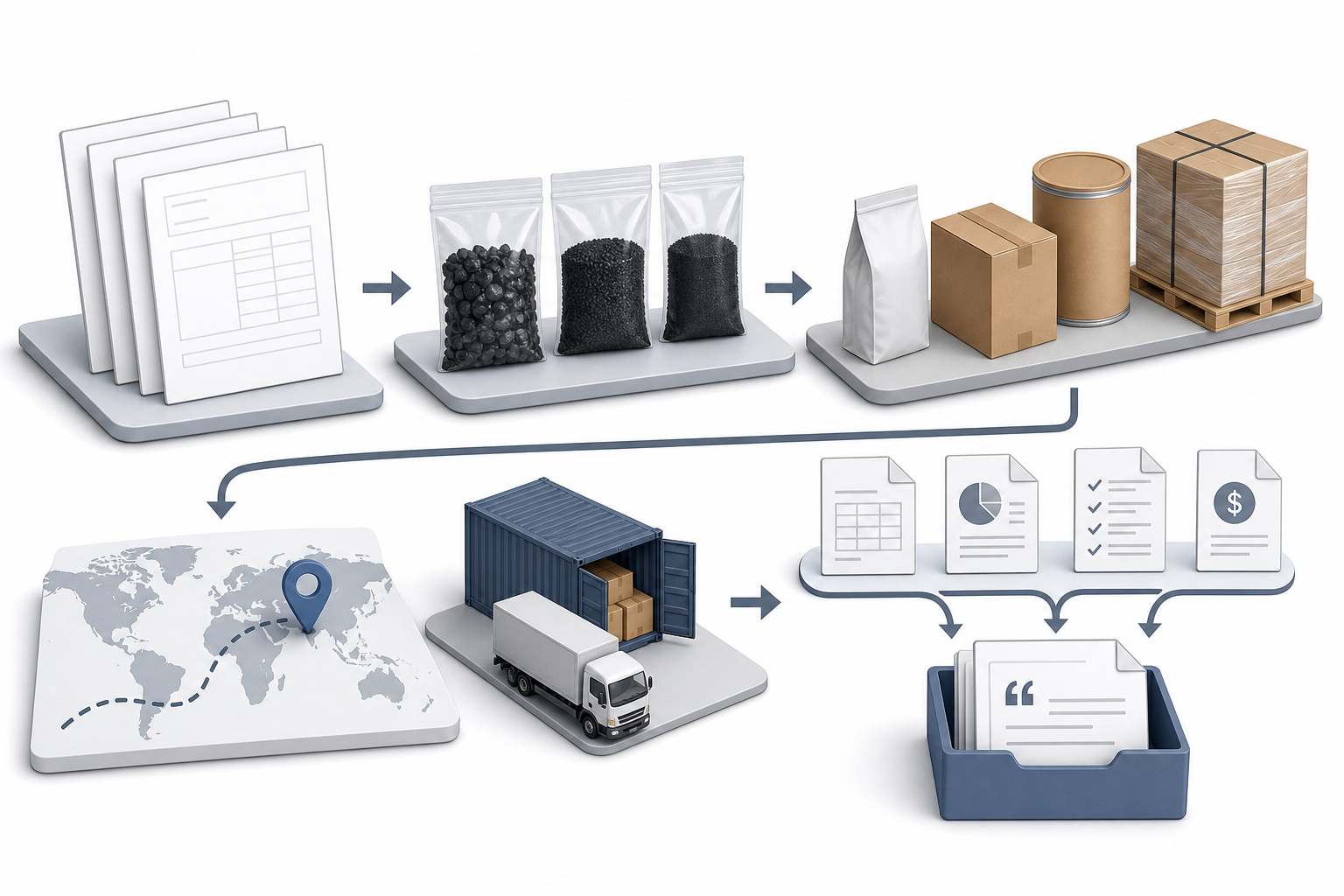
Next, provide the target contaminant or performance goal if known, while avoiding unsupported assumptions about removal. Include operating context such as flow rate, vessel or filter type, contact time, temperature, humidity, pH, batch size, or process constraints when available. If those details are not yet known, say so clearly and ask what information the supplier needs to narrow the recommendation.
Procurement inputs matter as much as technical inputs. Include estimated quantity or quantity range, desired product form if known, packaging preference, delivery destination, timing expectations, and documentation requests such as SDS, TDS, COA, compliance files, or import/export paperwork. This helps activated carbon suppliers return responses that can be compared on specification, packaging, and commercial terms rather than incomplete unit pricing.
Convert Your Activated Carbon Supplier Search Into a Specification-Ready Inquiry
The final supplier decision should not rest on the lowest price per pound, kilogram, bag, or pallet. Compare each reply line by line: quoted product form, grade or specification reference, particle size or pellet diameter if provided, packaging unit, minimum quantity, freight or destination assumptions, documentation included, and any substitution language. If two suppliers quote different media, packaging, or freight terms, the unit price is not a clean comparison.
For USA versus global sourcing, ask practical risk questions rather than assuming location alone solves supply risk. Confirm communication workflow, technical clarification process, destination terms, import or export documentation responsibilities, and whether repeat orders will reference the same specification. For larger-volume or wholesale purchasing, also clarify storage constraints, handling equipment, forecast needs, and whether blanket or repeat-order discussions require separate commercial terms.
To move from research to action, send a specification-ready activated carbon inquiry that states the application, product form if known, quantity range, destination, packaging preference, operating context, and documentation needs. Buyers ready to structure a comparable request can send a specification-ready activated carbon inquiry so the supplier conversation begins with enough detail to evaluate fit, not just price.
Frequently Asked Questions
Should I contact activated carbon suppliers before I know the exact grade?
Yes, if you can describe the application, operating context, and purchasing constraints. Ask suppliers to separate preliminary guidance from a confirmed recommendation and to state what technical details are still needed before final selection.
Can buyers request samples before placing a bulk activated carbon order?
Many procurement teams ask whether sample or trial quantities are available before committing to larger volumes. Confirm whether the sample represents the same specification, packaging, and supply source expected for future orders.
What should I share when switching from an existing activated carbon supplier?
Provide the current grade name if available, recent TDS or COA documents, packaging format, equipment context, annual or monthly usage, and the reason for switching. Ask any new supplier to explain whether proposed alternatives are equivalent or only functionally similar.
How should US buyers compare domestic and overseas activated carbon quotes?
Compare landed cost, Incoterms or delivery terms, customs documentation, tariff responsibilities, communication workflow, and repeat-order assumptions. Location can matter, but the quote should still be reviewed against specification, risk, and total procurement cost.
When should an activated carbon supplier recommend technical review or testing?
Technical review is especially important when contaminants are unclear, operating conditions are unusual, emissions or compliance risks are involved, or an alternate grade is proposed. A supplier should be willing to identify what cannot be confirmed from pricing information alone.
Are smaller minimum order quantities useful for activated carbon sourcing?
Smaller quantities can help with qualification, handling checks, or startup needs, but they may not reflect bulk pricing or repeat-supply terms. Buyers should confirm whether later orders will use the same specification, packaging, and documentation.