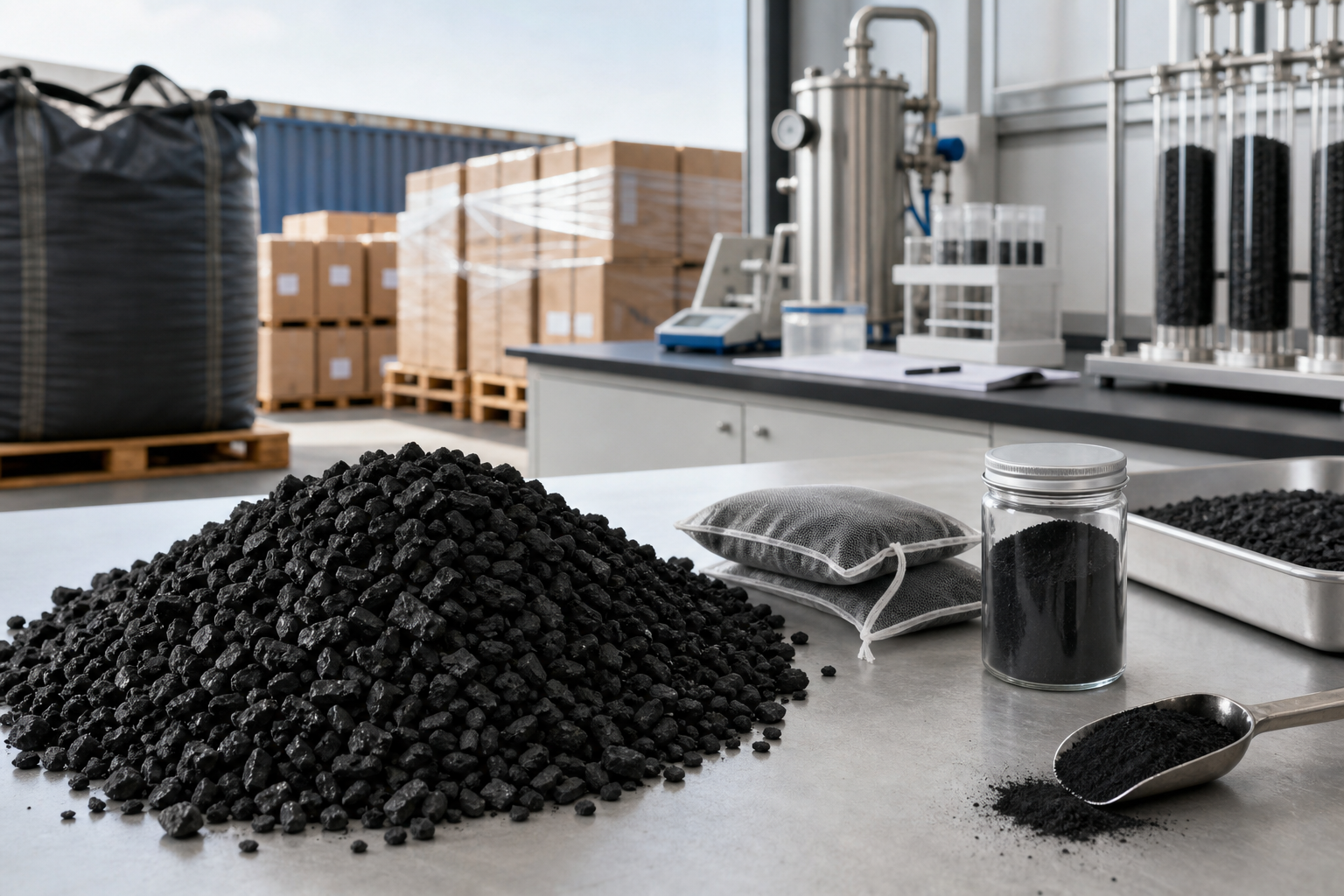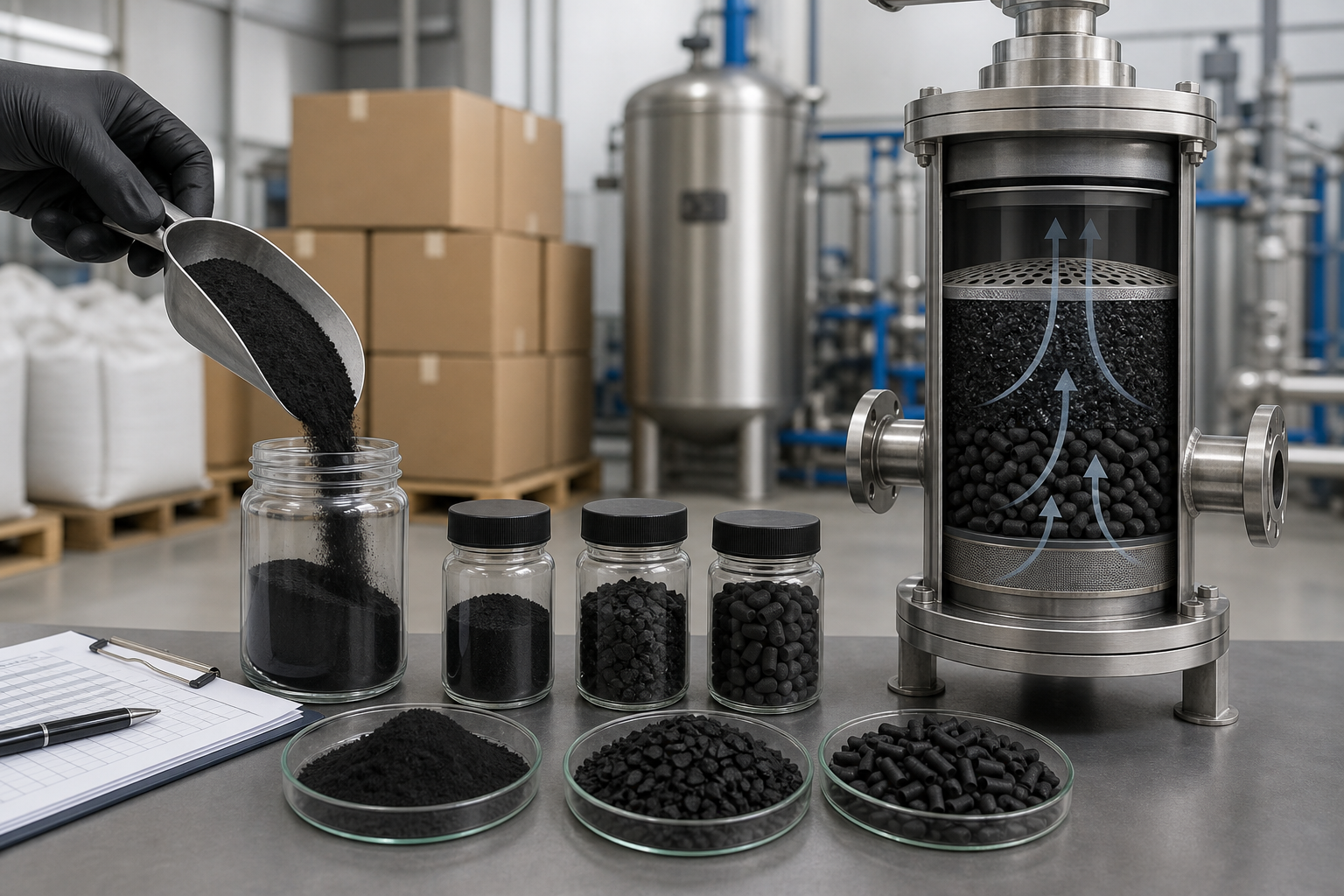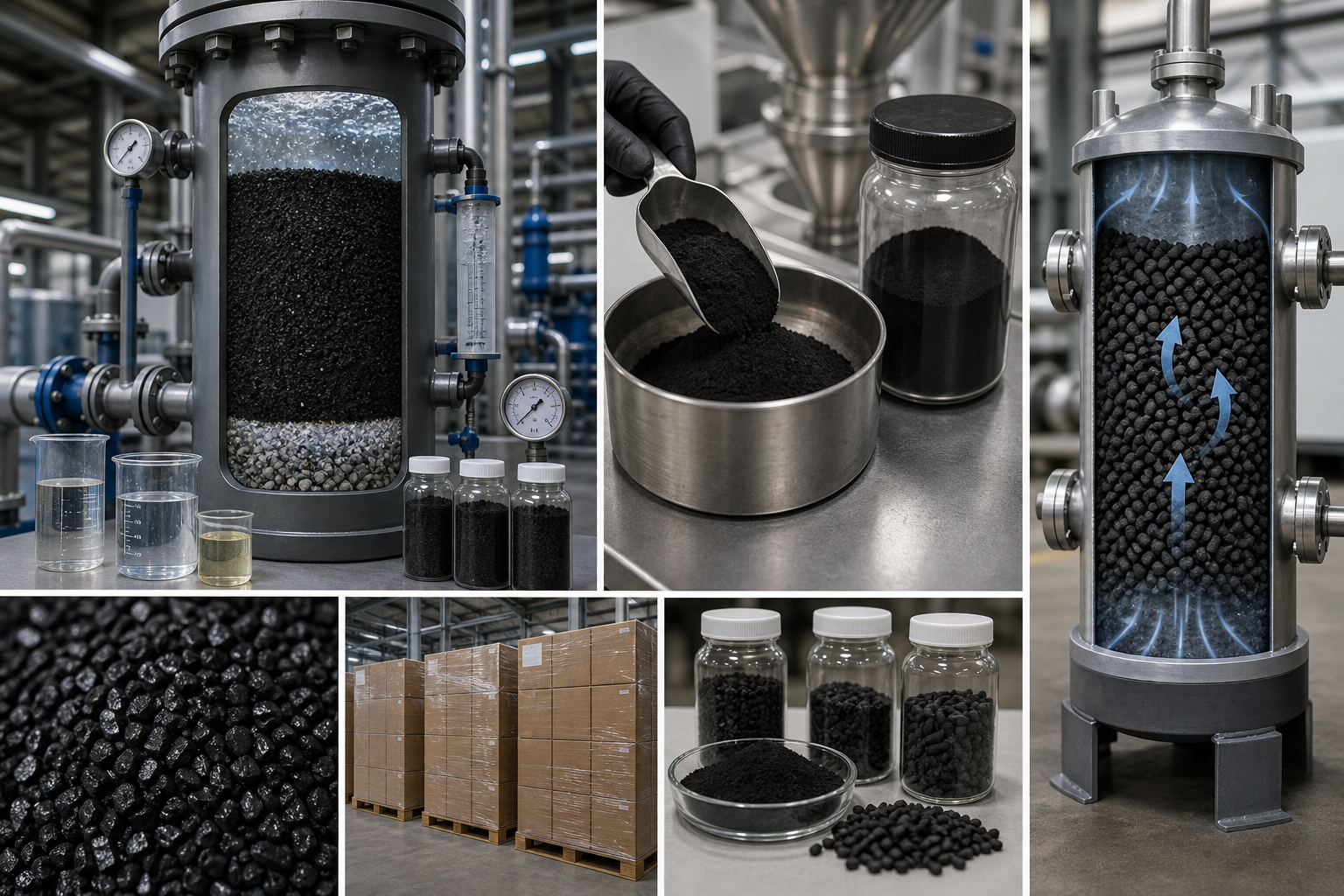
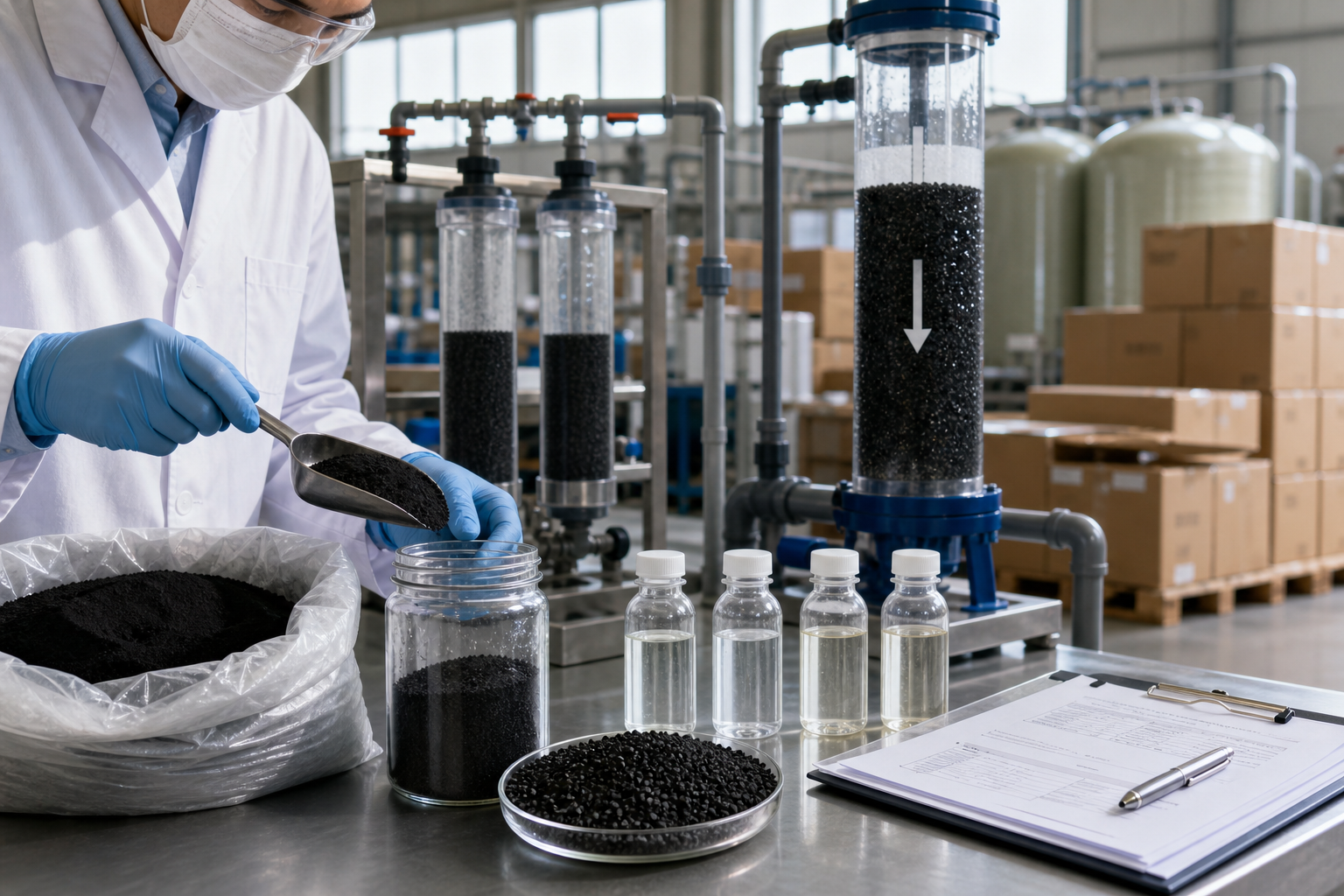
Water Source and Filter Configuration: Define the Job Before Choosing Carbon
An activated carbon water filter can mean a pitcher, an under-sink cartridge, a whole-house-style vessel, or an industrial polishing bed. For B2B sourcing, separate the finished device from the activated carbon media inside it. DXD Carbon / Dingxinda Co., Ltd. should be approached for media requirements rather than retail filter rankings or DIY potable-water claims.
Start with water source and configuration: municipal water polishing, tested well water, process water, OEM cartridge filling, refillable bed, or pressure vessel. Then collect flow rate, vessel dimensions, filter housing style, expected bed depth, backwashing or non-backwashing operation, and whether the media must fit an existing mesh size or cartridge design. This avoids a common procurement risk: buying a high-iodine-value carbon that does not fit the equipment, creates excess pressure drop, or sheds too many fines during commissioning.
If the project team is still comparing coconut shell GAC, coal based GAC, PAC, or pellets, use activated carbon format and specification basics as background, but keep the water-filter RFQ tied to the actual system.
Activated Carbon Water Filter Media: The Adsorption Job Inside the Housing
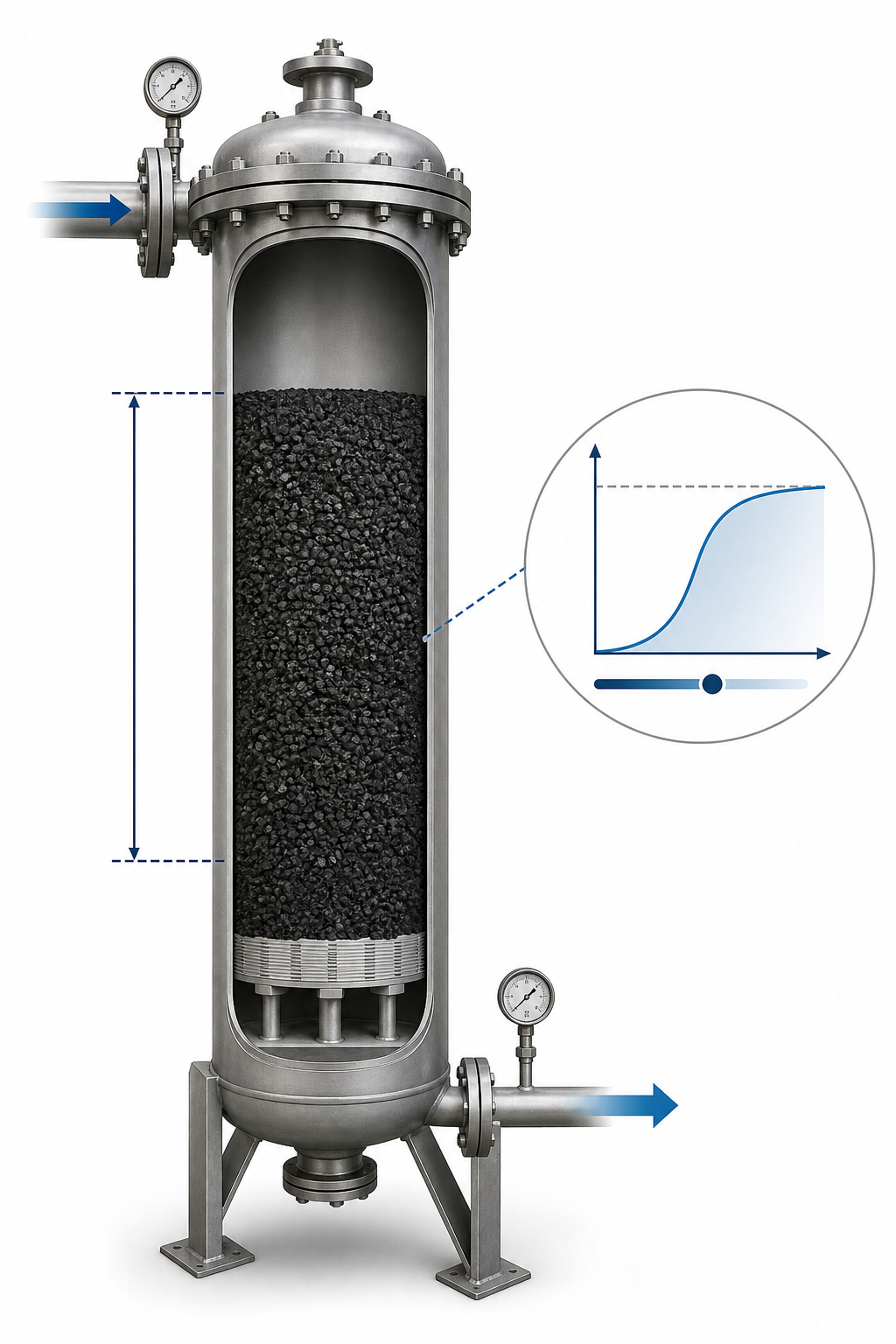
Activated carbon media works mainly through adsorption: dissolved compounds contact the carbon surface and are retained within pore structure when the chemistry and contact time are favorable. In GAC beds, bed depth, flow rate, and channeling risk affect whether water actually sees enough carbon surface. In carbon block formats, binder, pore path, and cartridge geometry also influence flow and pressure drop, so the media grade cannot be evaluated alone.
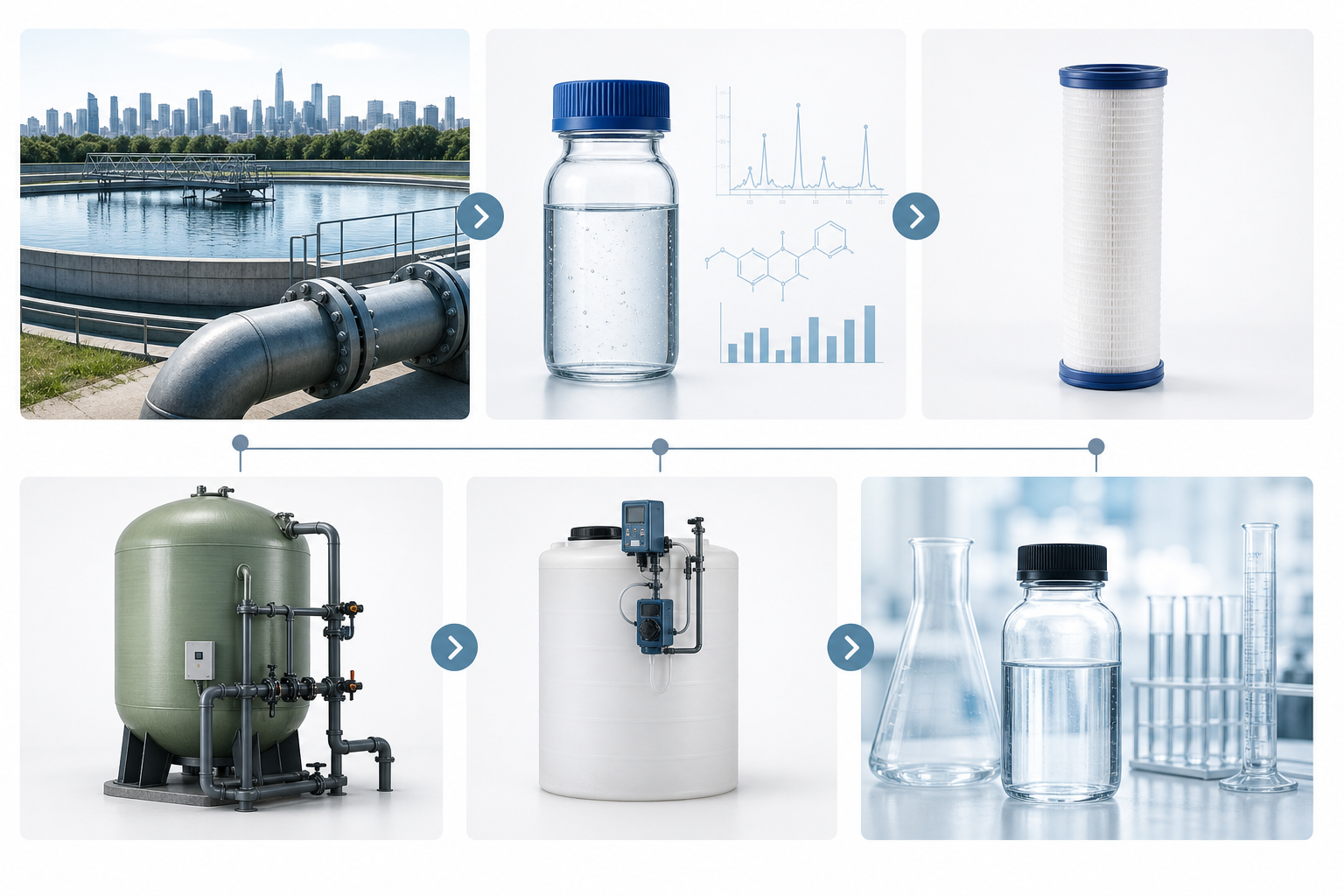
Activated carbon is commonly considered for taste and odor polishing, dechlorination, color reduction in some process streams, and certain organic compounds, but it should not be treated as a universal barrier. Water chemistry, pH, temperature, competing organics, upstream treatment, and testing all influence results. Microbial risk, hardness, nitrate, fluoride, high iron or manganese, and regulated contaminants may require pretreatment, disinfection, ion exchange, membrane treatment, or validated system review before carbon selection.
Breakthrough is the operating point where the target compound begins appearing downstream at an unacceptable level. Do not plan changeout by calendar days alone; use sampling, influent loading, historical run data, and application requirements. Taste or odor change can be a late warning in critical systems.
Water-Source-to-Media Fit Matrix for Activated Carbon Water Filters
Use this application-fit matrix before requesting a quote; it identifies what to confirm, not certified performance.
| Water source | Goal | Possible carbon form | Key specification fields | System-fit concern | Testing or changeout trigger | RFQ note |
|---|---|---|---|---|---|---|
| Municipal water polishing | Taste, odor, chlorine, some organic compounds | GAC or carbon block | Mesh size, iodine value, ash, moisture, hardness | EBCT and pressure drop must match cartridge or vessel | Chlorine, odor, or breakthrough sampling | Send flow rate, bed size, packing, SDS/TDS/COA needs |
| Well water after testing | Odor or organics after source testing | GAC or carbon block | Mesh size, dust/fines, ash, hardness | Pretreat high iron or manganese; microbial risk, hardness, nitrate, or fluoride may need other technology | Lab testing plus breakthrough trend | Send test report and pretreatment status |
| OEM cartridge media | Consistent fill and low fines | GAC or carbon block feed | Particle size distribution, dust/fines, moisture | Housing screens, vibration, and pressure drop | Incoming lot checks and COA review | Confirm cartridge volume and packing rules |
| Industrial/process water polishing | Color, odor, or organic load polishing | Coconut shell or coal based GAC | Iodine value, methylene blue, ash, mesh size | pH, temperature, EBCT, and loading variability | Pilot testing or breakthrough data | Send water matrix and target QC index |
| Treatment plant PAC dosing | Temporary taste, odor, color control | PAC | Methylene blue, fineness, ash, moisture | PAC dosing, mixing, separation, and dust control | Jar test, plant trial, residual target | Share dose range and powdered activated carbon dosing considerations |
| Refillable GAC vessel or whole-house-style bed | Dechlorination or polishing bed | GAC | Mesh size, hardness, dust/fines | Backwashing versus non-backwashing operation | Differential pressure and breakthrough testing | Send vessel dimensions and EBCT target |
EBCT, Bed Depth, Flow Rate, Pressure Drop, and Breakthrough Work Together
In a granular activated carbon vessel, media selection is not only an iodine value discussion. Flow rate and bed depth determine EBCT, while mesh size and particle size distribution influence pressure drop, backwash behavior, and dust/fines release. A finer GAC may improve contact in some cartridges, but it can also increase pressure drop or clog screens. A coarser grade may flow better but may shorten contact in compact housings. For equipment-specific detail, review granular activated carbon mesh and filter fit.
Carbon block is evaluated as a finished media format with its own geometry and binder system. PAC belongs in dosing, mixing, and separation workflows; it is not a simple replacement for loose GAC in a refillable cartridge. Pellet activated carbon should be reviewed only when the equipment calls for pellet diameter and compatible hydraulic behavior.
Procurement should request mesh size, iodine value, methylene blue value where relevant, ash, moisture, hardness, abrasion resistance, and dust/fines limits. CTC value may appear as a buyer-requested QC index, especially in vapor-phase comparisons, but it should not be the only water-treatment selection factor.
Specification-Ready Inquiry Details for Activated Carbon Water Filter Media
A responsible RFQ should let the supplier understand both the water problem and the equipment. Send product form, water source, contaminant class or treatment goal, filter configuration, flow rate, vessel or cartridge details, target EBCT if known, and whether the system is backwashing or non-backwashing. Add mesh size or pellet diameter, target QC index, iodine value, CTC if requested, ash, moisture, hardness, quantity, packing, destination, and requested documents.
- Potential media discussion: coconut shell granular activated carbon or coal based granular activated carbon for relevant GAC beds, cartridges, or polishing applications; powdered or wood based powdered activated carbon for dosing or process-liquid contexts.
- Documents to request or discuss: SDS, TDS, COA, lot traceability, packing details, and import/export paperwork; do not assume every document or certification applies without confirmation.
- Receiving risk to control: inconsistent packing, unspecified fines, changed mesh size, or a quote based only on price per kg can create installation and repeat-order problems.
For a DXD Carbon / Dingxinda Co., Ltd. water-filter media inquiry, send your application, media form, target indexes, quantity, packing, destination, and required documents. Ningxia factory, QC, packing, and export support topics can be discussed upon request without assuming a fixed grade, price, lead time, or guaranteed removal result.