Separate a Norit Activated Carbon Search Into Three Buying Paths
A search for Norit activated carbon usually falls into one of three buying paths. First, the project may require the original brand because an approved vendor list, customer specification, or regulated approval record names a NORIT grade. In that case, procurement should use official NORIT or authorized distributor channels and should not treat a non-branded carbon as acceptable without formal approval. Second, the buyer may only need an official data sheet to confirm product form, mesh size, pellet diameter, or QC indexes. Third, substitution may be allowed, and the branded reference becomes a starting point for alternative sourcing.
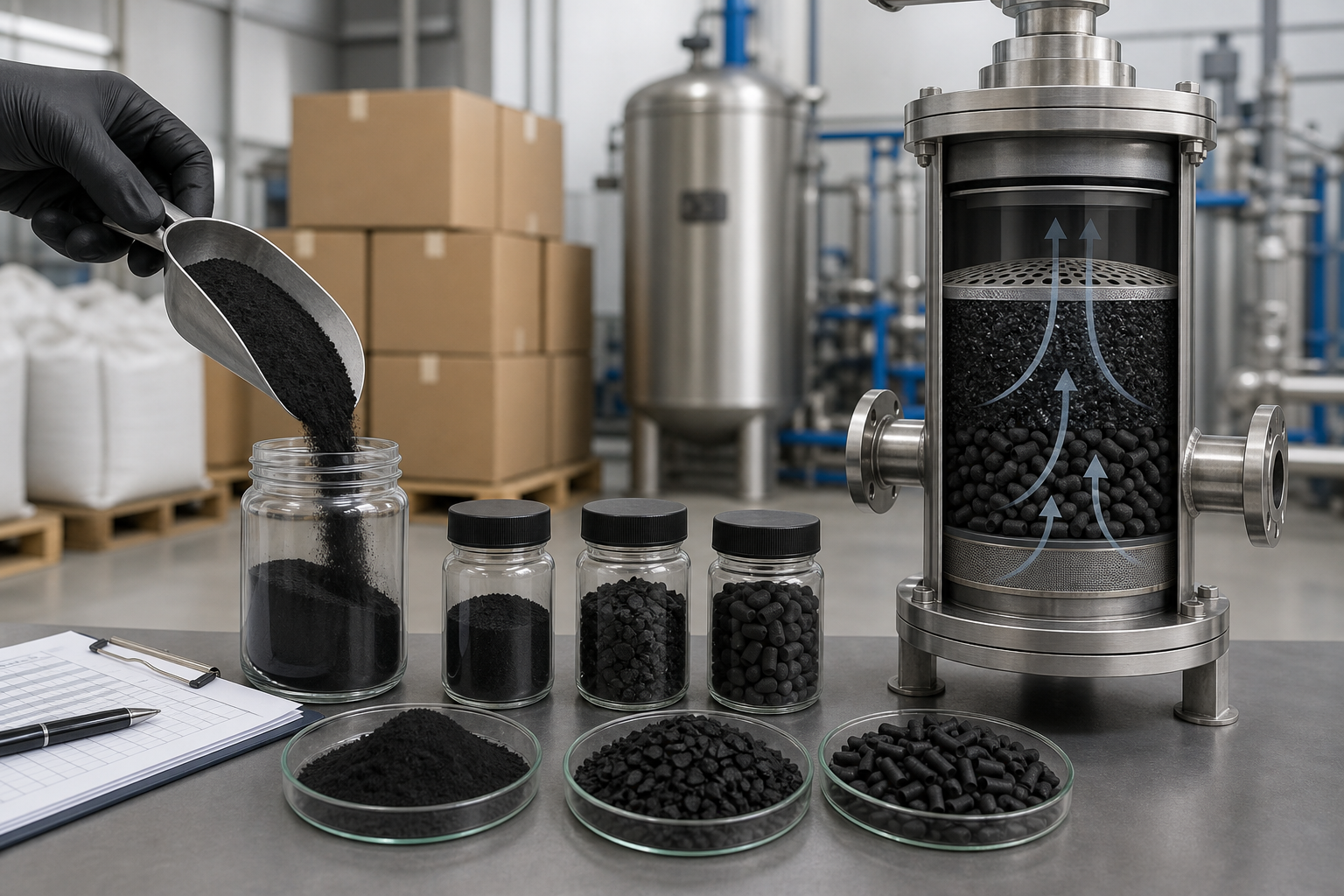
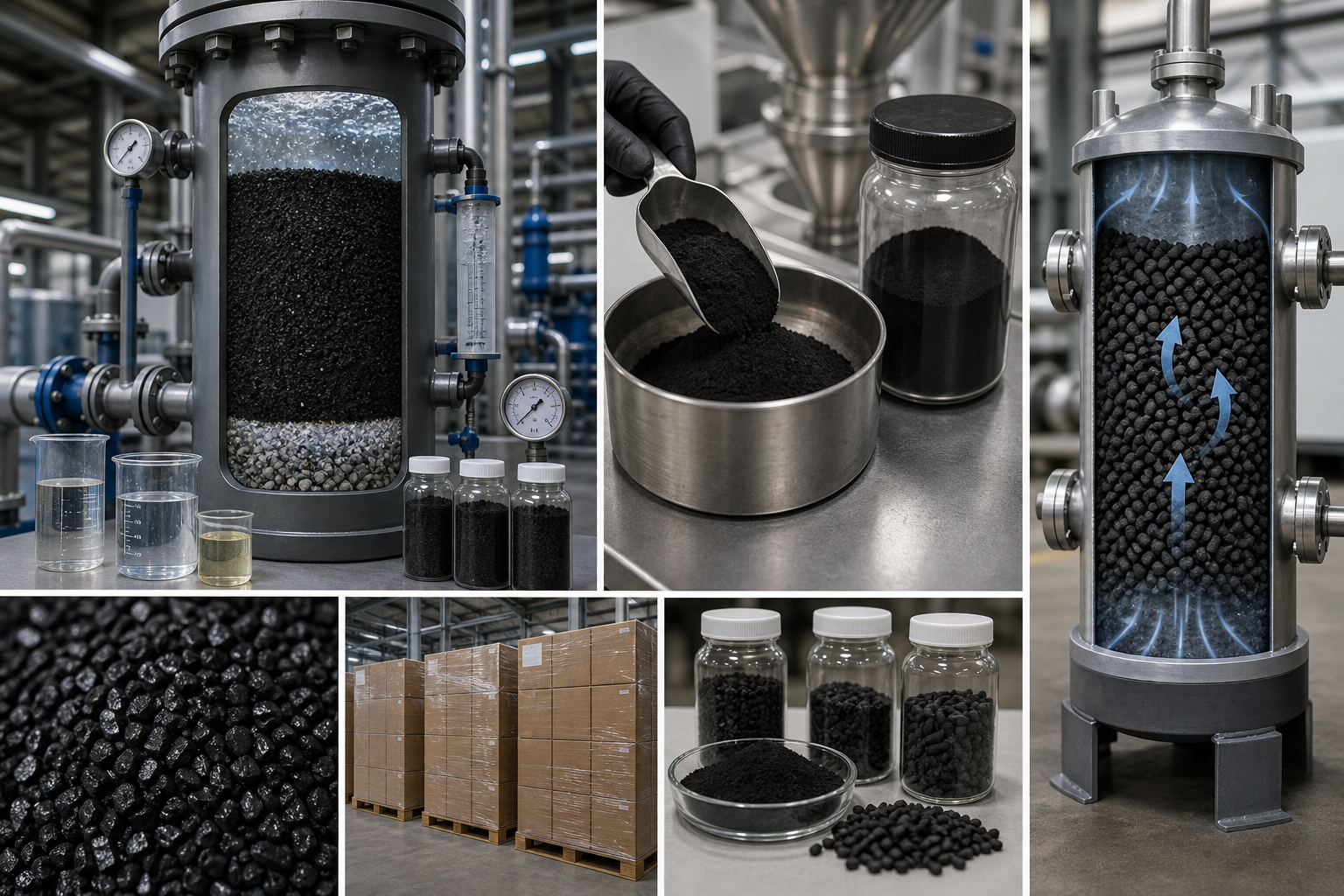
For the third path, compare the application requirement rather than the brand name alone. Activated carbon works mainly by surface and pore-based adsorption, not bulk absorption; performance depends on contaminant class, pore structure, contact time, and equipment fit. GAC may suit fixed-bed water vessels, PAC may suit liquid dosing, and pellet activated carbon often fits vapor or industrial gas beds. Coconut shell, coal based, and wood based carbons can all be relevant, but only after the current grade reference and operating conditions are understood. For broader supplier shortlisting, see this activated carbon supplier RFQ shortlisting guide.
Application-fit judgment: if a gas bed requires controlled pressure drop, fine PAC is usually unsuitable even if one adsorption index looks high.
Pull Specification Indexes From the Data Sheet Before Requesting Alternatives
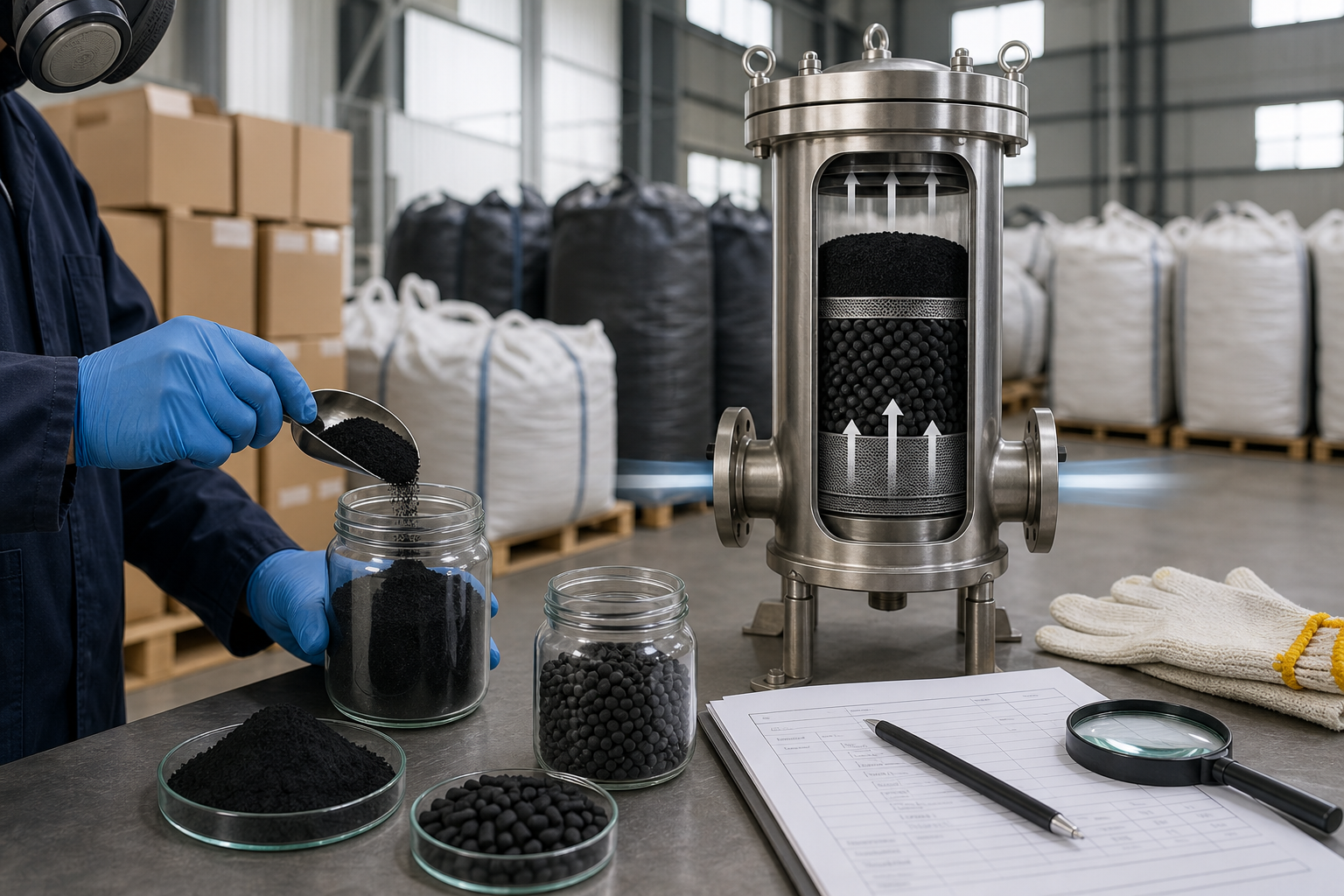
Before any alternative quote, copy the fields from the official data sheet or the buyer's legacy specification. Start with product form, raw material base, mesh size, pellet diameter, powder fineness, and dust or fines limits. These details affect loading, backwashing, cartridge retention, pressure drop, PAC dosing behavior, and worker handling. A quote that only says activated carbon is too vague for engineering review.

Then separate the adsorption indicators. Iodine value is often used as a general indicator for smaller-molecule adsorption capacity; CTC is commonly referenced for vapor-phase activity; methylene blue points more toward larger organics and color bodies. They are not interchangeable scores, and a higher number in one index does not prove equal removal rate, service life, or breakthrough behavior in a real system. Ash can affect process cleanliness, moisture affects handling and net usable material, and hardness matters where attrition or transport abrasion can create fines.
Documentation fields also belong in the comparison file: SDS, TDS, COA, lot traceability, packing details, and any import or export paperwork required by the destination. If the data sheet is incomplete, ask for clarification before requesting a substitute. For background on formats and sourcing language, use DXD's activated carbon fundamentals for B2B filtration.
Comparison Matrix for Converting a Norit Reference Grade Into RFQ Fields
Use this matrix to translate a NORIT reference into RFQ language. It is not a replacement chart; it shows what must be supplied before a non-branded industrial activated carbon can be evaluated.
| Buyer-provided reference grade | Application | Product form and size | Key adsorption index | Supporting QC indexes | Operating or equipment factor | Documents, quantity, packing, destination | Decision status |
|---|---|---|---|---|---|---|---|
| NORIT grade name or official TDS | Water treatment | GAC; coconut shell or coal based option; match mesh size | Iodine value | Ash, moisture, hardness, dust or fines | EBCT, bed depth, flow, pressure drop, breakthrough | SDS, TDS, COA, lot traceability; confirm quantity, packing, destination | Alternative can be evaluated if substitution is permitted; pilot test for critical water |
| Same reference plus gas stream notes | Air purification or industrial gas treatment | Pellet carbon; match pellet diameter | CTC | Moisture, ash, hardness, fines | VOC or odor class, humidity, temperature, airflow, bed depth | Same document and logistics fields | Pilot or field validation required |
| Reference powder grade | Food and beverage decolorization | PAC, often wood based; match powder fineness | Methylene blue | Ash, moisture, pH if specified, dust | PAC dosing, mixing, contact time, filtration | Food or process documents if required, packing and lot data | Alternative can be evaluated only with process approval |
| Reference carbon in leach circuit | Gold recovery | Granular carbon; match particle size | Buyer-specified adsorption target | Hardness, ash, moisture, fines | Attrition, screening, regeneration plan | COA, lot traceability, packing, destination | Lab or plant trial normally needed |
| Named grade in controlled method | Regulated, lab, medicinal, or approved-vendor use | Exact form and grade requirements | Indexes from official data sheet | All controlled fields | Method, approval list, audit record | Required documents before quote | Original brand required or not enough information to quote |
When several fields are blank, ask engineering for the current media label, purchase specification, or operating data before comparing prices.
Application-Specific Checks Before Treating an Alternative as Viable
The same branded carbon reference can lead to different alternative checks depending on the process. In water treatment, the first questions are source water, contaminant class, pH, flow rate, EBCT, bed depth, vessel screen fit, pressure drop, and expected breakthrough monitoring. A coconut shell GAC or coal based GAC can only be screened responsibly when mesh size and hydraulic limits match the system.
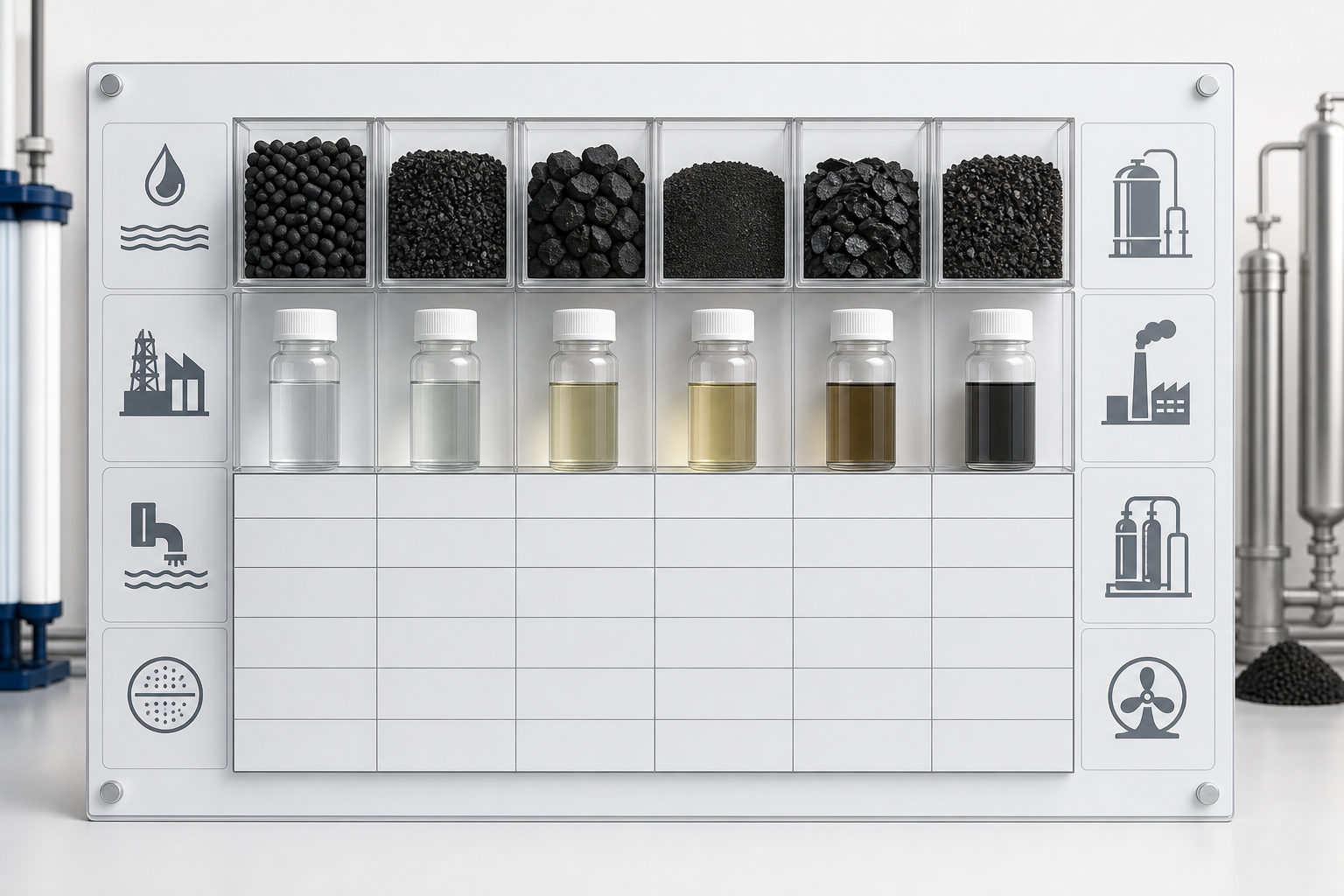
For air purification and industrial gas treatment, compare VOC or odor class, humidity, temperature, airflow, bed depth, CTC, pellet diameter, and dust generation. A pellet activated carbon that keeps pressure drop within blower limits may be a better application fit than a granular or powdered media. For food and beverage decolorization, evaluation moves toward PAC dosing, mixing energy, contact time, methylene blue, ash, separation behavior, and whether the finished liquid can be filtered without carbon carryover. For gold recovery, hardness, particle size distribution, ash, and resistance to attrition become central because fines can leave the circuit or reduce adsorption contact.
Procurement risk warning: do not approve a lower-cost quote because it matches only iodine value or CTC. Removal rate, service life, and breakthrough depend on concentration, competing contaminants, operating temperature, humidity, flow profile, and validation data. A trial or buyer validation is often the safest step before changing media.
Send the Current Grade Reference and Operating Requirements for Review
Before switching media, align procurement, QA, and engineering on the approval path. Confirm whether samples are allowed, who signs off pilot testing, and which documents must accompany the lot: SDS, TDS, COA, lot traceability, packing details, and destination-specific import or export paperwork may all be requested. Document availability should be confirmed for the specific inquiry rather than assumed. For repeat orders, lock the product code, mesh size or pellet diameter, QC ranges, bag or bulk packing format, and receiving checks; DXD's bulk activated carbon packing and repeat-order checks may help procurement teams avoid drift between shipments.
DXD Carbon / Dingxinda Co., Ltd. can discuss industrial activated carbon requirements based on buyer-provided specifications, including coconut shell granular activated carbon, coal based granular activated carbon, wood based powdered activated carbon, pellet activated carbon, decolorization PAC, and activated carbon for gold recovery. Ningxia factory context, QC discussion, packing support, and export support can be reviewed upon inquiry without assuming a fixed document set, stock level, lead time, or performance result.
To start a useful review, send the current NORIT grade reference or official data sheet if available, application, product form, mesh size or pellet diameter, target iodine value, CTC, methylene blue, ash, moisture, hardness, quantity, packing, destination, and required documents. If original NORIT product is mandatory, use official or authorized channels; if substitution is allowed, DXD can discuss whether an industrial alternative may be evaluated.