Translate Powder Activated Carbon Into a PAC Purchase Specification
When a plant team asks for powder activated carbon, suppliers will usually translate the request into powdered activated carbon, PAC, or activated carbon powder. The difference is not just wording. It tells the supplier that the product form is a fine carbon intended for contact treatment, slurry preparation, or controlled dry addition, not a granular fixed-bed media or consumer charcoal powder.
Before asking for a quotation, confirm the application stream, target issue, and whether the process can remove the powder after use. A PAC inquiry should name the product form first, then mesh size or particle size range, dosage basis if known, and any target QC index such as iodine value, methylene blue, ash, moisture, or pH. If the request is still exploratory, say so; a supplier should not assume that one high-index PAC will fit every contaminant or separation step.
For deeper dosing mechanics, use powdered activated carbon dosing considerations as background, then keep the purchase discussion tied to equipment fit, packing, destination, and required documents.
Powder Activated Carbon Process-Fit Matrix
Use this matrix before requesting PAC; if separation is missing, powder may be the wrong form even when adsorption looks suitable.
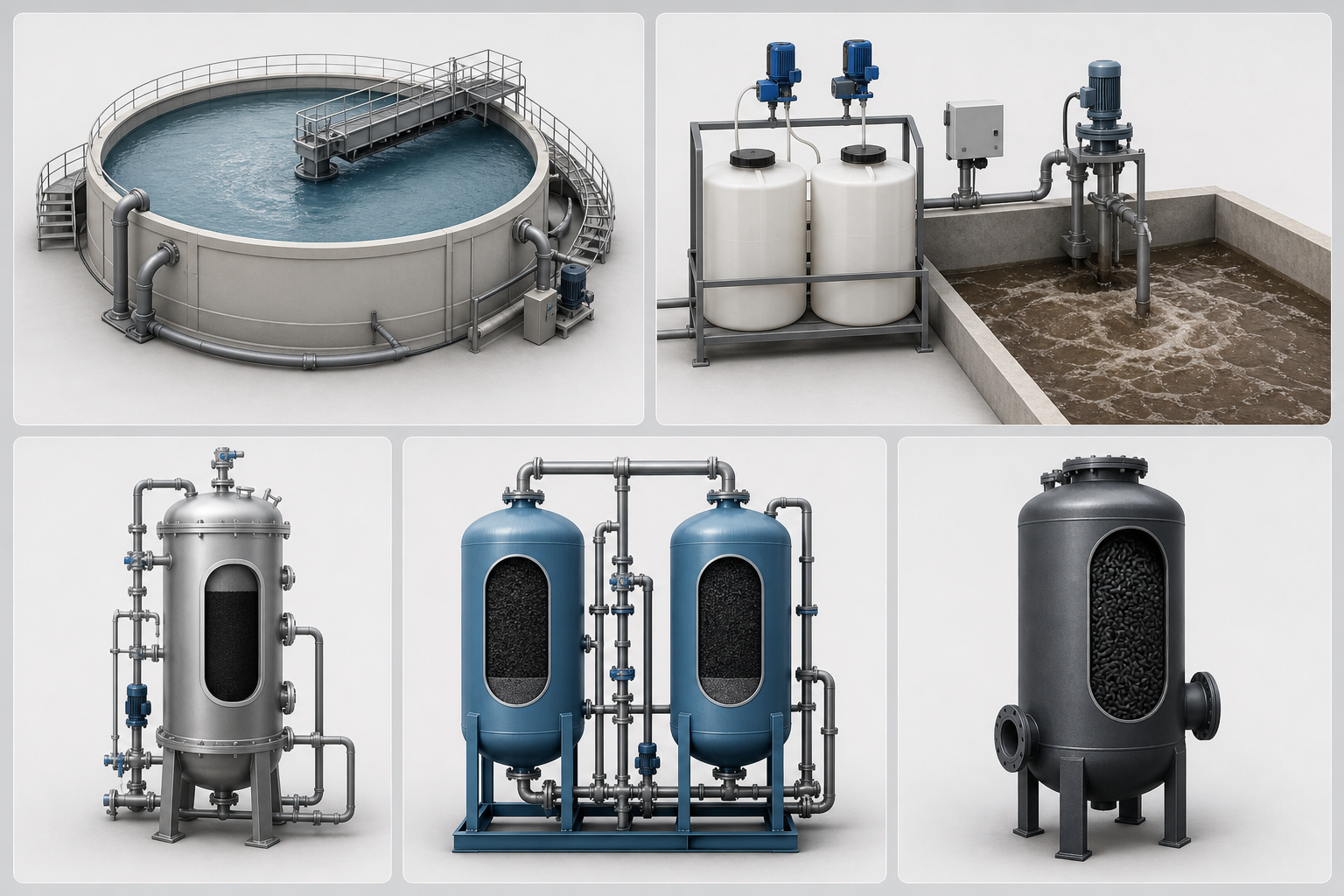
| Application | PAC fit | Use mode | Downstream separation | Critical specs | Handling risk | Equipment warning and decision |
|---|---|---|---|---|---|---|
| Process water polishing | Good if contact tank exists | Slurry dosing; control contact time | Settling or filtration | Mesh size, iodine value, moisture, pH | Dust during make-down | Request PAC; validate dose |
| Municipal or industrial wastewater contact dosing | Test-first because load varies | Dry addition or slurry | Clarifier or filter press | Particle size distribution, ash, moisture | Sludge volume, black carryover | Test PAC first |
| Food & beverage or chemical decolorization | Strong candidate after trials | Batch slurry dosing | Filtration or filter press | Methylene blue, ash, pH; wood based PAC | Filter blinding risk | Consider wood based PAC |
| Temporary odor or color upset control | Useful short-term | Controlled emergency dosing | Existing settling or filtration | Iodine value, mesh size, contact time | Overdosing and sludge | Use trial dose first |
| Air or gas treatment exceptions | Usually weak fit | Special injection only | Dust collector needed | CTC, particle size, moisture | Airborne dust | Consider pellet activated carbon; confirm pellet diameter and pressure drop |
| Fixed-bed or cartridge systems | Poor fit | Not recommended | No powder separation | GAC mesh is more relevant | Migration, channeling, pressure drop | Switch to GAC fixed beds |
Validate dosage, contact time, and performance by jar testing, pilot testing, or process-specific trials. Do not approve bulk purchase from iodine value alone.
Wrong-Form Risks Before You Choose Fine Powder
Fine powder is valuable when the plant can wet it, mix it, contact it with the liquid, and separate it again. It becomes a procurement risk when buyers specify PAC for equipment designed around retained media. Fixed beds, many cartridges, canisters, and open airflow trays are usually not built to hold powder; fines can migrate, blind downstream filters, or create excessive pressure drop.
Check the separation train before approving an order. If there is no clarifier, settling tank, filter press, membrane guard, or disposable filtration step after dosing, PAC may leave residual suspended solids or increase sludge handling. If the target process cannot tolerate black carryover, dust release, or variable spent carbon solids, do not treat powder as a simple substitute for GAC.
A lower unit price can be misleading if the form causes cleanup, filter blinding, production interruption, or repacking work. For fixed-bed vessels, cartridges, and lower-dust handling, compare granular activated carbon equipment-fit considerations before switching forms. The application-fit judgment is straightforward: PAC fits contact dosing with removal; GAC or pellet media fit retained beds.
Mesh Size Links Slurry Preparation, Separation, and Packing
Mesh size is not only a lab description. In PAC service, particle size distribution affects wetting speed, slurry stability, adsorption contact, dust generation, settling behavior, and filtration load. Finer activated carbon powder may contact dissolved organics quickly, but it can also stay suspended too long, pass through loose filters, or blind fine filters. A coarser powder may handle more cleanly but need adequate mixing and contact time.
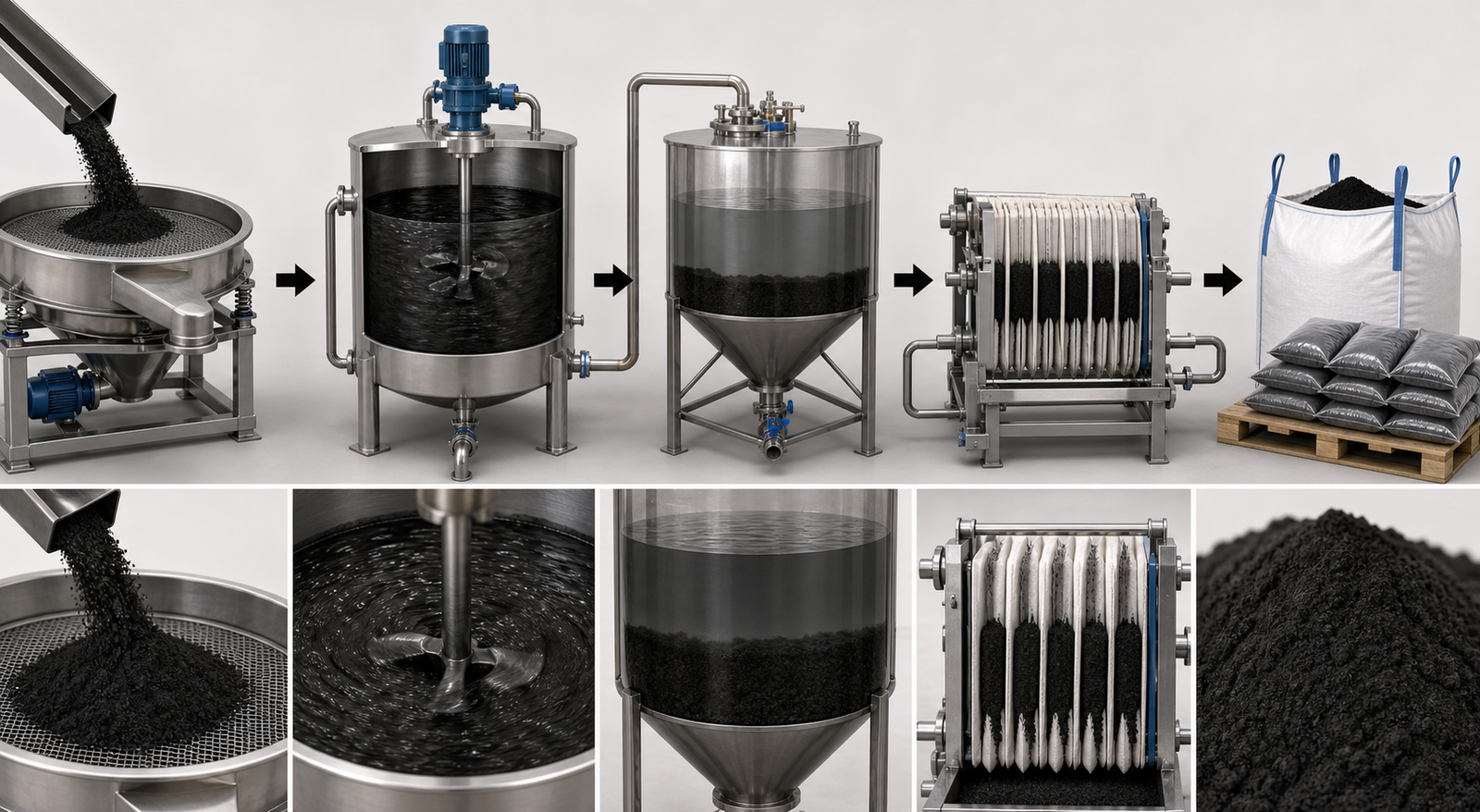
Connect the requested mesh to the make-down system. Will operators add dry PAC directly, prepare a slurry, or meter from a bulk bag? Is the process using a clarifier, plate filter, filter press, or cartridge guard? These answers influence whether bag packing, big bag packing, liners, and dry storage controls are more important than chasing the finest powder.
Feedstock and QC indices are screening tools. Wood based powdered activated carbon may be evaluated for liquid-phase adsorption and decolorization trials; coal based PAC and coconut shell based PAC may be screened when pore structure, ash, or hardness-related handling preferences differ. Iodine value, methylene blue, ash, moisture, and pH help compare grades, but none alone guarantees removal of a specific color body, odor compound, or contaminant.
Turn Application Details Into a Powder Activated Carbon Inquiry
After the process-fit review, convert the decision into supplier-ready fields. State whether you need PAC for tank dosing, GAC for a fixed bed or cartridge, or pellet activated carbon for gas-phase airflow where pellet diameter, bed depth, and pressure drop matter. If replacing an existing grade, share the current mesh size, feedstock, target QC index, and any operating issue such as dust, slow settling, or breakthrough.
- Application stream and target issue: process water, wastewater, decolorization, odor, dissolved organics, or upset control.
- Media specification: product form, mesh size or alternative pellet diameter, iodine value, methylene blue if relevant, ash, moisture, pH, and packing preference.
- Process layout: PAC dosing point, mixing/contact time, downstream separation, spent carbon or sludge handling, and quantity.
- Commercial details: destination, bag or big-bag packing, and requested SDS, TDS, COA, lot traceability, packing details, or import/export paperwork to confirm for the specific order.
For broader receiving and packaging controls, see this bulk activated carbon packaging and document guide. To discuss a DXD Carbon / Dingxinda Co., Ltd. PAC inquiry, send the application, media form, target indices, quantity, packing, destination, and required documents. DXD can review QC and packing requirements, including Ningxia factory or export-support questions, without assuming unverified performance results.