What Novolac-Derived Activated Carbon Means in Research Papers
Novolac-derived activated carbon usually means porous carbon made from novolac resin, a phenol-formaldehyde precursor. In papers, related wording such as novolac-type phenol-based activated carbon or carbon beads often appears when the resin is shaped before carbonization. That naming points to the starting material and morphology; it is not the same as a standard commercial adsorbent grade.
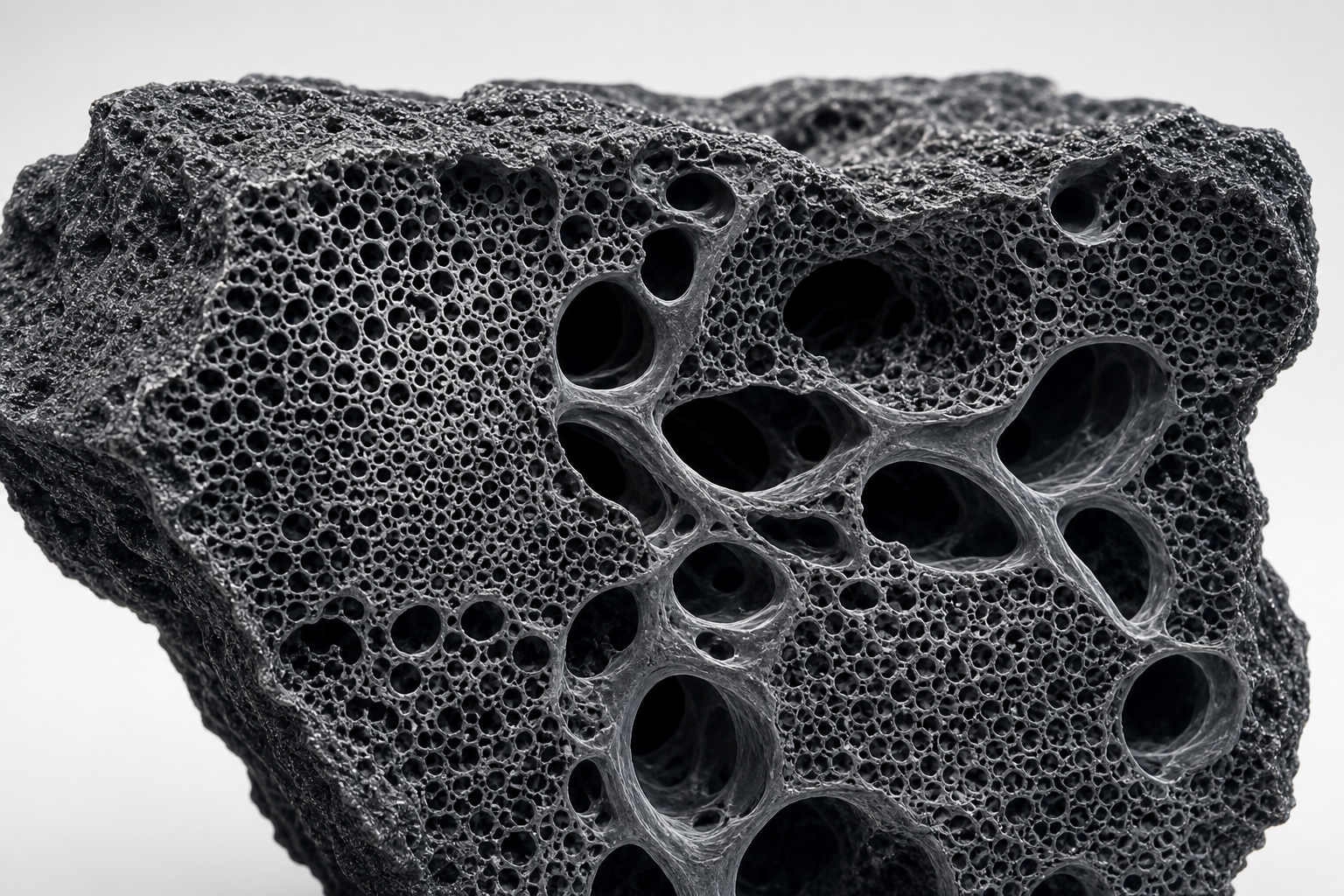
The preparation route is normally described in concept-level terms. Carbonization converts the resin into a carbon framework. Physical activation or chemical activation then develops pores. Some research uses a sacrificial template or template-assisted pore control to influence micropores, mesopores, and overall pore structure. These methods help explain why academic materials can be tightly controlled, but they should not be read as a DXD stock claim or a normal factory specification.
For procurement, precursor is only one field. A buyer still has to define form, particle size, and application. If the goal is conventional adsorption, compare the terminology with activated carbon fundamentals for B2B filtration buyers before deciding whether novolac origin is truly mandatory.
Why Research Metrics Do Not Translate Directly into Adsorption Specifications
Novolac-derived carbon papers often report BET surface area, pore size distribution, pore volume, micropores, mesopores, and hierarchical pore structure. These are useful descriptors, but they are not complete purchasing specifications. A small gas molecule, a dissolved organic, a color body, and a metal recovery circuit may each require different pore access, contact time, and physical handling behavior.
Electrode-focused research may also discuss surface functional groups, nitrogen-containing carbon, EDLC behavior, and specific capacitance. Those terms belong to electrochemical testing. They should not be treated as guaranteed odor removal, VOC capture, water treatment performance, decolorization performance, or gold recovery performance.
Commercial activated carbon evaluation normally shifts to iodine value, CTC, methylene blue value, ash, moisture, hardness, mesh size, pellet diameter, dust level, and sometimes application testing. Procurement risk warning: selecting media because a paper reports attractive research metrics, while ignoring packing, hardness, pressure drop, or dosing behavior, can result in material that cannot be handled, installed, regenerated, separated, or changed out correctly in the buyer’s process.
Comparison Matrix for Novolac-Derived Research Carbon and Commercial Activated Carbon Forms
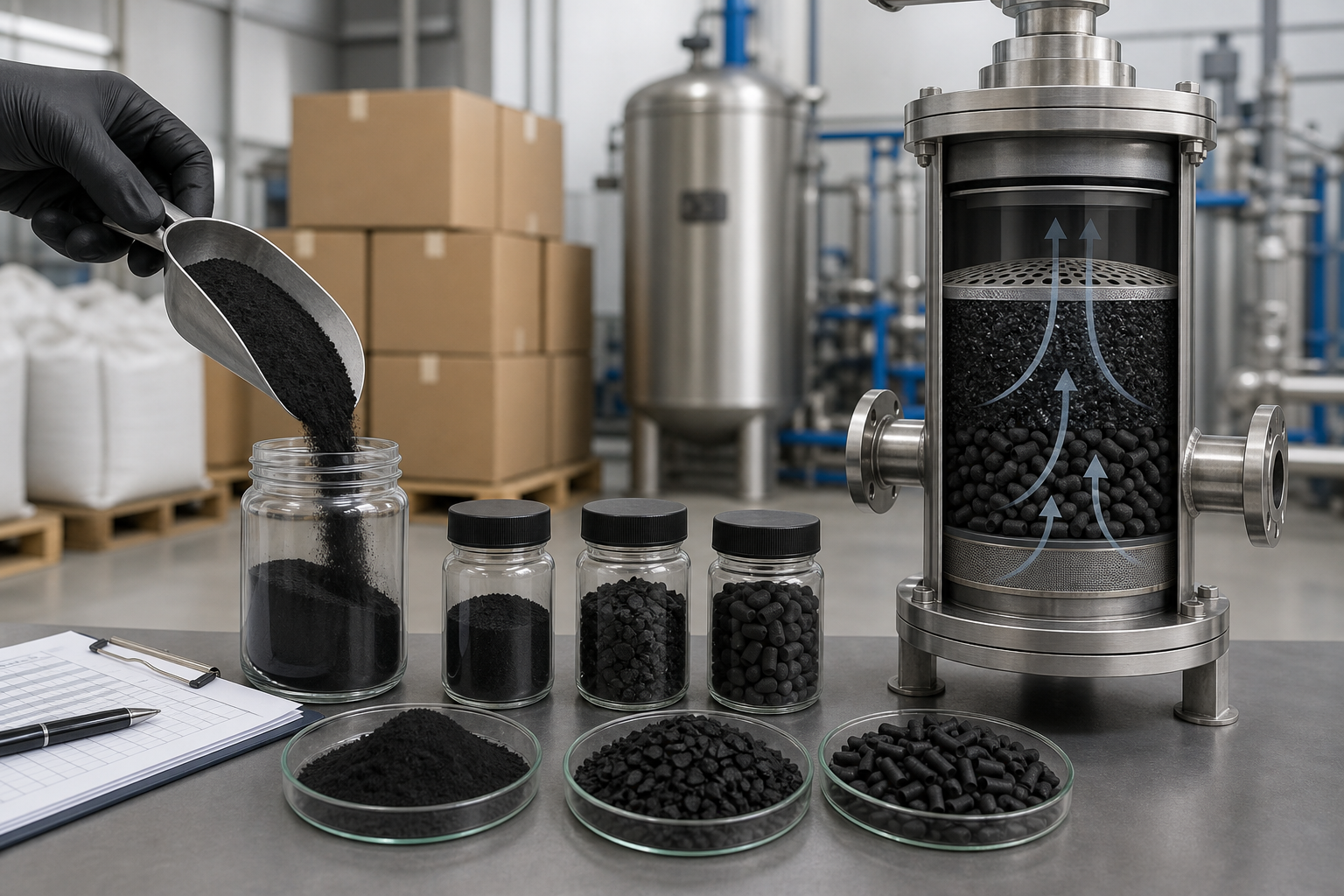
Use this matrix as a translation tool, not a ranking. The correct line depends on application, equipment, and test method. For deeper media-form checks, see granular activated carbon mesh and filter selection and powdered activated carbon dosing and specifications.
| Precursor or origin | Common form | Context | Particle-size field | Metrics | Equipment-fit concern | RFQ decision note |
|---|---|---|---|---|---|---|
| Novolac resin | bead, porous carbon | research, electrode | bead size, morphology | BET surface area, pore size distribution | scale, test method | ask exact specs; review feasibility |
| Coconut shell | granular | water, air adsorption | mesh size | iodine value, ash, hardness | fines, pressure drop | spec conventional GAC alternative |
| Coal based | granular | water, industrial filtration | mesh size | iodine value, CTC, ash | bed flow, backwash | confirm system fit |
| Wood based | powder | liquid treatment | PAC fineness | methylene blue value, moisture | dust, wetting, separation | check dosing setup |
| Decolorization carbon | powder | food and beverage | powder fineness | methylene blue value, ash | PAC dosing, packing | test against color body |
| Coal or blend | pellet | air, gas | pellet diameter | CTC, hardness, moisture | airflow, pressure drop | use for gas beds |
| Often coconut shell | granular | gold recovery | mesh size | hardness, ash, moisture | attrition, screen retention | review process compatibility |
When Conventional Activated Carbon Becomes the Practical Sourcing Path
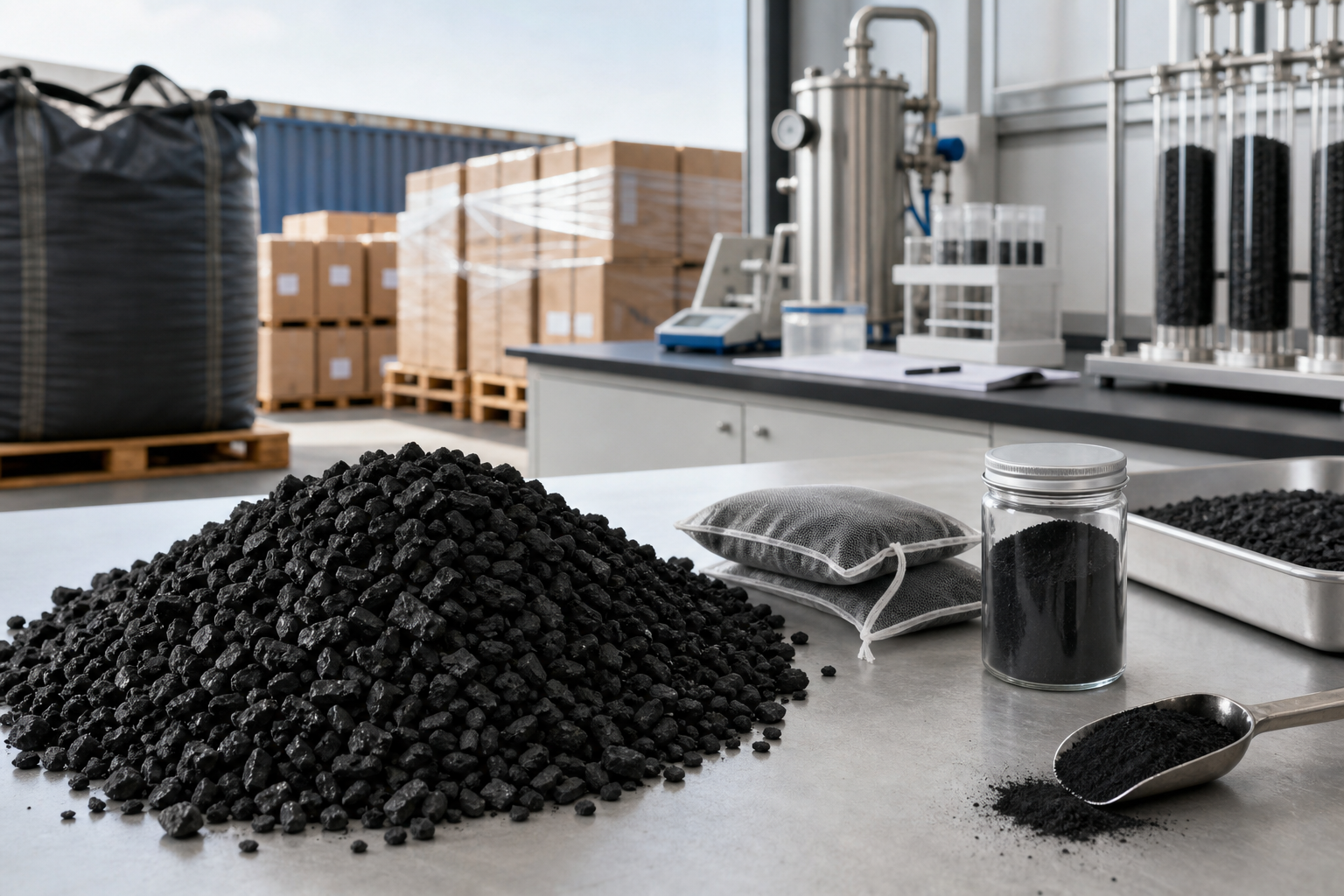
If the real operating problem is adsorption, a conventional commercial activated carbon may be easier to specify, test, and reorder than an exact novolac-derived precursor. Application-fit judgment matters: a water treatment vessel, an air purification bed, a decolorization batch, and a gold recovery circuit do not need the same pore structure or physical form.
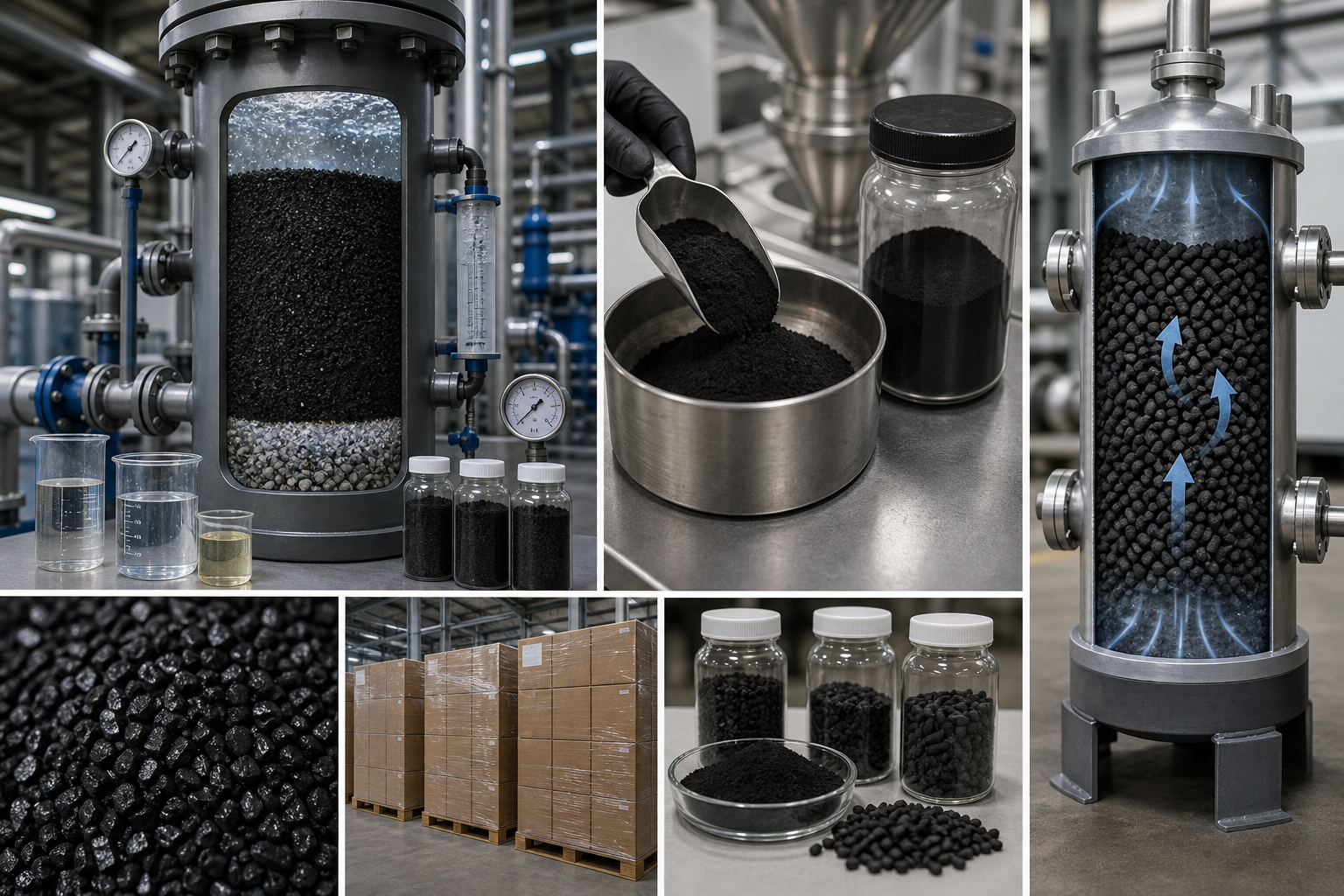
For water treatment, define contaminant class, pH, flow rate, vessel or cartridge fit, EBCT, breakthrough expectation, and changeout method before choosing a GAC mesh size. For air purification or industrial gas treatment, the VOC or odor class, humidity, temperature, airflow, bed depth, pellet diameter, and pressure drop may control the media choice more than the precursor name. For food and beverage decolorization, PAC dosing, wetting, separation, color body target, ash, and moisture are practical review points. For gold recovery, hardness, ash, particle retention, and process compatibility become critical.
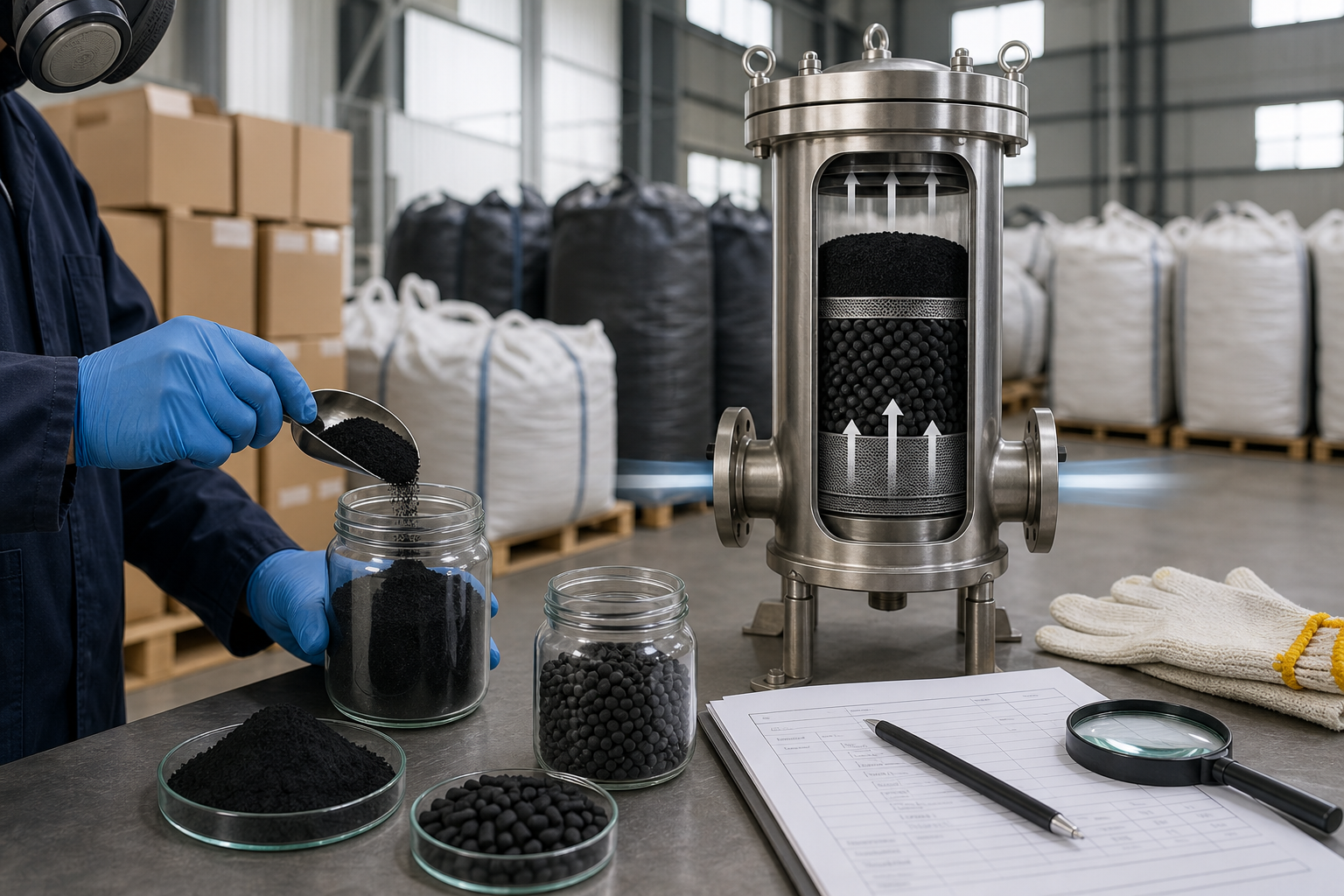
The main risk is over-specifying a research label while under-specifying the process. Beads may not fit existing vessels, powder can create dust and separation burdens, and pellets can solve airflow problems while being unsuitable for liquid dosing. Ask for technical review or testing when chemistry, solvent, temperature, or contaminant profile is uncertain.
RFQ Translation for Buyers Asking About Novolac-Derived Activated Carbon
Before contacting a supplier, separate mandatory research requirements from adsorption requirements. If novolac-derived activated carbon is mandatory, send target morphology, BET surface area, pore size distribution, surface chemistry or nitrogen doping needs, intended test method, and sample quantity. This supports feasibility review; it does not imply standard availability.
- Application route: water treatment, air purification, industrial gas treatment, food and beverage decolorization, or gold recovery.
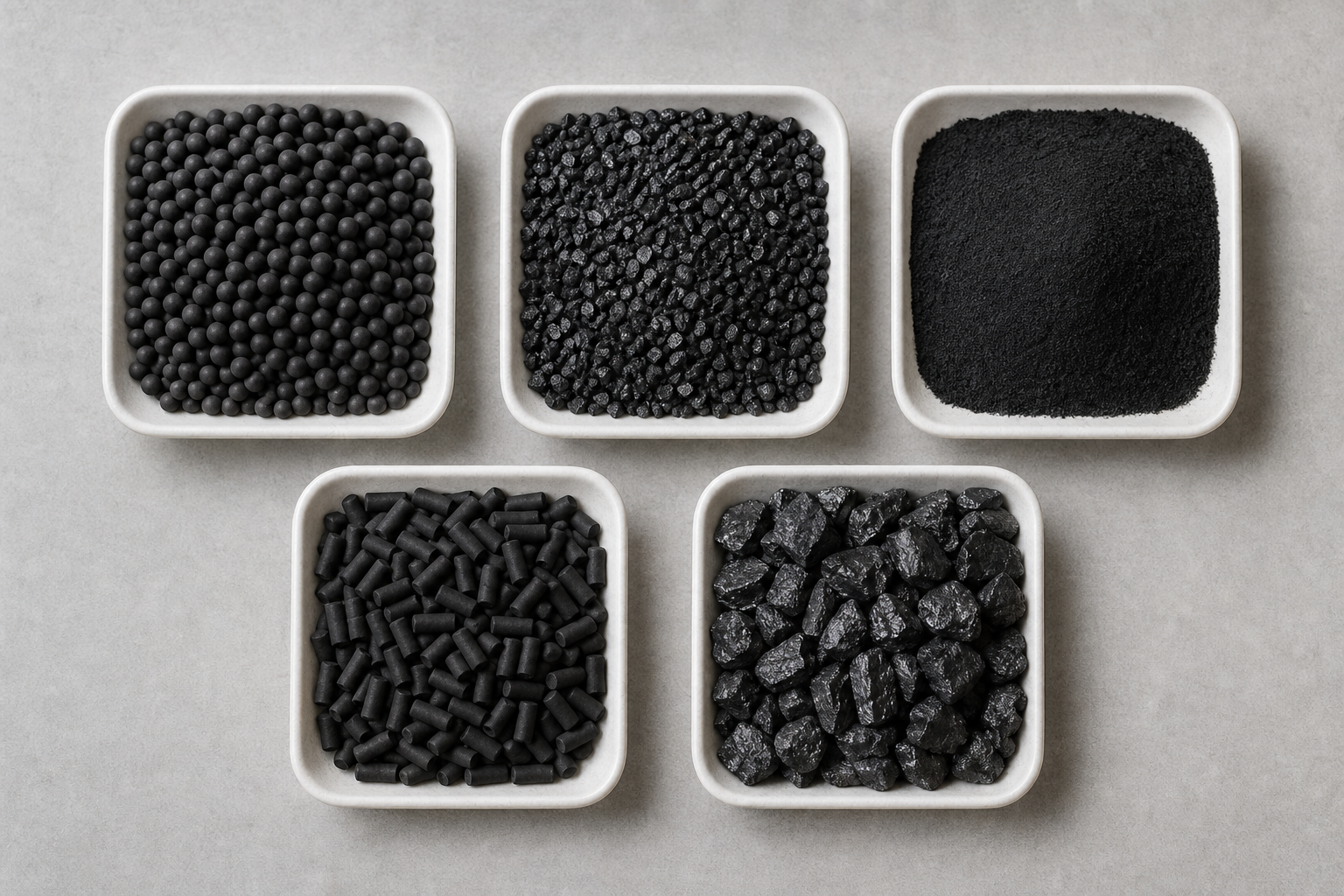
- Media form: bead, GAC, PAC, or pellet; include mesh size, PAC fineness, or pellet diameter.
- Target QC index: iodine value, CTC, methylene blue value, ash, moisture, or hardness.
- Commercial fields: quantity, packing, destination, Incoterms if used, and requested SDS, TDS, COA, lot traceability, packing details, or import/export paperwork.
DXD Carbon / Dingxinda Co., Ltd. can discuss practical activated carbon product families for B2B inquiries, with Ningxia factory context, QC support, packing support, and export support items reviewed upon request. Send your application, media form, target index, quantity, packing, destination, and required documents so the inquiry can be clarified without assumptions about price, inventory, lead time, or guaranteed suitability.