Activated Carbon in an RFQ: What the Term Means for Filtration Buyers
In a procurement conversation, activated carbon is not just a black filtration material. It is a media category that needs context before a supplier can recommend a suitable product. The term is often used interchangeably with activated charcoal, but buyers should treat both phrases as starting points rather than complete specifications.
The commercial value of activated carbon comes from its porous structure and high surface area. In practical terms, this means the media provides internal surfaces where certain substances can be adsorbed as water, air, gas, or process streams pass through. That does not mean every activated carbon product performs the same way in every system.
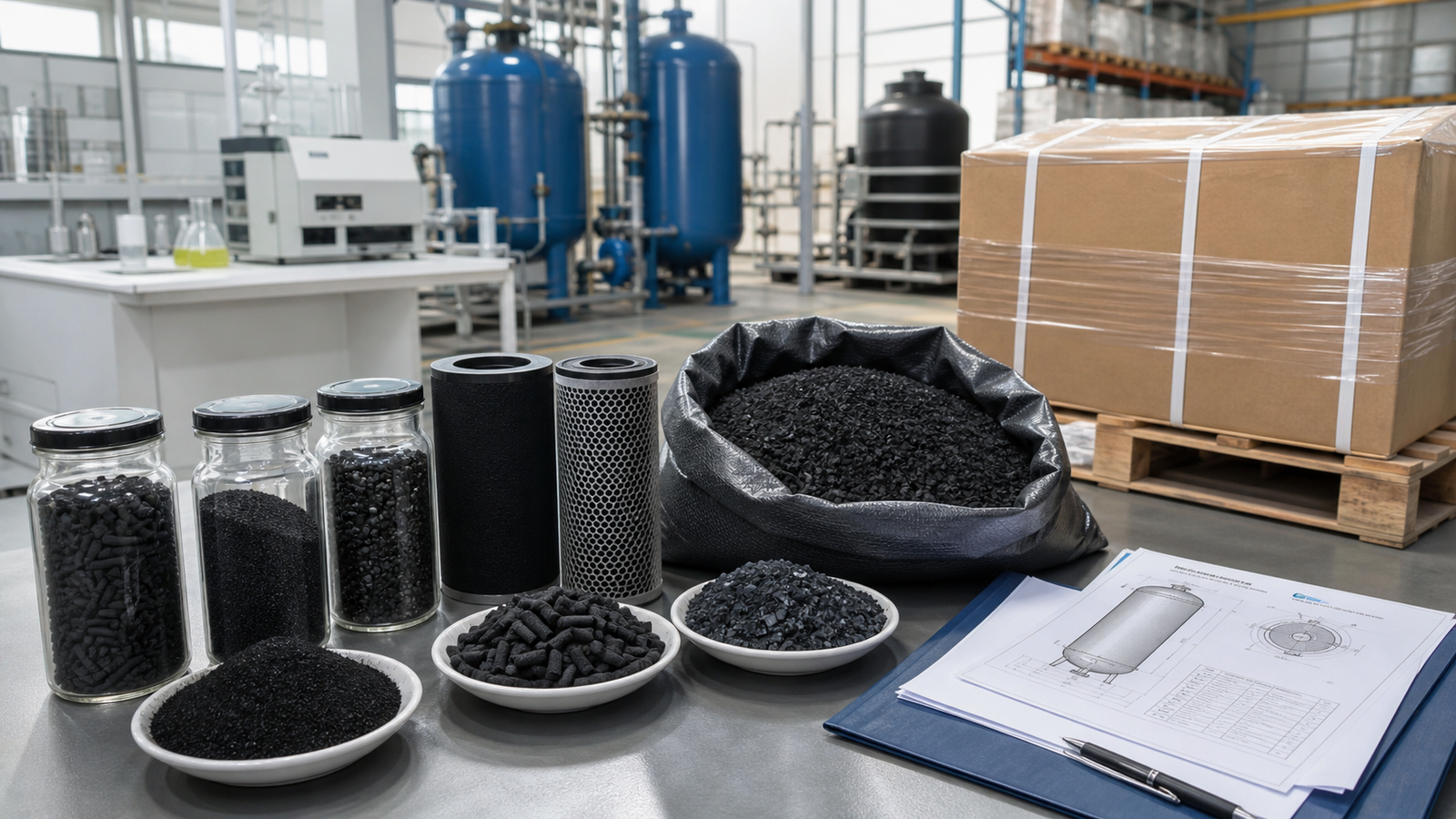
When activated carbon appears in an RFQ, buyers should clarify the application, stream type, system design, target treatment goal, media form, packaging expectation, and documentation needs. Without that context, quotes may compare only material names or unit prices, not fit for the actual filtration task.
Activated Carbon Application-to-Media Map: Water, Air, Odor, Aquarium, and Industrial Pathways
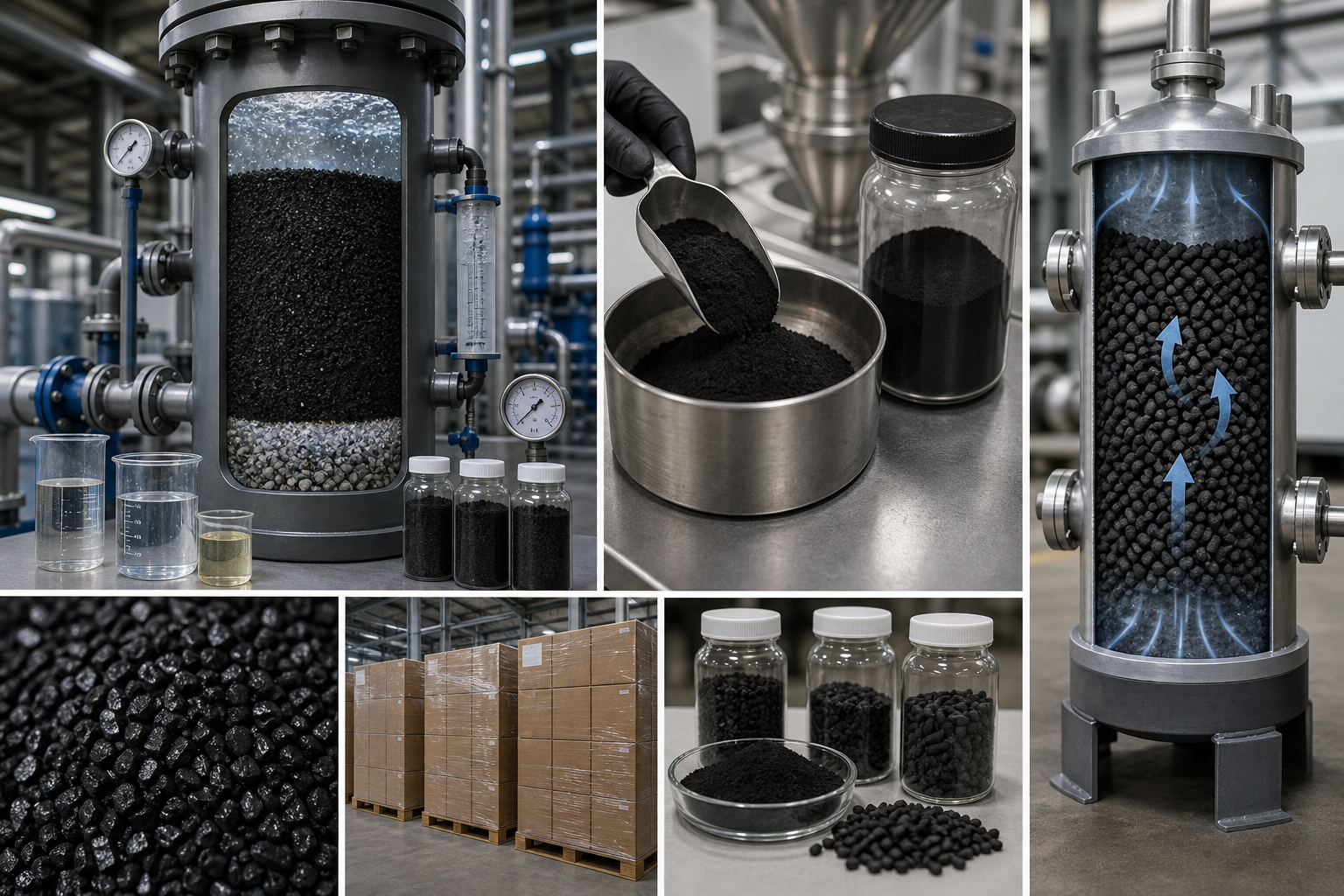
Activated carbon is used across many filtration settings, but the buying path changes with the application. Water treatment discussions often focus on media used in vessels, beds, cartridges, or process systems for taste, odor, dissolved organic chemical, or general purification goals. Municipal and industrial water buyers usually need more specification detail than a small replacement-media purchase.
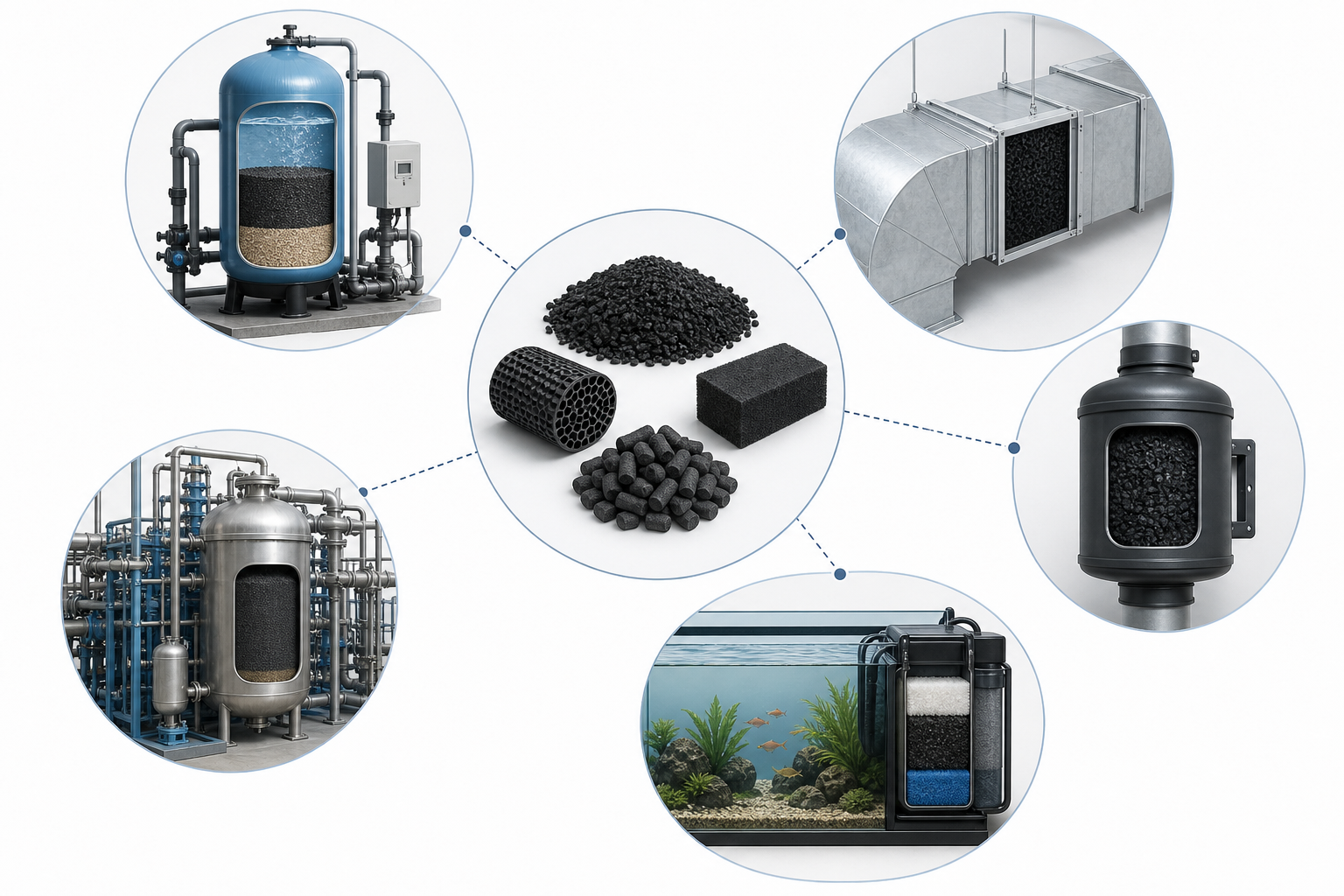
Air, gas, and odor-control applications may point buyers toward media forms and equipment designs intended for gas-phase flow. These projects should define the air or gas stream, humidity, temperature, contact time, and odor or vapor category before comparing products.
Aquarium use appears frequently in searches, but B2B buyers should treat it as one application pathway, not the center of the sourcing decision. Food-related processing and gold recovery are also recognized industrial pathways, but they require application-specific review and documentation. The useful first step is to connect the use case to the expected media format, operating environment, and supplier questions before requesting a quote.
What Activated Carbon Can—and Cannot—Be Assumed to Remove
Activated carbon is commonly selected because adsorption can help reduce certain contaminants, odors, tastes, vapors, or dissolved organic chemicals. For buyers, the key word is “certain.” Suitability depends on the target substance, concentration, flow conditions, contact time, temperature, humidity, competing compounds, and the design of the filter or treatment system.
This is where broad product descriptions can create procurement risk. A listing that says “activated carbon” or “carbon filter media” does not prove it is suitable for a specific water, air, gas, odor, aquarium, or industrial process. Buyers should avoid assuming that one activated carbon grade can cover every contaminant category or that a lower unit price will deliver the needed outcome.
Before specifying media, ask suppliers what product data is available, what operating information they need, and whether pilot testing, engineering review, or equipment-manufacturer input is appropriate. For regulated, food-related, municipal, or industrial applications, procurement should coordinate with technical stakeholders before placing a bulk order.
Granular, Pelletized, Powdered, and Packaged Media: Procurement Differences That Matter
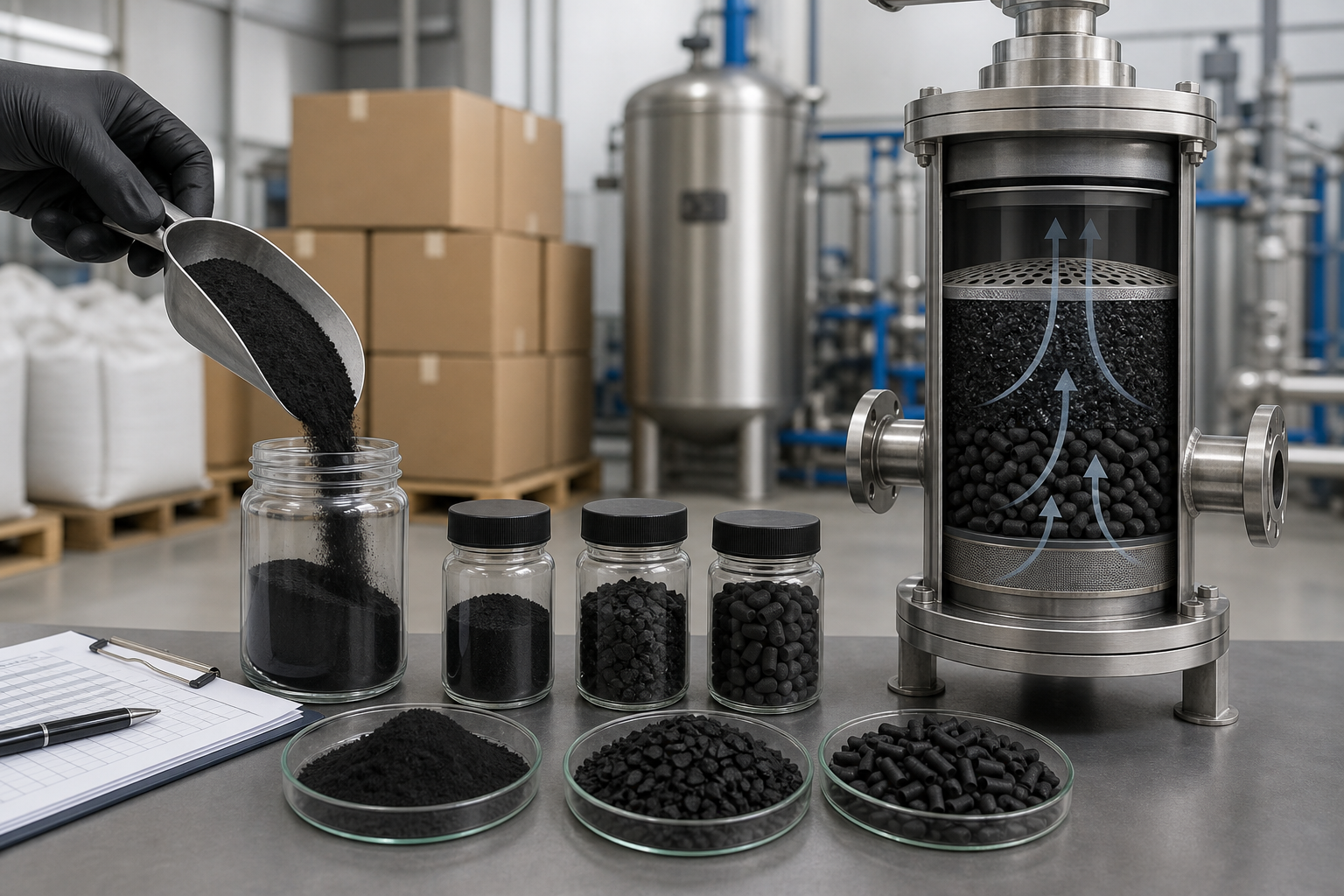
Activated carbon format affects equipment fit, handling, packaging, and supplier comparison. Granular activated carbon is often discussed for beds, vessels, and filtration systems where particle size, pressure drop, backwash behavior, and changeout planning may matter. Buyers should confirm compatibility with the existing system rather than ordering by name alone.
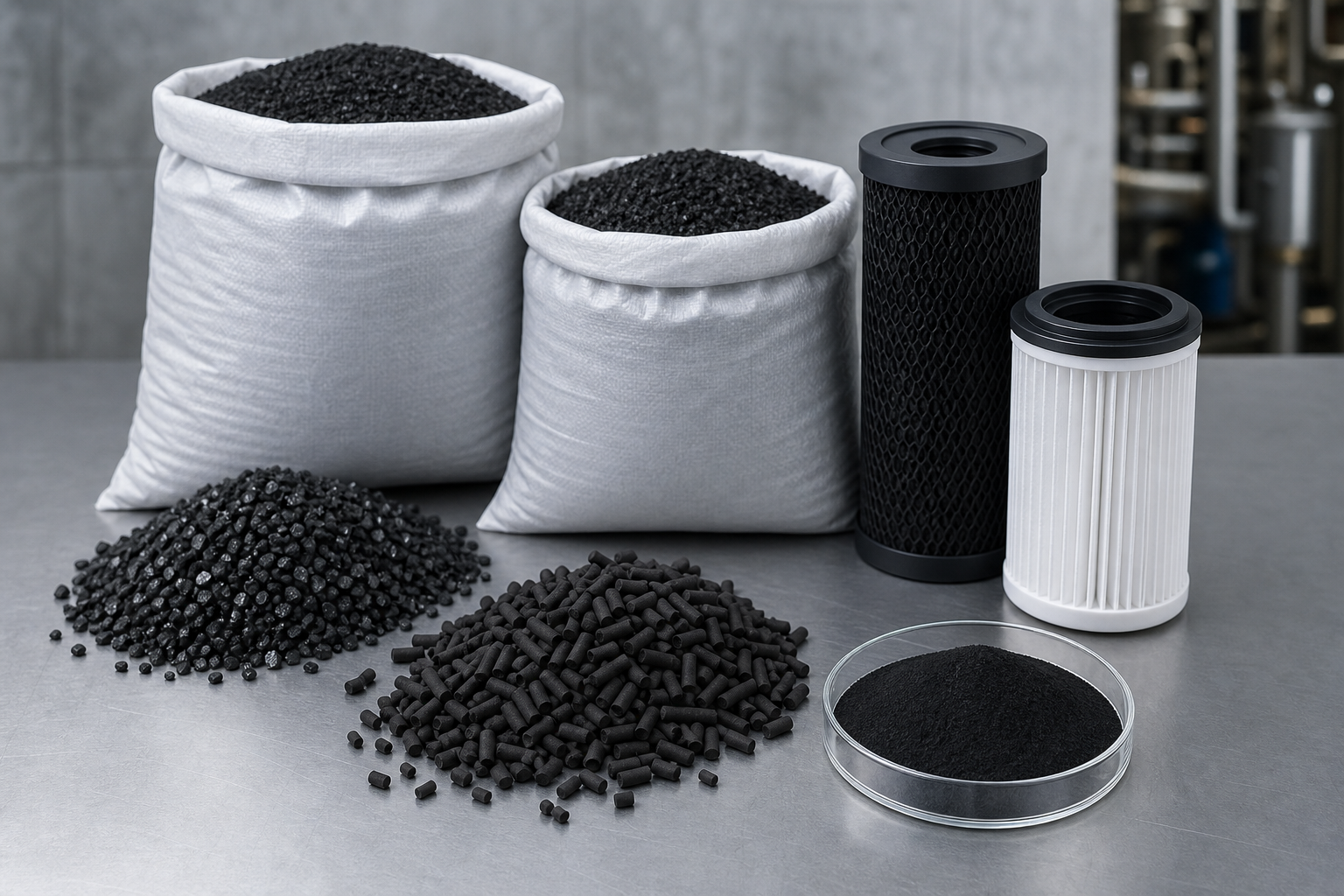
Pelletized carbon is commonly encountered in gas-phase or controlled-flow conversations, where physical form, dusting, and airflow considerations may influence the specification. Powdered activated carbon is a different procurement discussion because handling, dosing, containment, cleanup, and process integration can become more important than simple media replacement.
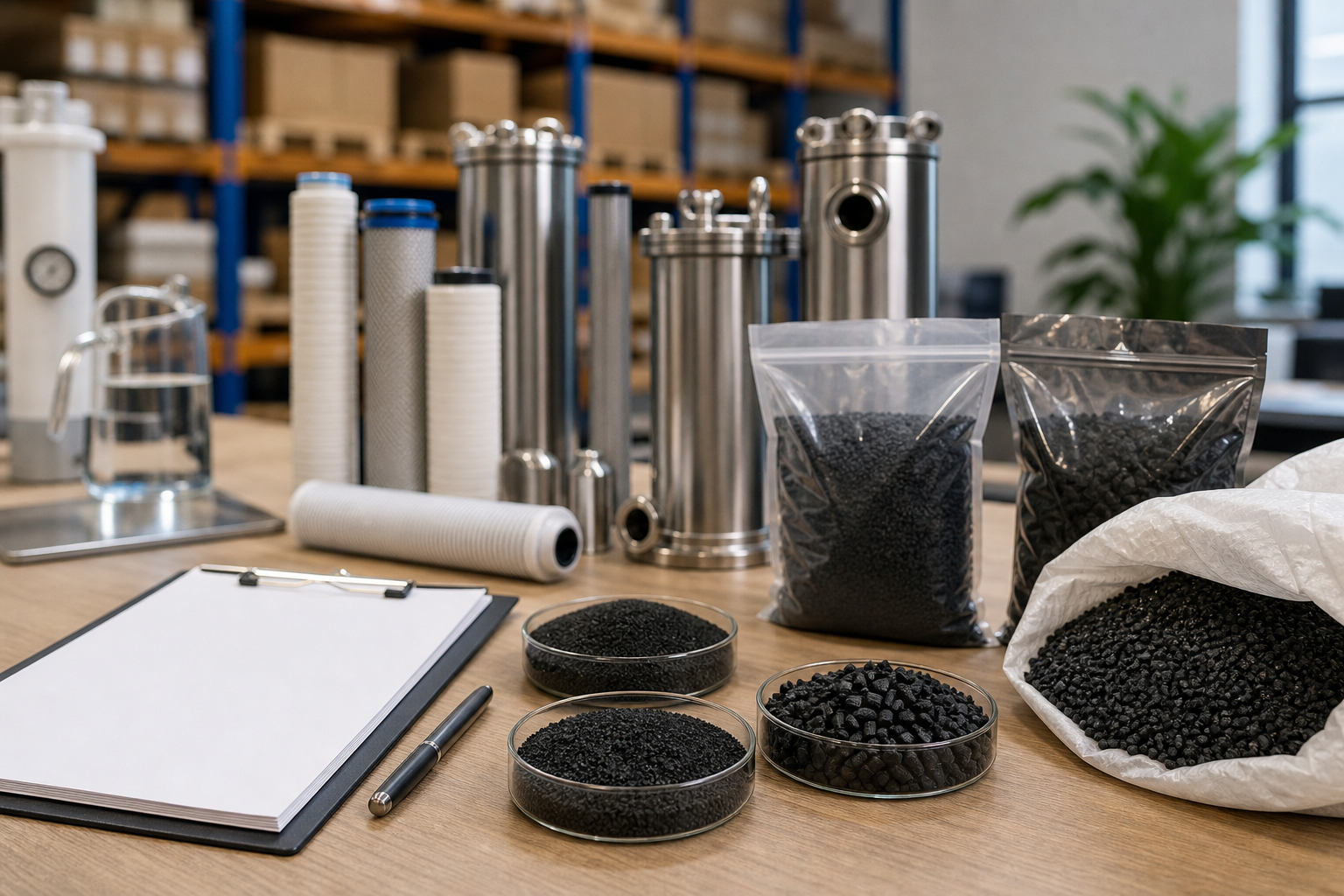
Packaged media, cartridges, bags, and bulk formats also change the buying decision. A maintenance team replacing a cartridge has different requirements from a facility buying bulk media for a vessel. Request format details, packaging configuration, labeling expectations, safety documentation, and any equipment compatibility notes. The goal is not to rank one form as universally better, but to match the format to the process and operational constraints.
From Price per kg to a Specification-Ready Activated Carbon Inquiry
Searches for activated carbon price, price per kg, “near me,” and marketplace listings are common, but price is only useful after the grade, form, quantity, packaging, and documentation needs are clear. Bulk supply, local purchasing, and online marketplace options can serve different buying situations; they should not be compared as if they solve the same operational problem.
Before selecting an activated carbon supplier, review sourcing signals that affect risk: consistency of product description, responsiveness to technical questions, packaging options, availability of specification sheets and SDS, and willingness to discuss application fit without unsupported guarantees. For import or export purchases, HS code and customs classification should be verified through official trade resources, a customs broker, or supplier documentation rather than assumed from a generic article.
To turn research into a useful RFQ, share the application, target treatment goal, preferred media form if known, estimated quantity, packaging needs, equipment context, and documentation questions. This helps the supplier conversation focus on fit, handling, and procurement risk—not unit price alone.
Frequently Asked Questions
What should an activated carbon supplier know before recommending a grade?
Share the stream type, treatment objective, target substance category, system design, flow or contact-time information, operating environment, preferred media form, order quantity, packaging needs, and required documents. A recommendation based only on the phrase activated carbon can lead to mismatched media.
Can one activated carbon product be used for water, air, and aquarium filtration?
Do not assume so. Water-phase, gas-phase, and aquarium uses may require different particle sizes, forms, cleanliness expectations, equipment fit, and changeout practices. Verify compatibility with the filter manufacturer, supplier, or project engineer before substituting media.
Why do activated carbon price per kg quotes vary so much?
Quotes may vary because of grade, form, particle size, order volume, packaging, freight, documentation, and supply consistency. A low price per kg can be misleading if the product does not match the system conditions or creates extra handling, replacement, or performance risk.
How often should activated carbon media be changed out in a filter system?
There is no universal replacement interval. Changeout is usually based on breakthrough monitoring, return of odor or taste, pressure drop, contaminant loading, flow rate, gas humidity, and OEM or supplier guidance. B2B systems should define acceptance criteria before buying replacement media.
How should a buyer confirm the HS code for activated carbon?
Use official tariff resources, a customs broker, and supplier import or export documentation. Classification can depend on jurisdiction, product form, treatment, and intended use, so a general article should not be treated as the final authority.
What documentation should procurement request for activated carbon?
At minimum, request a current specification sheet and SDS. Depending on the application, also ask about lot traceability, packaging details, applicable certificates or compliance statements, and import or export paperwork. Do not assume every activated carbon product carries the same documentation.
Is buying activated carbon near me better than ordering bulk media from a supplier?
Local buying can work for urgent small-volume or standard replacement needs. Bulk supplier sourcing is usually more appropriate when the project requires repeat volume, defined packaging, technical discussion, documentation, or application-specific media review. Compare fit and support, not location alone.