Powdered Activated Carbon as a Dosed Treatment Media
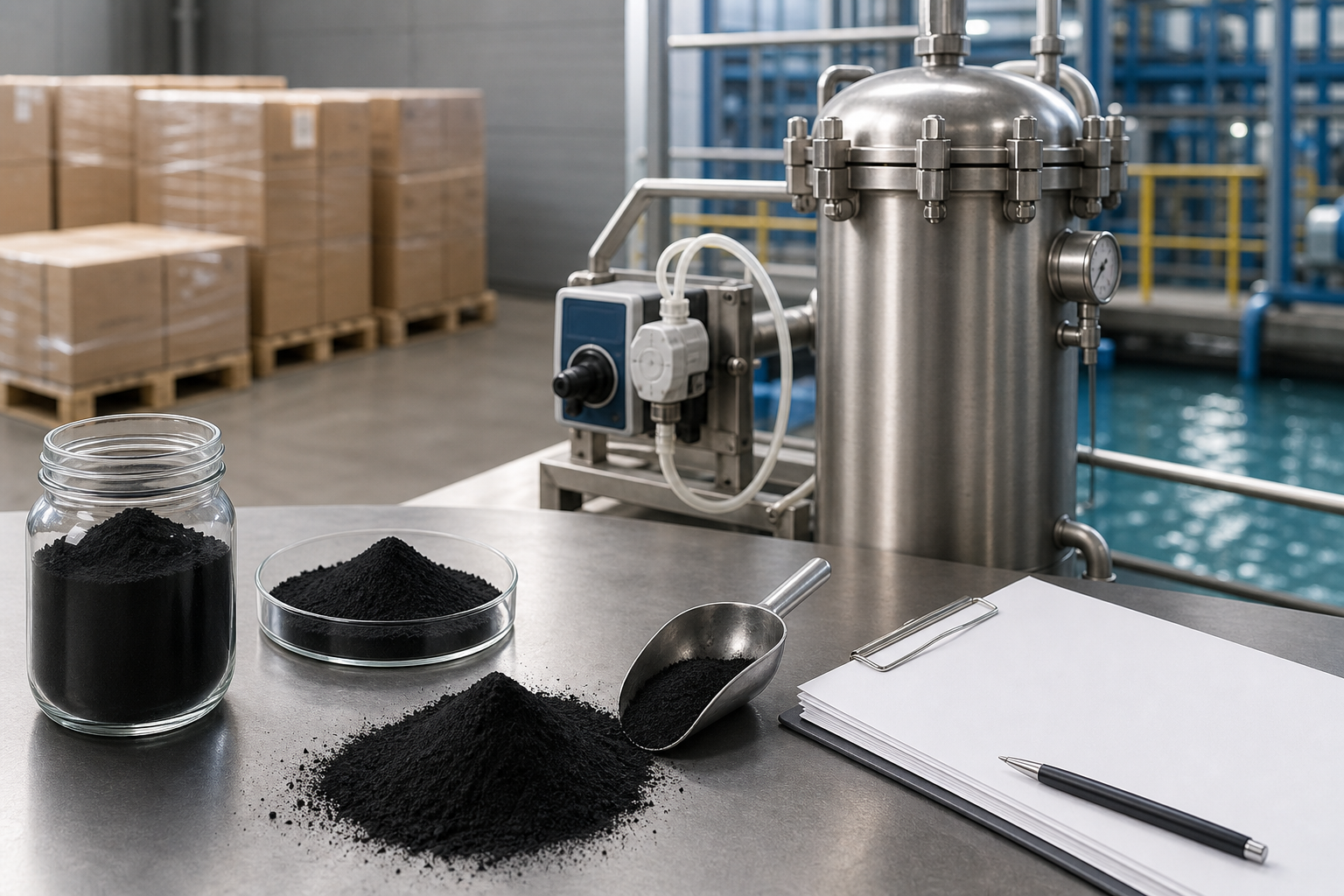
Powdered activated carbon, often shortened to PAC, is best understood by how it enters a process. Unlike fixed-bed media, PAC is typically dosed into a liquid stream, mixing tank, treatment basin, or batch vessel, allowed to contact the target compounds, and then removed with solids-handling or filtration steps. That process route changes the buying decision: the buyer is not only choosing an adsorption media, but also confirming whether the site can feed, wet, mix, separate, and handle a fine carbon powder.
This distinction matters for procurement teams comparing PAC with other activated carbon forms and specifications. PAC can be useful where a treatment program needs variable dosing, short-term response, batch treatment, or integration into existing clarification or filtration equipment. However, it also brings powder-specific issues: dust control, slurry behavior, transfer points, and downstream removal of spent carbon.
Before requesting a grade, buyers should identify whether the process is continuous or batch, whether PAC will be dry-fed or slurried, and how spent carbon will leave the system.
Where PAC Fits: Batch Dosing, Water Treatment, Wastewater, Process Liquids, and Temporary Upset Control
PAC applications are easier to evaluate by process setup than by industry label. In batch or tank dosing, PAC is introduced for a defined contact period, then separated from the treated liquid. In municipal or industrial water treatment, it may be used to address taste, odor, color, or certain organic contaminant concerns when supported by testing and site procedures. In wastewater and PACT-related systems, PAC may be added into biological or treatment basins as part of a broader solids-management process.
| Process setup | What buyers should confirm | Procurement consequence |
|---|---|---|
| Batch dosing | Mixing intensity, contact time, removal step | Grade must wet and disperse reliably |
| Water treatment | Treatment goal and downstream filtration | Documentation and testing plan matter |
| Wastewater or PACT context | Solids loading and sludge handling | Spent PAC removal must be planned |
| Process liquids | Color, odor, haze, or polishing target | Compatibility and product quality checks are critical |
| Temporary upset control | Seasonal or variable dosing need | Packaging and fast handling may influence choice |
No supplier should assume one universal PAC grade fits all of these setups. Feedstock, activation, iodine value, methylene blue value, ash, moisture, and particle-size distribution should be reviewed against the actual treatment objective.
PAC Particle Size and Powder Behavior: Fineness, Wetting, Suspension, Dust, and Separation
“Powdered” is not a complete specification. PAC buyers should ask for grade-specific particle-size distribution instead of relying on a broad powder label. Finer material can improve dispersion potential in some systems, but it may also increase dust generation, affect slurry preparation, and create a higher solids-separation burden. Coarser powder behavior may be easier to handle in some equipment, yet still needs enough contact efficiency for the treatment goal.
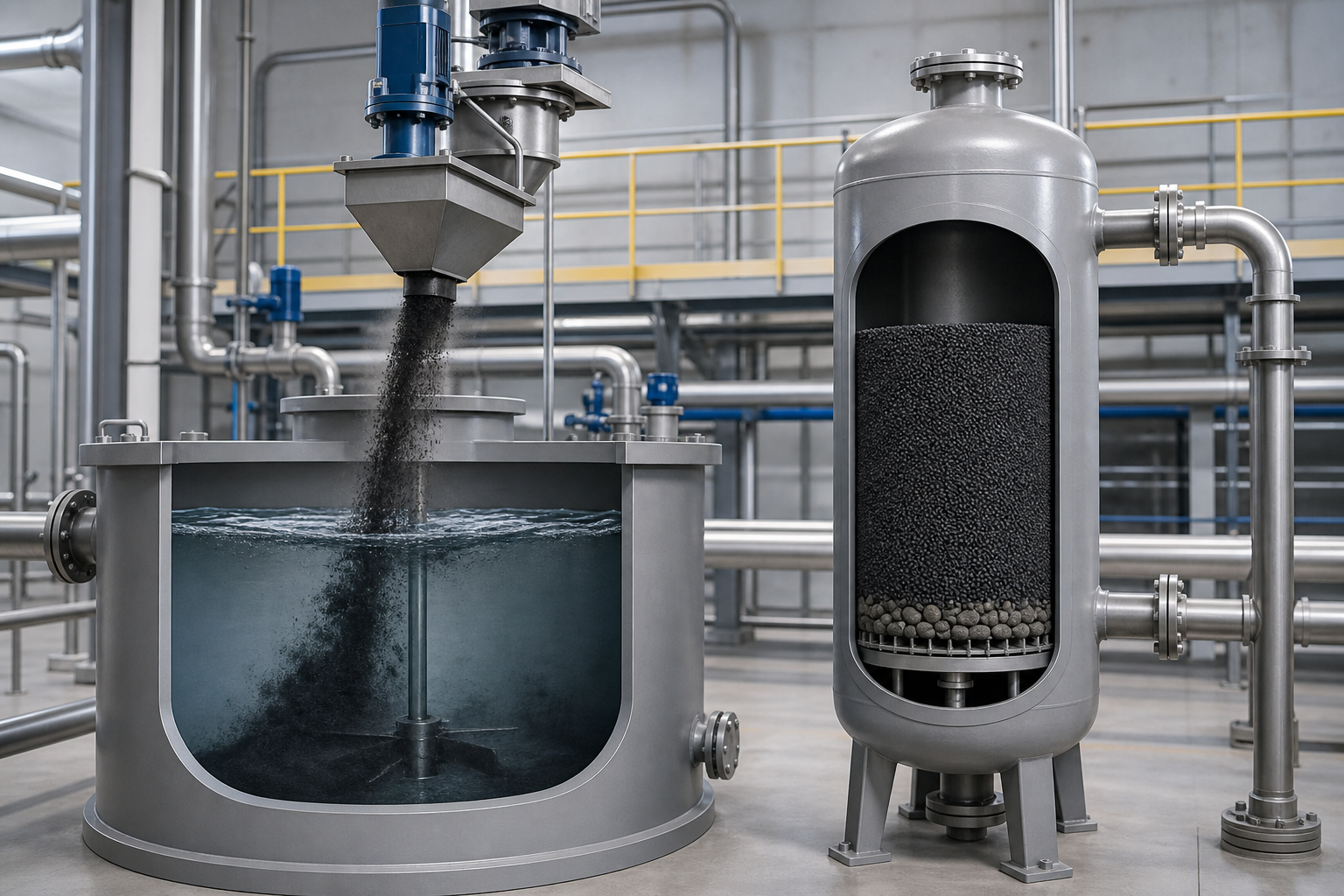
Wetting behavior is a practical issue during startup and routine operation. Some PAC grades may require suitable agitation, make-down procedures, or slurry preparation to avoid floating, clumping, or uneven dosing. Suspension time, mixer performance, and contact conditions influence whether the carbon has a realistic opportunity to adsorb the compounds of concern before it is removed.
Downstream separation should be considered before purchase. Clarifiers, filters, filter presses, bag filters, or other solids-handling steps must be compatible with the selected PAC and expected solids loading. Ask suppliers for a TDS, SDS or MSDS, COA where applicable, and particle-size information that can be reviewed by both operations and EHS teams.
PAC vs GAC from a System-Design Perspective
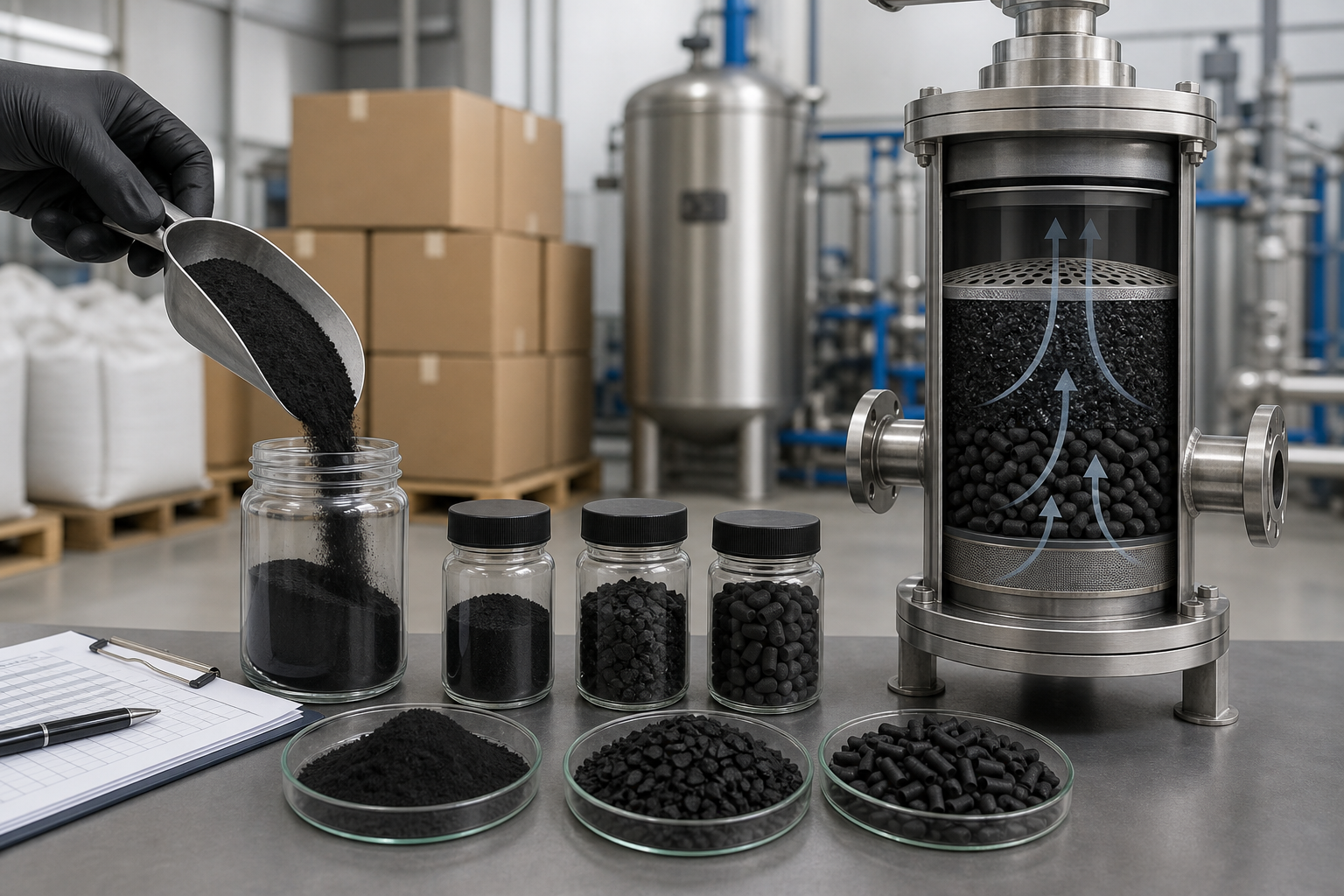
The PAC versus GAC decision is not only a particle-size comparison. It is a system-design question. PAC is usually dosed, mixed, contacted, and removed. GAC is typically installed as a bed or filter media, where liquid or gas passes through the carbon until changeout or regeneration is required. Buyers evaluating granular activated carbon should therefore focus on vessel fit, bed depth, pressure drop, and changeout planning; PAC buyers should focus on feed method, wetting, contact time, dust, and solids separation.

| Decision point | PAC implication | GAC implication |
|---|---|---|
| Process style | Dosed into stream or tank | Installed in fixed bed or cartridge |
| Operational burden | Slurry, dust, separation, sludge | Pressure drop, bed condition, changeout |
| Use pattern | Useful for variable or temporary dosing | Suited to continuous installed treatment |
| Performance review | Dosage and contact depend on testing | Breakthrough and service life are monitored |
PAC may be preferred when existing basins, mixers, or temporary treatment programs can support dosing. GAC may be a better fit when a stable stream can be routed through installed media and the site wants to avoid adding carbon solids directly into the process.
Handling, Packaging, Storage, and PAC RFQ Details to Confirm
Powdered activated carbon should be reviewed as both a treatment media and a fine industrial powder. Before ordering, confirm SDS access, dust-control expectations, PPE guidance, storage conditions, spill cleanup procedures, and transfer-point controls. PAC should generally be protected from moisture and contamination, and receiving teams should inspect packaging condition, labeling, lot identification, and documentation against the purchase order.
Packaging can affect plant handling as much as purchasing convenience. Sacks, drums, and bulk bag formats each create different unloading, storage, dust, and dosing-system considerations. For larger orders, buyers may also want to review bulk activated carbon packaging considerations so warehouse, EHS, and operations teams are aligned before delivery.
When discussing PAC requirements with an activated carbon supplier, share the application, target treatment goal, process volume, expected dosing method, approximate contact window, particle-size or powder-behavior needs, documentation requirements, sample or testing plan, and packaging preference. These inputs help a supplier recommend a suitable PAC grade or sample path without assuming universal performance or dosage.