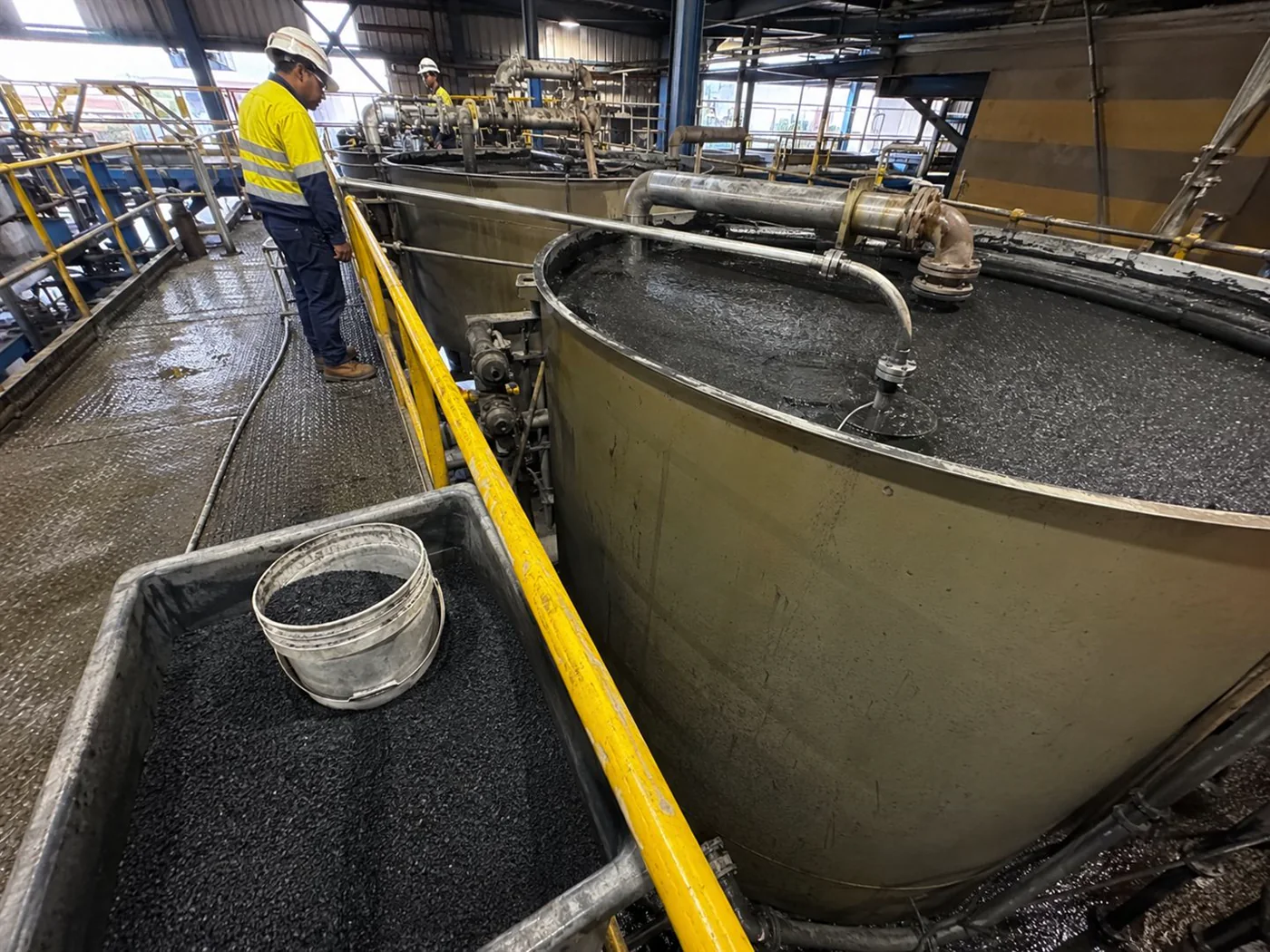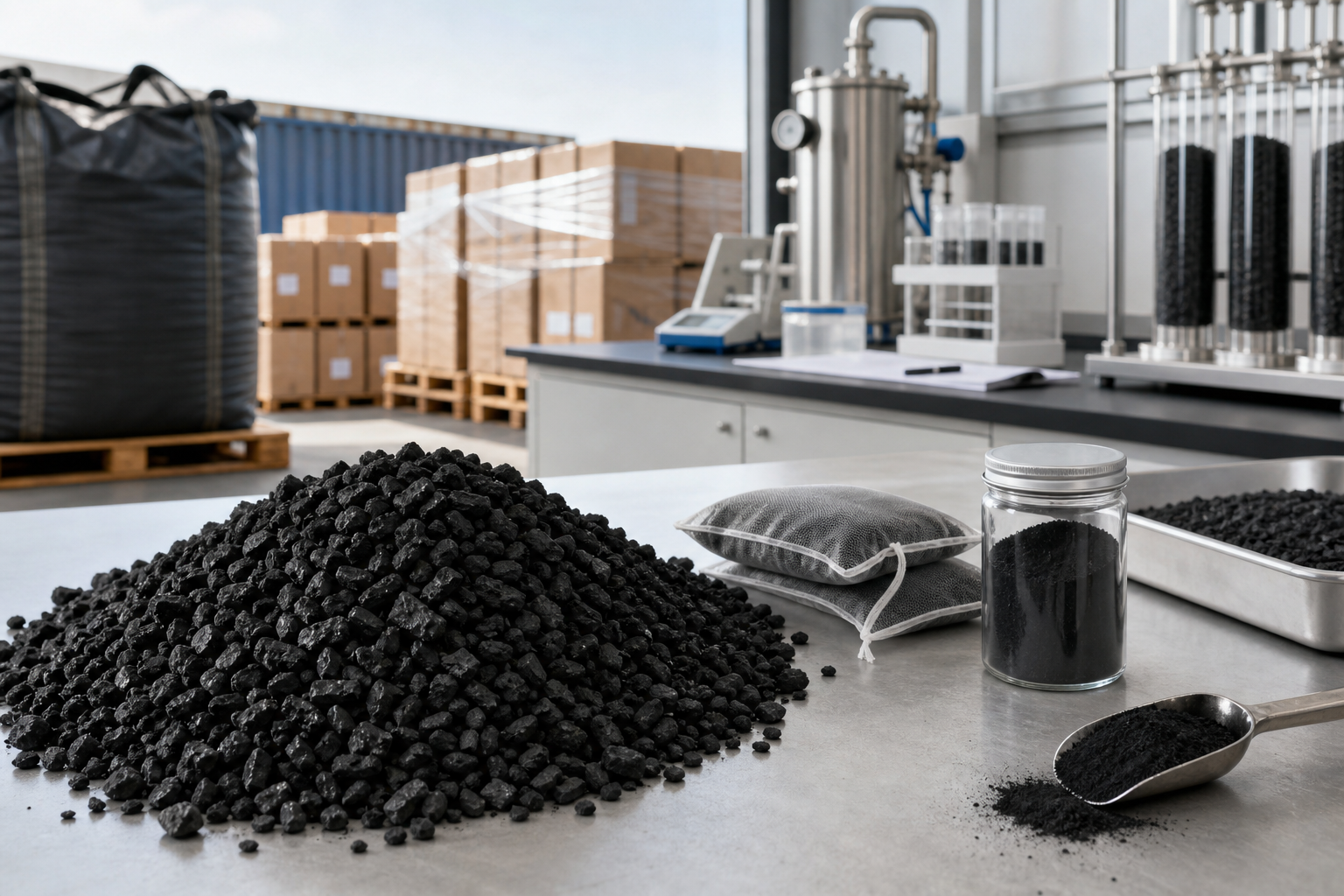
Direct Answer: To replace or dual-source an international activated carbon grade from Calgon Carbon, Norit (Cabot), or Jacobi Carbons, procurement and process engineers must match four core technical pillars rather than relying on a trade name or iodine number alone: (1) Raw material & activation route (steam-activated coconut shell, agglomerated/direct coal, or phosphoric/steam wood), (2) Hydraulic particle size distribution (ASTM D2862 mesh, effective size, and uniformity coefficient), (3) Pore structure & adsorption index (ASTM D4607 iodine, ASTM D3467 CTC/butane, or methylene blue/molasses), and (4) Purity & mechanical durability (ASTM D3802 hardness, ash, acid-wash pH, and moisture).
1. Master Activated Carbon Brand Cross-Reference Table
The engineering table below maps widely specified international reference grades across water treatment, VOC/gas scrubbing, liquid decolorization, and gold recovery to factory-direct DXD Carbon specification series manufactured at our 50,050 m² Ningxia production base.
| Application & Form | Calgon Carbon Ref. | Norit (Cabot) Ref. | Jacobi Carbons Ref. | DXD Equivalent Series | Key ASTM Matching Specs |
|---|---|---|---|---|---|
| Coconut Shell GAC (Drinking Water, Cartridges, POU/POE) |
OLC 12x40 / OLC 8x30 | GCN 1240 / GCN 830 | AquaSorb CX / CS | DXD-CGAC-1000 / 1050 | Iodine ≥1,000 mg/g, Hardness ≥95–97%, Ash ≤3–5% (Water or Acid-Washed) |
| Coal-Based GAC (Municipal Water, TOC, Wastewater COD) |
Filtrasorb 300 / 400 (F300 / F400) | GAC 830 / GAC 1240 | AquaSorb 1000 / 2000 | DXD-BGAC-950 / 1000 | 8x30 or 12x40 mesh, Iodine 900–1,050 mg/g, Methylene Blue ≥150 mg/g, Density 450–540 g/L |
| Extruded Pellet Carbon (VOC Abatement, Odor, Biogas, Solvent) |
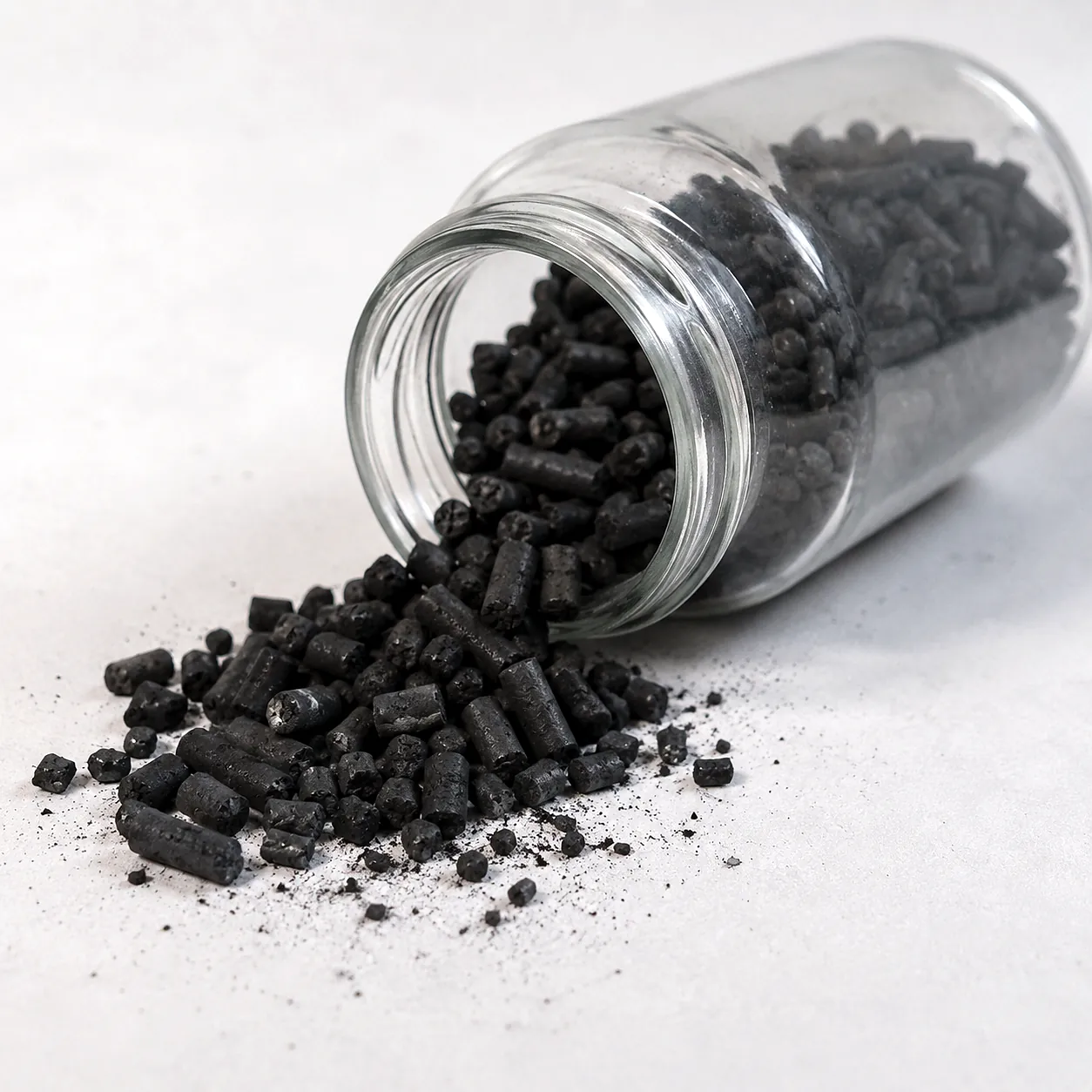
AP4-60 / BPL / Centaur | Norit RB3 / RB4 / RST3 | EcoSorb GX / AddSorb | DXD-PEL-4060 / IMP | 1.5–4.0 mm pellets, CTC ≥60% (ASTM D3467), Hardness ≥95%, Virgin or KOH/KI Impregnated |
| Water & Process PAC (Municipal Dosing, MIB/Geosmin, Effluent) |
WPH / WPX Series | Norit SA Super / W35 | AquaSorb BP2 | DXD-WPAC-200 / 325 | 200 or 325 mesh (≥90–95% passing, ASTM D5158), Iodine ≥900 mg/g, Moisture ≤5% |
| Decolorization Wood PAC (Sugar, Citric Acid, Oil, Pharma/Chem) |
BG HHM / Cane Cal | Norit CA1 / SX Plus / Darco KB | ColorSorb G7 / G9 | DXD-DPAC-180 / 200 | Methylene Blue 180–220 mg/g, Caramel ≥95%, Low Iron (≤0.02–0.05%), Controlled pH |
| Gold Recovery GAC (CIP, CIL & CIC Cyanide Leach Circuits) |
DG-11 / GRC-22 | Norit RO 3515 / GCN Gold | GoldSorb 6000 / 5000 | DXD-GOLD-1050 / 1100 | 6x12, 6x16 or 8x16 mesh, Pre-polished platelet-free, Hardness ≥98%, High K/R gold kinetics |
2. Why Iodine Value Alone Cannot Qualify an Equivalent Grade
A common procurement pitfall is requesting “1,000 mg/g iodine activated carbon” as a drop-in replacement for a named grade like Calgon Filtrasorb 400 or Norit GCN 1240. While iodine number (ASTM D4607) measures micropore surface area (<2 nm), industrial system performance is equally governed by:
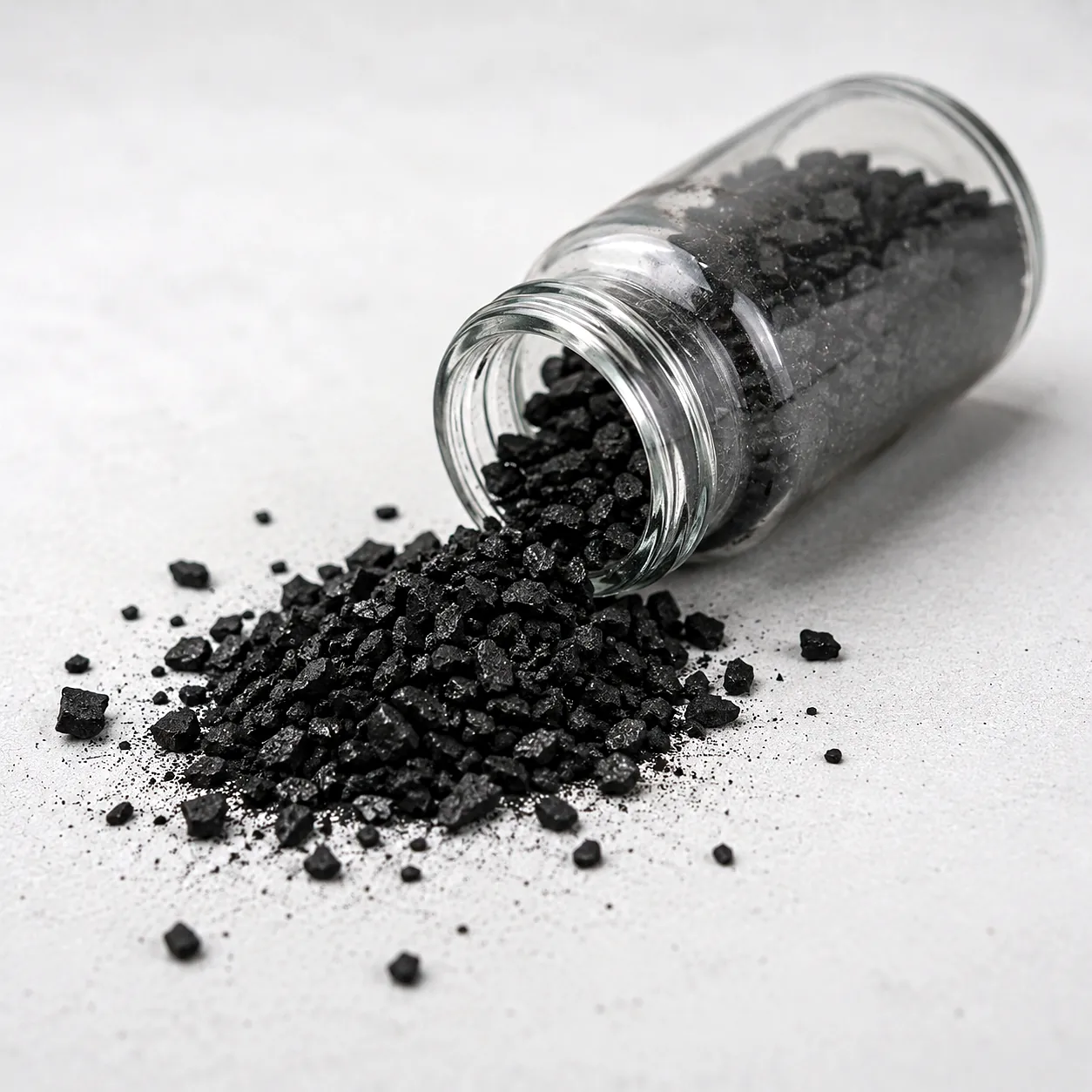
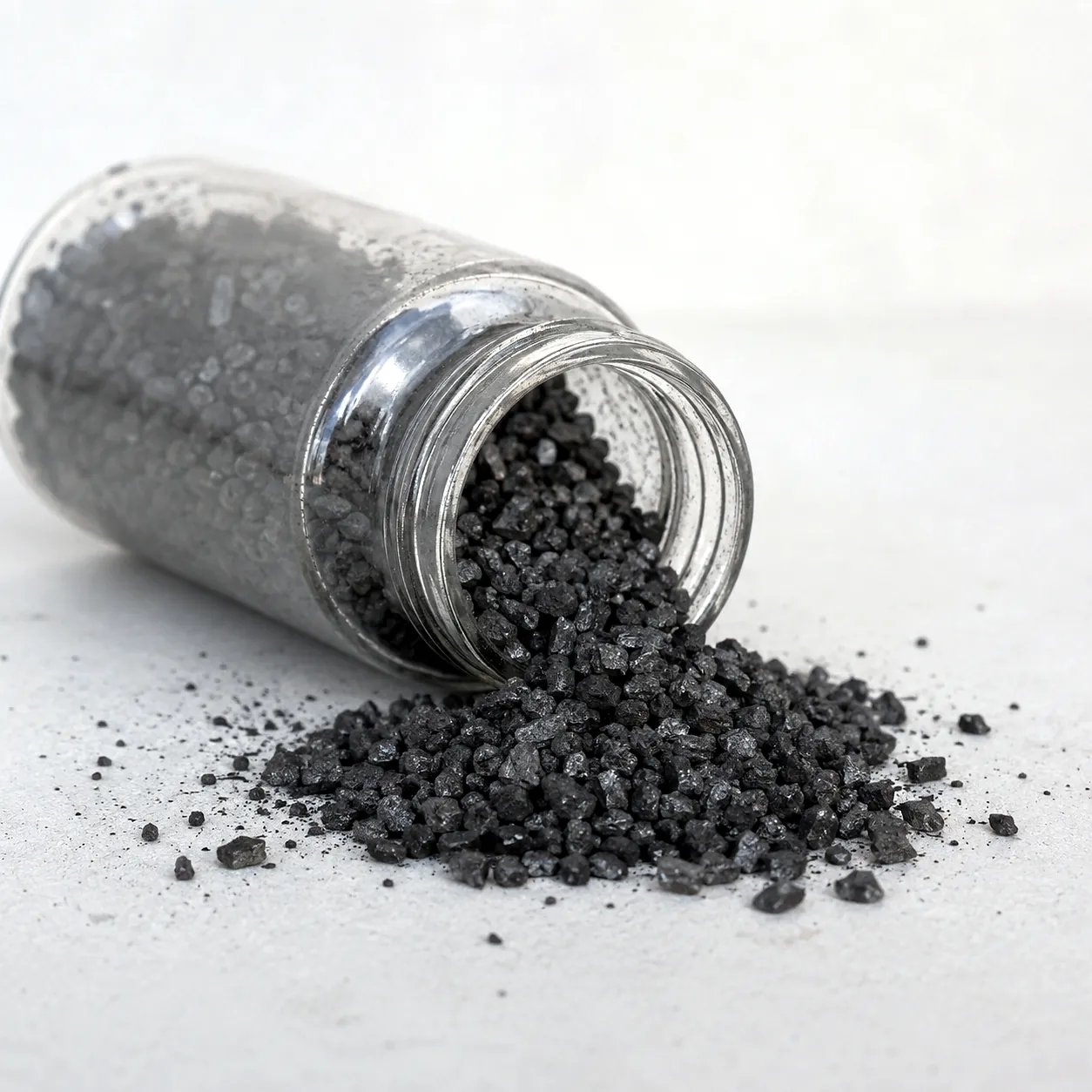
- Pore Size Distribution (Micro vs. Meso/Macropores): Coconut shell carbon (DXD-CGAC-1000) is predominantly microporous, making it superior for low-molecular-weight VOCs, free chlorine, and trace haloalkanes. Bituminous/anthracite coal GAC (DXD-BGAC-950) provides a wider transport pore and mesopore network essential for humic acids, surface-water TOC, and wastewater COD.
- Hydraulic Mesh & Backwash Stratification: In gravity or pressure vessels, replacing an 8x30 mesh coal GAC with an unmatched density or wide-screen carbon alters bed expansion during backwash. Always specify ASTM D2862 oversize/undersize limits, effective size (ES), and apparent density (ASTM D2854).
- Extractables, Ash & pH Conditioning: Unwashed steam-activated carbons exhibit an alkaline water-extract pH (8.5–11.0), which can cause initial pH spikes or carbonate scaling in potable water and boiler feed systems. When replacing acid-washed grades (such as OLC AW or GCN W), specify acid-washed ash (≤3%) and neutral pH (6.5–8.0).
3. Step-by-Step Protocol to Qualify a Factory-Direct Alternative
- Share Your Current TDS or COA: Send your incumbent grade name or specification sheet through our TDS & Brand Cross-Reference Center.
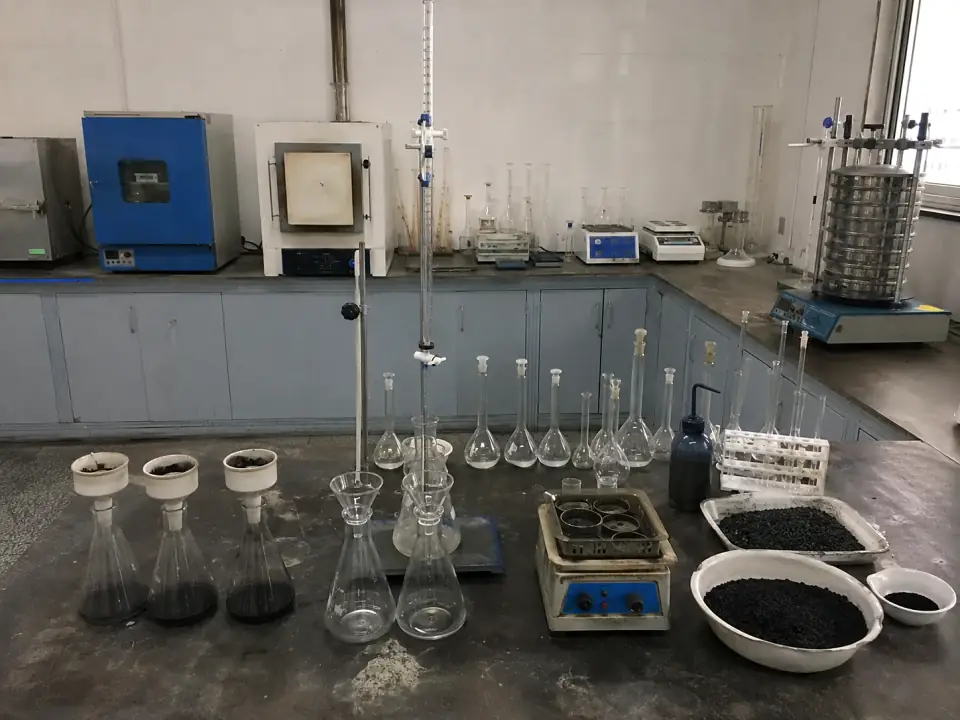
- Verify ASTM Test Method Parity: Ensure the factory laboratory tests iodine (ASTM D4607), ball-pan hardness (ASTM D3802), moisture (ASTM D2867), ash (ASTM D2866), and CTC/butane (ASTM D3467 / D5742) using identical analytical procedures.
- Run a Representative Bench or Column Test: Request a free standard sample (or 2–5 kg metallurgical sample for gold CIL bottle-roll testing) matched to the proposed contract lot.
- Lock tolerances into the Contract Specification & Batch COA: Before bulk dispatch (25 kg bags or 500/1,000 kg FIBC), verify the batch-specific Certificate of Analysis against your signed tolerance limits.