Direct Answer: Selecting activated carbon for gold recovery in Carbon-in-Leach (CIL), Carbon-in-Pulp (CIP), and Carbon-in-Column (CIC) circuits requires balancing two competing metallurgical demands: maximum mechanical attrition resistance (≥98% ASTM D3802 ball-pan hardness with platelet-free pre-polishing) so loaded carbon never abrades into gold-bearing fines lost through interstage screens, and fast gold-cyanide [Au(CN)₂]⁻ adsorption kinetics (R-value) and loading capacity (K-value) driven by an accessible micropore/mesopore network (≥1,050 mg/g iodine, ≥55% CTC).
1. Choosing Between 6x12, 6x16, and 8x16 US Mesh by Circuit Type
In gold cyanidation plants, particle size selection is governed by the trade-off between interstage screen retention (which favors coarser granules) and external film mass-transfer kinetics (which favors smaller granules with higher geometric surface area per gram):
| Mesh Size (ASTM D2862) | Millimeter Aperture | Primary Gold Circuit Application | Metallurgical Advantage | DXD Grade & Brand Equivalent |
|---|---|---|---|---|
| 6x12 US Mesh | 3.35 – 1.70 mm | High-tonnage CIL & CIP agitated pulp tanks with 0.8–1.0 mm wedge-wire interstage screens | Fastest pulp-from-carbon drainage across screens; lowest screen pegging risk in high-viscosity slurries. | DXD-GOLD-1050 (6x12) (Ref: GoldSorb 6000 / DG-11 6x12) |
| 6x16 US Mesh | 3.35 – 1.18 mm | Standard CIP / CIL circuits and mixed agitation/elution trains | Balanced mass-transfer rate and screen retention across standard 0.65–0.80 mm interstage screens. | DXD-GOLD-1050 (6x16) (Ref: GoldSorb 6000 6x16) |
| 8x16 US Mesh | 2.36 – 1.18 mm | CIC (Carbon-in-Column) heap-leach pregnant solution columns & fine-screen CIP plants | 20–30% faster initial gold adsorption kinetics (R-value) due to shorter intraparticle diffusion path. | DXD-GOLD-1100 (8x16) (Ref: GoldSorb 6000 / Norit RO 3515) |
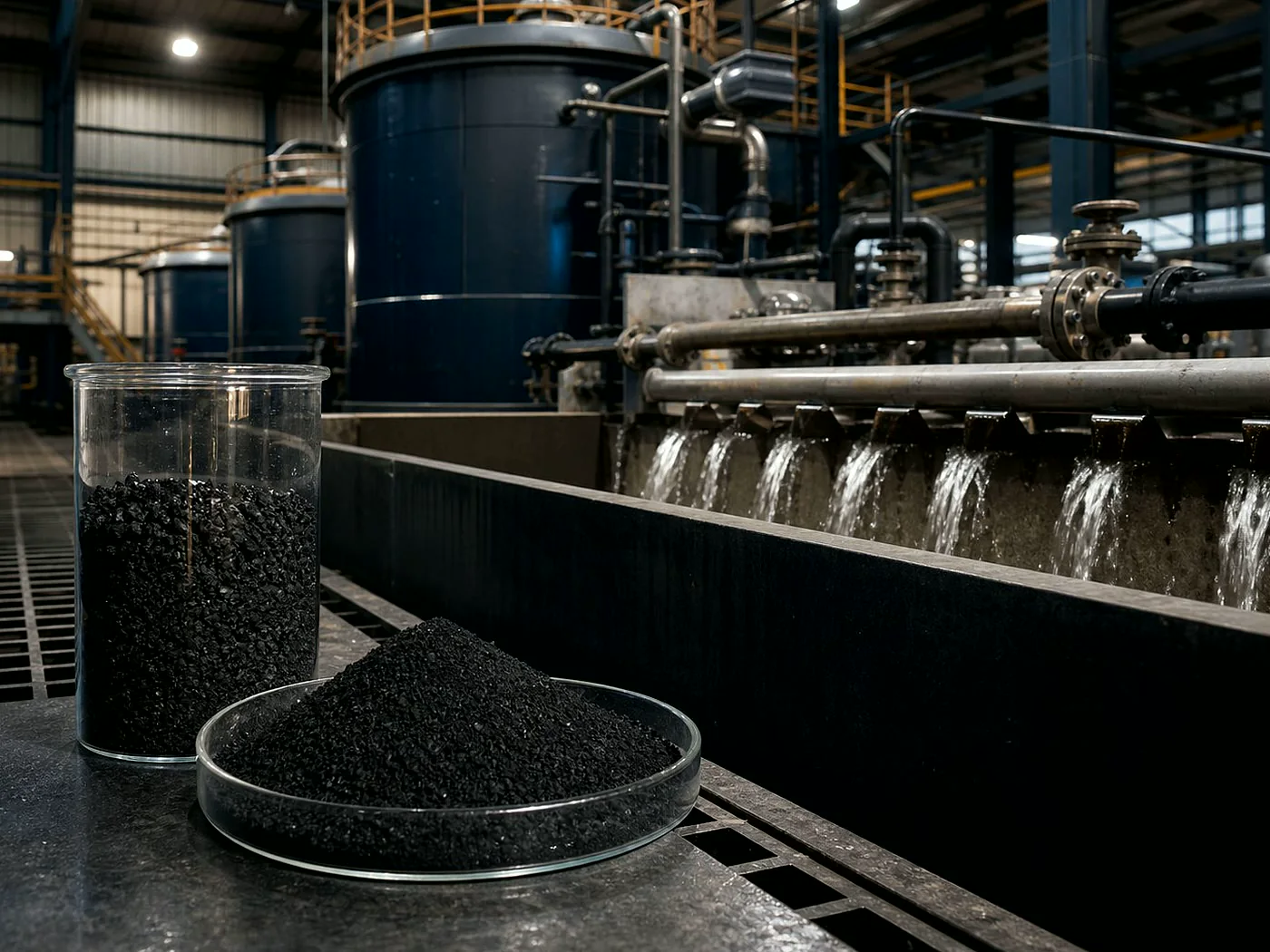
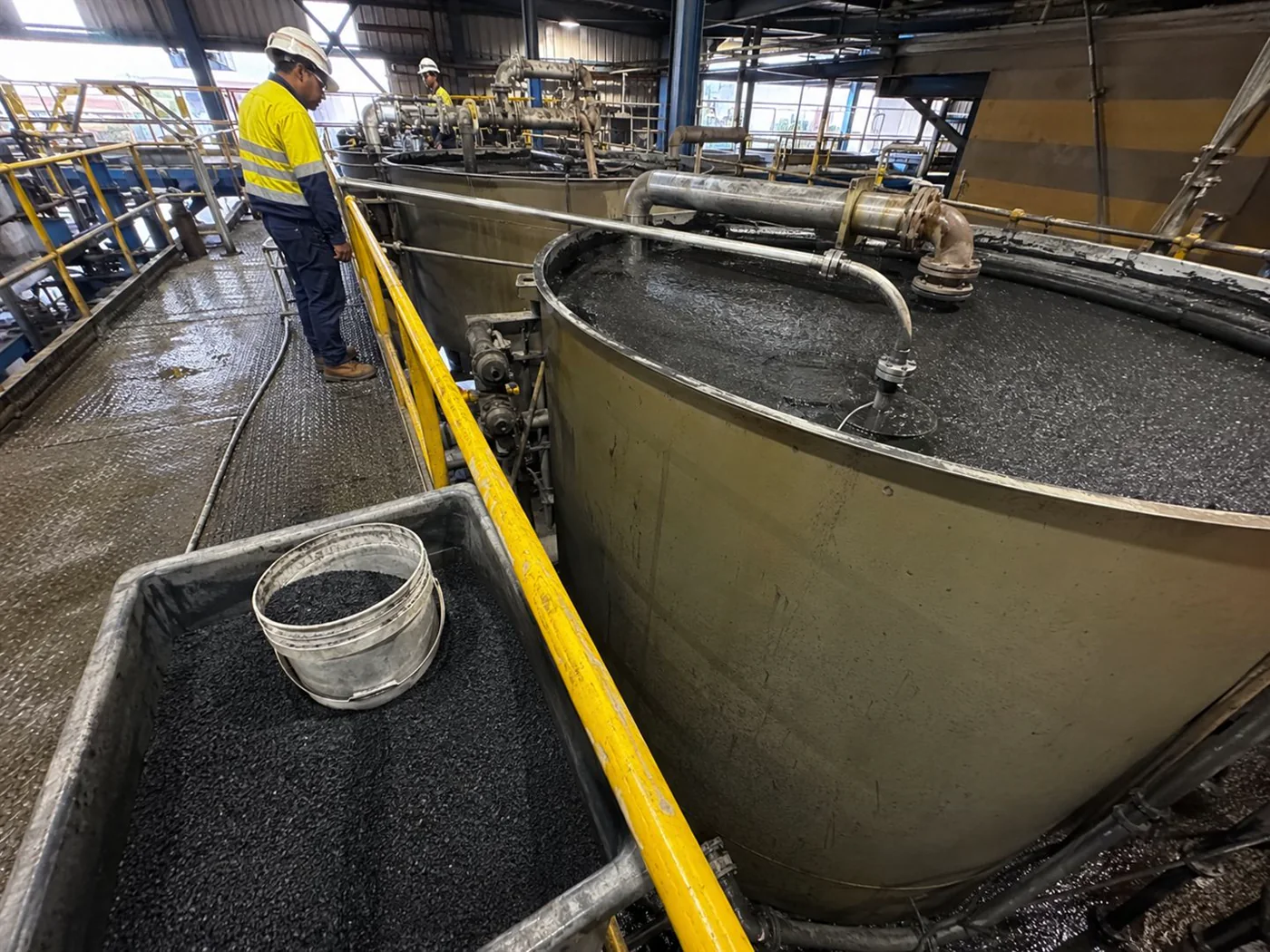
2. Why Platelet Removal and Pre-Attrition Polishing Prevent Gold Loss
Even when a raw coconut shell carbon reports a high nominal iodine number, unpolished granules contain two high-risk fractions for a gold plant:
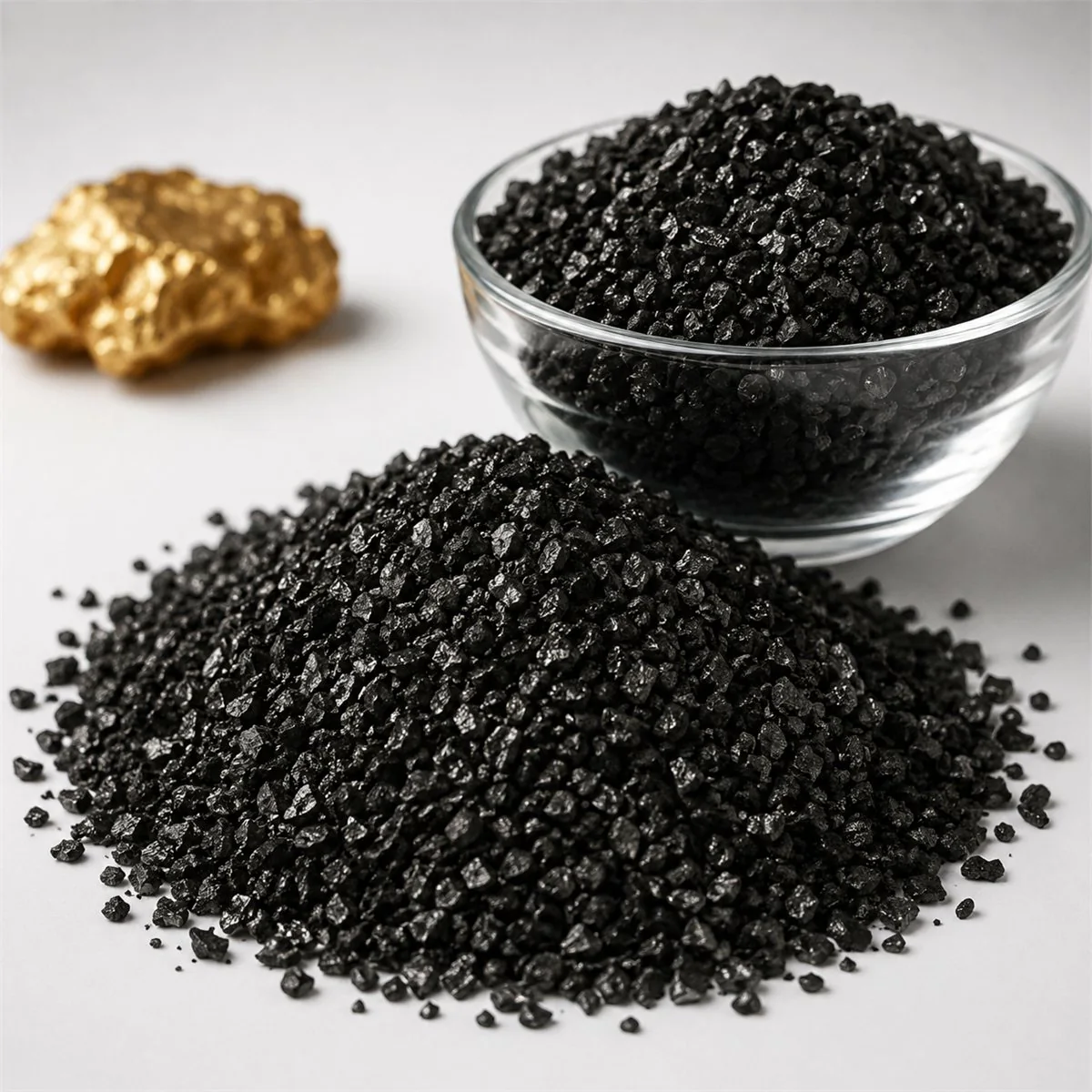
- Sharp Particle Corners: During the first 24 hours inside mechanically agitated CIL tanks, sharp edges shear off into <100 μm carbon fines. Because fine carbon has extremely fast kinetics, it rapidly loads gold cyanide to 2,000–5,000 g/t and passes straight through the interstage screens into the tailings dam.
- Flat Flaky Platelets: Thin, flat shell fragments pass through slotted wedge-wire screens sideways or wedge into screen apertures (screen pegging), restricting slurry flow and forcing costly tank bypasses.
Our DXD-GOLD-1050 and DXD-GOLD-1100 grades undergo mechanical air/water pre-attrition polishing and shape classification at our Ningxia facility before final dedusting—removing weak corners and flat platelets in the factory rather than inside your leach circuit.
3. How to Qualify Bulk Gold Carbon Before Placing a Container Order
- Download the Official TDS & Sample COA: Review full ASTM D4607, D3802, and D2862 specifications in our Interactive TDS Center.
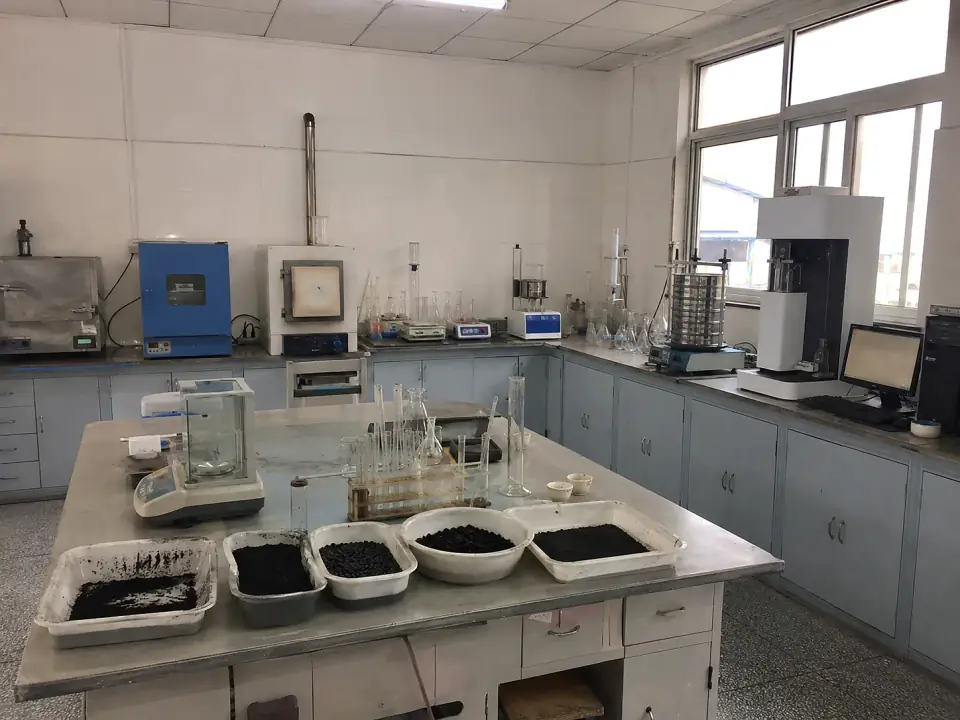
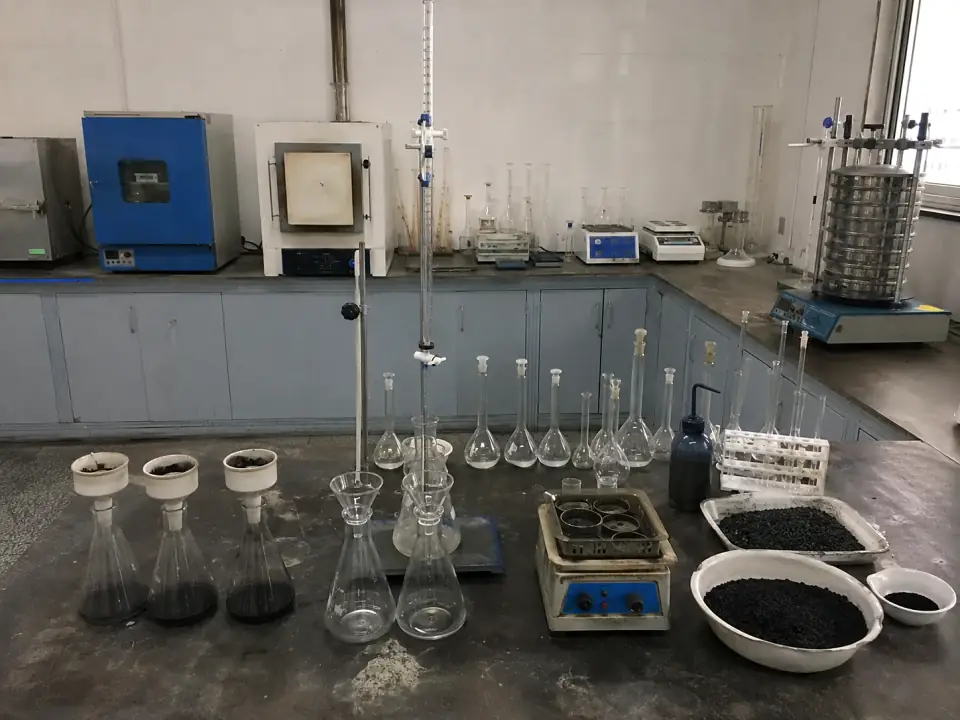
- Request a 2–5 kg Metallurgical Test Sample: Run a parallel 24-hour CIL bottle-roll kinetic test (measuring 1-hour R-value and 24-hour K-value) and wet-attrition test in your mine laboratory using actual pregnant leach solution (PLS) or cyanide pulp.
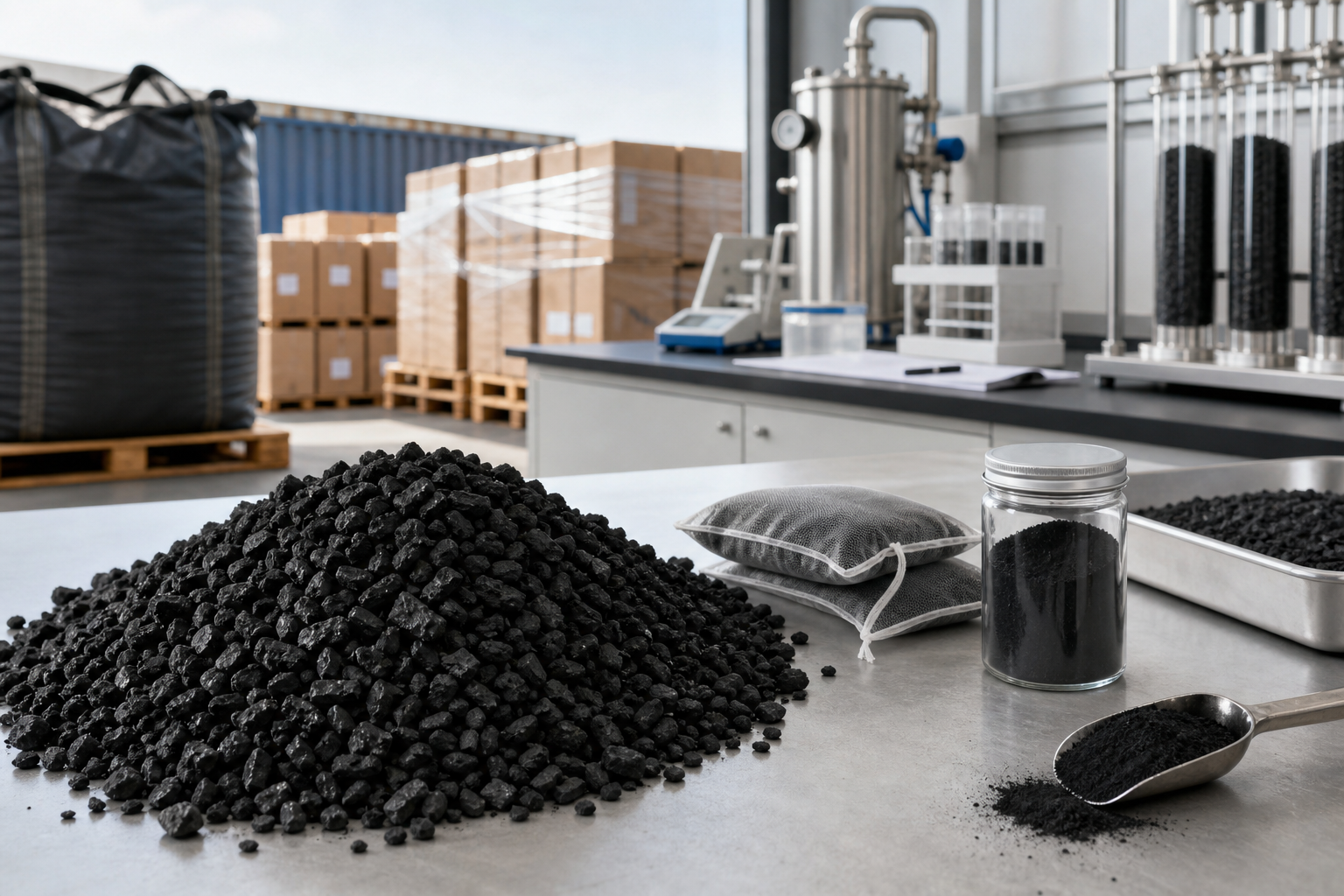
- Specify FIBC Packaging & Pre-Shipment Inspection: Order in moisture-proof 500 kg or 1,000 kg FIBC bulk super sacks with inner PE liners and optional SGS pre-shipment sampling.