
Food mills, fermentation plants, and active pharmaceutical ingredient (API) makers lose yield and press flow when orders rely on iodine number alone. Iodine molecules measure less than 0.6 nm across. A microporous carbon can test above 1,050 mg/g iodine yet fail to adsorb 5,000-Dalton caramel polymers or dark Maillard color bodies. Engineers running liquid purification under U.S. FDA food ingredients and packaging standards must align three pore probes: iodine, methylene blue, and caramel or molasses number.
Our adsorption process engineers and lab team at the DXD Carbon Shizuishan plant (50,050 m2 site, 10,000+ MT/year) compiled this guide. It links pigment size to wood PAC activation routes, iron limits, and filter-cake flow. Engineers can check our powdered activated carbon for decolorization. Bulk buyers can also review our wood-based powdered activated carbon and food and beverage decolorization hub.
| Decolorization Metric | Standard Test Method | Target Pore Width Zone | Representative Surrogate Molecule | Best-Fit Industrial Process Liquids |
|---|---|---|---|---|
| Iodine Number (800 to 1,050 mg/g) | ASTM D4607 / GB/T 12496.8 | Micropores (< 2.0 nm) | Iodine (I2, ~0.56 nm, 254 Da) | Off-odors, volatile flavor precursors, trace synthesis byproducts, PAH4 (BaP) |
| Methylene Blue (150 to 220 mg/g) | GB/T 12496.10 | Small to mid mesopores (2.0 to 15 nm) | Methylene blue (C16H18ClN3S, 320 Da, ~1.5 nm) | Citric acid, lactic acid, amino acids, API intermediates, light glucose syrups |
| Caramel A-Grade (>= 95% to 98.5%) | GB/T 12496.9 | Large mesopores & feeder macropores (15 to >50 nm) | Polymeric caramel & melanoidins (2,000 to 20,000 Da) | Cane and beet sugar syrups, molasses, monosodium glutamate (MSG), dark fermentation broths |
| Molasses Number (>= 200 to 250+) | AWWA / Sugar Industry Protocol | Wide mesopores & macropores (20 to >50 nm) | Standard blackstrap molasses color polymers | Refinery melt liquor, high-fructose corn syrup (HFCS), hydrolyzed vegetable protein |
| Wet Screen Fineness (90% to 96.8%) | ASTM D5158 | External particle size (< 75 um or < 45 um) | 200 US mesh or 325 US mesh suspension | Controls batch contact kinetics (20 to 45 min) vs. plate-and-frame filter cake drainage |
Why High Iodine Number Alone Fails in Liquid Decolorization
Decolorization powdered activated carbon (PAC) is a finely milled wood or coal adsorbent (passing 200 or 325 US mesh per ASTM D5158) built with wide 2 to >50 nm pores for liquid color removal. In liquid streams, dissolved pigments diffuse 10,000 times slower than gas vapors. Steric hindrance also stops a bulky molecule from entering any pore narrower than twice its hydrated width.
Standard coconut shell or anthracite carbons place 75% to 90% of their surface area inside micropores narrower than 2.0 nm. When dosed into cane sugar liquor or glutamic acid broth, large pigments bridge across those tiny pore mouths. That leaves the inner surface unused. Wood sawdust and wood chips have wide natural vessels that open into broad transport channels during activation.
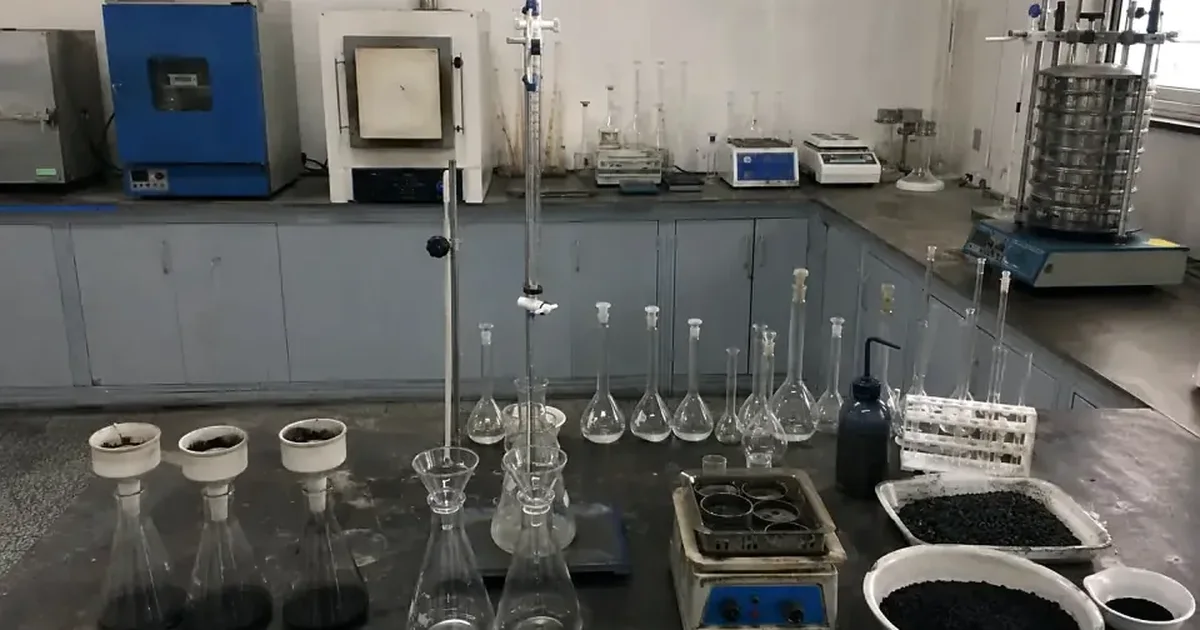
See our ASTM activated carbon laboratory testing guide for how our lab runs three-point isotherms and color checks. Matching the test probe on your Certificate of Analysis (COA) to your impurity size cuts carbon dosing and cake liquid loss.
Matching Methylene Blue, Caramel A-Grade, and Molasses Numbers to Pigment Size
Methylene blue adsorption is a liquid color test (reported in mg/g under GB/T 12496.10) that measures 2.0 to 15 nm mesopore capacity for medium-sized organic molecules. Data in the NIH PubChem Methylene Blue compound database shows this dye cation weighs 319.85 g/mol. It needs pores wider than 1.5 to 2.0 nm for fast entry. For citric acid, lactic acid, and synthetic APIs, 165 to 220 mg/g methylene blue ensures rapid removal of mid-sized color precursors.
Caramel decolorization (alongside the North American molasses number) is an absorbance test under GB/T 12496.9 that measures polymer uptake in 15 to >50 nm pores. Maillard polymers formed during sugar boiling or starch hydrolysis span 2,000 to 30,000 Daltons. High-macropore phosphoric-acid wood PAC testing at >= 95.0% A-grade caramel removal (DXD batch result: 98.5%) captures those long chains without surface plugging.
- Small Trace Contaminants & PAH4 (< 500 Da, Pore Target < 2 nm): Covers benzo[a]pyrene (
BaP, 252 Da) in edible oils, odor aldehydes in glycerin, and catalyst traces. Specify a dual-pore wood PAC with >= 950 mg/g iodine and >= 165 mg/g methylene blue. - Medium Fermentation & API Impurities (300 to 2,500 Da, Pore Target 2 to 15 nm): Covers hydroxymethylfurfural (HMF), polyphenols, riboflavin, and API side-products under U.S. FDA drug quality oversight. Specify washed wood PAC with 180 to 220 mg/g methylene blue.
- Bulky Polymeric Color Bodies (2,500 to 30,000+ Da, Pore Target 15 to >50 nm): Covers cane and beet syrups, molasses, caramel, MSG broth, and hydrolyzed proteins. Specify phosphoric-acid wood PAC with >= 95% to 98.5% caramel decolorization.
Edible Oil PAH4 Bleaching and USP Glycerin Polishing
Refining crude palm, soybean, sunflower, and marine fish oils presents a two-part purification problem. Acid-activated bleaching earth (bentonite clay) removes green chlorophyll and soap traces efficiently, yet clay mineral layers cannot trap flat polycyclic aromatic hydrocarbons (PAH4). Heavy PAHs such as benzo[a]pyrene (BaP), chrysene, benzo[a]anthracene, and benzo[b]fluoranthene form when oilseeds undergo direct-flue-gas drying or smoke exposure.
Blending 0.10% to 0.35% wt/wt controlled-PSD wood PAC (air-classified low-ultrafine grade) with 0.8% to 1.5% wt/wt bleaching clay in the vacuum bleacher (90 to 110 degrees Celsius, 30 to 50 mbar) solves this. That dual dose strips BaP below 2.0 ppb and total PAH4 below 10.0 ppb. Because oil viscosity is much higher than water even at 100 degrees Celsius, edible oil PAC grades are air-classified to remove ultrafine dust below 10 micrometers. That clean particle cut stops black carbon fines from passing through pressure leaf screens and ensures fast oil blow-down recovery.
In pharmaceutical and food-grade USP glycerin refining (99.7% purity), crude biodiesel or tallow-split glycerin carries fatty esters, odor aldehydes, and yellow thermal breakdown polymers. Dosing 0.2% to 0.6% wt/wt steam-activated acid-washed wood PAC at 75 to 85 degrees Celsius removes both APHA color and odor precursors in a single 30-minute stage without adding phosphate ions or raising ash conductivity.
Phosphoric-Acid vs. Steam-Activated Wood PAC: Pore Chemistry and Soluble Iron
Wood-based powdered activated carbon is manufactured via two distinct kiln routes, each creating a different surface pH, ash profile, and pore architecture. Choosing the wrong activation route can trigger sucrose inversion in sugar syrups or iron-catalyzed color rebound in organic acids.
- Phosphoric-Acid Activated Wood PAC (
H3PO4Route): We mix sawdust with food-grade phosphoric acid and carbonize it at 450 to 550 degrees Celsius before hot water rinsing. Acid swelling opens huge mesopore and macropore volumes (180 to 220 mg/g methylene blue, >= 98% caramel removal). Unwashed grades hold an acidic pH of 2.5 to 5.0, while washed grades sit at pH 4.0 to 6.5 (ASTM D3838). Both suit citric acid, starch syrups, and fermentation broths running at pH 4.0 to 5.5. - Steam-Activated Acid-Washed Wood PAC (Thermal Route): We activate wood char with steam at 850 to 1,000 degrees Celsius, then acid-wash and rinse it with pure water. Steam activation gives 150 to 190 mg/g methylene blue with zero residual phosphate and a neutral pH of 5.5 to 7.5. Total ash stays below 3.0% to 5.0% (ASTM D2866), and soluble iron drops to <= 0.02% wt (or <= 100 ppm for pharma grades per GB/T 12496.19).
- Preventing Sucrose Inversion & Metal Chelation: In cane and beet sugar refining, pH below 5.0 at 75 degrees Celsius splits sucrose into invert sugars and cuts crystal yield. Alkaline pH above 8.0 triggers dark alkaline breakdown products. Using pH-adjusted wood PAC (pH 5.5 to 6.8) with low iron (
<= 0.028% wt) stops both sugar loss and iron-polyphenol darkening.
| Specification Parameter | Test Method | Phosphoric-Acid Wood PAC | Steam-Activated Acid-Washed Wood PAC | Process Purity & Yield Impact |
|---|---|---|---|---|
| Methylene Blue Adsorption | GB/T 12496.10 | 180 to 220 mg/g (Batch: 195 mg/g) | 150 to 190 mg/g (Batch: 165 mg/g) | Higher mid-pore volume in acid-activated grades cuts dosage in dark syrups |
| Caramel Decolorization (A) | GB/T 12496.9 | >= 95.0% to 98.5% (Batch: 98.5%) | 85.0% to 92.0% | Measures large-macropore uptake of melanoidin polymers |
| Iodine Number | ASTM D4607 | 900 to 1,050 mg/g (Batch: 1,010 mg/g) | 900 to 1,050 mg/g (Batch: 945 mg/g) | Captures co-existing odor precursors and low-MW aromatics |
| Water-Extract pH | ASTM D3838 | 3.0 to 5.5 (Washed: 4.5 to 6.5) | 5.5 to 7.5 (Unwashed steam: 8 to 10) | Neutral pH prevents sucrose inversion and API pH drift |
| Total Ash Content | ASTM D2866 | <= 5.0% wt (Batch: 3.8% wt) | <= 3.0% to 5.6% wt | Minimizes conductivity and inorganic extractables in purified liquids |
| Acid-Soluble Iron (Fe) | GB/T 12496.19 | <= 0.05% wt (Batch: 0.028% wt) | <= 0.02% wt (Pharma: <= 100 ppm) | Stops iron-citrate yellowing and catalyst contamination |
Batch Dosing, Contact Temperature, and Filter-Press Cake Permeability
Wet screen fineness is the weight percentage of powdered carbon passing a 200-mesh (75 um) or 325-mesh (45 um) sieve during water flushing under ASTM D5158. Finer grinding shortens liquid diffusion paths and speeds up batch color removal. Over-milled powder with too many sub-5-micrometer fines, however, blinds filter cloths and spikes pressure across plate-and-frame presses.
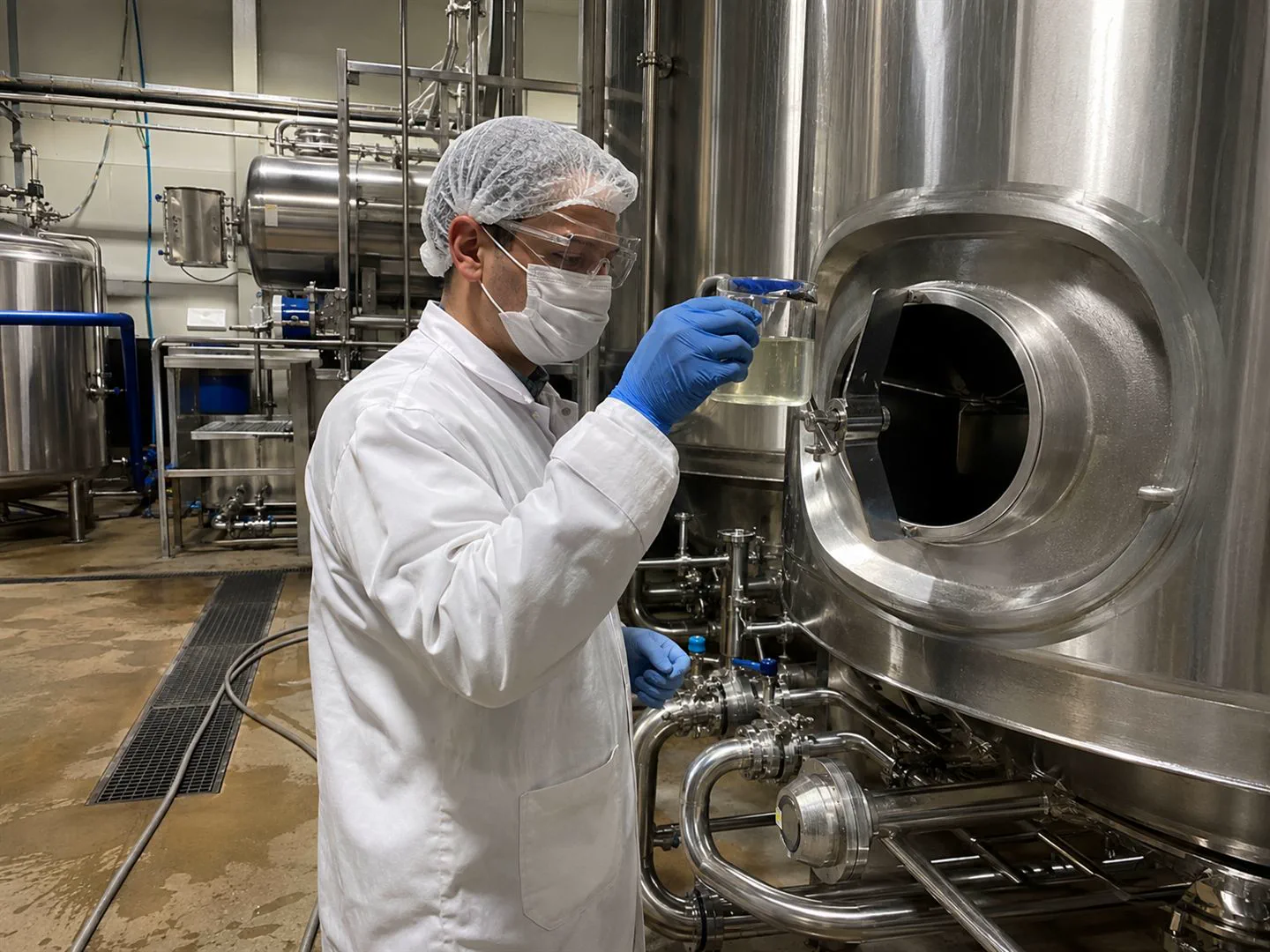
- Slurry Make-Down & Batch Dosage (0.1% to 1.5% wt/wt): Wet dry PAC into a 5% to 15% wt/wt slurry before pumping it into the stirred batch vessel. Light syrup polishing and edible oil PAH removal use 0.1% to 0.4% wt/wt based on dry solids. Dark molasses and fermentation broths require 0.5% to 1.5% wt/wt.
- Contact Temperature (60 to 85 C) & Mixing Time (20 to 45 min): Heating thick sugar syrups (50 to 65 Brix) or glycerin to 60 to 85 degrees Celsius cuts fluid viscosity by more than half. Edible oil bleaching runs at 90 to 110 degrees Celsius under vacuum. Lower viscosity speeds pore diffusion so color uptake finishes in 20 to 45 minutes of stirring.
- 200 Mesh vs. 325 Mesh & Filter-Aid Precoating: Specify
200 US Mesh(90% to 95%< 75 um,D50 ~ 30 to 40 um) for standard plate-and-frame presses to build a free-draining cake. Specify325 US Mesh(< 45 um,D50 ~ 18 to 25 um) for short-contact viscous fluids on precoated candle or rotary drum filters using a 1:1 diatomaceous earth body feed. For slurry safety checks, read our PAC process liquid systems checklist.
Specifying DXD Decolorization and Wood-Based PAC Grades
At our 50,050 m2 plant in Shizuishan, Ningxia (10,000+ MT/year output), we run dedicated phosphoric-acid kilns, steam furnaces, acid-wash lines, and air-classifier mills. Every export lot is tested in-house for GB/T 12496.10 methylene blue, GB/T 12496.9 caramel removal, ASTM D4607 iodine, and ASTM D5158 mesh fineness. We also verify ASTM D2866 ash, GB/T 12496.19 iron, and ASTM D3838 pH, with sample data posted on our Interactive TDS and COA Center.
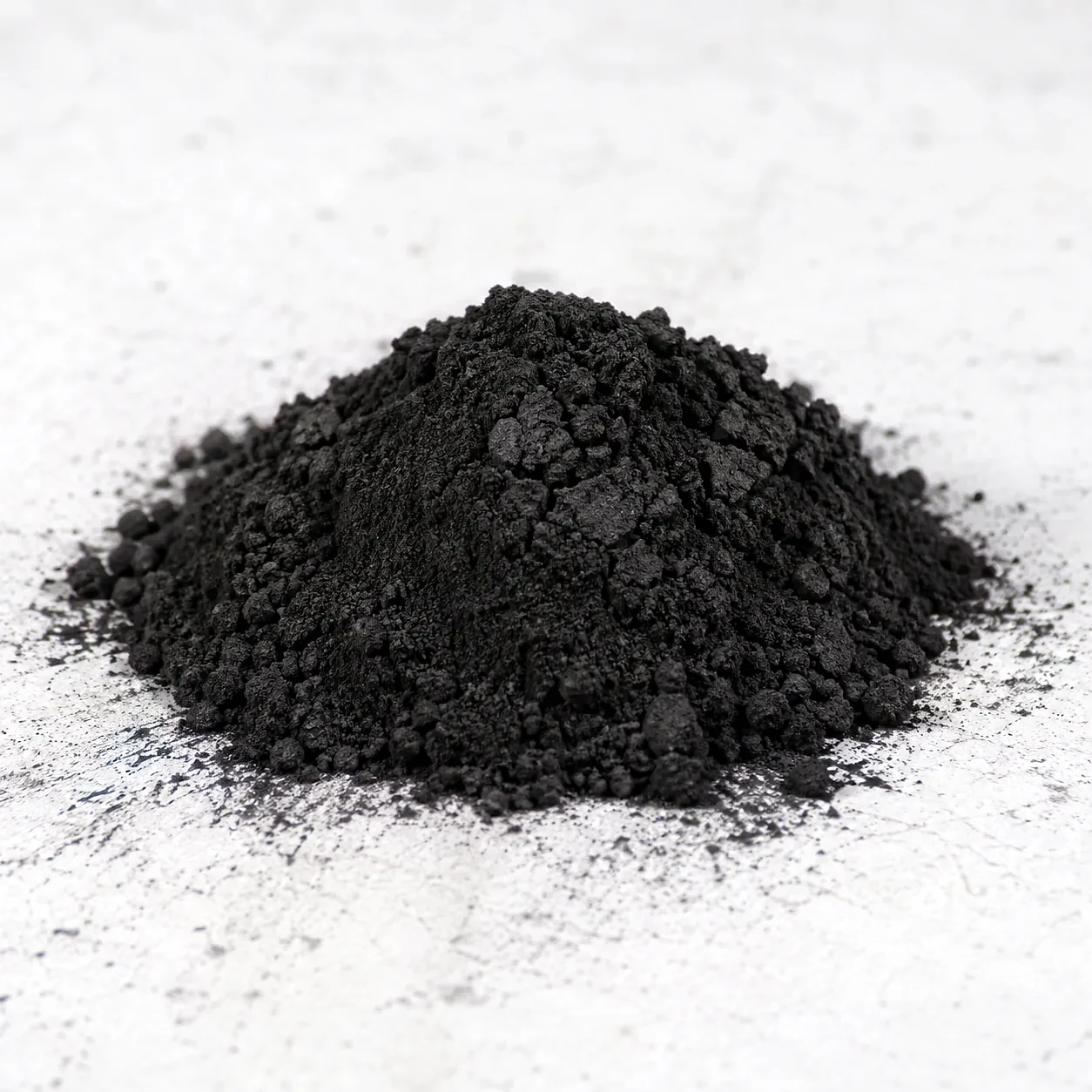
Our powdered activated carbon for decolorization matches Norit Darco S-51, CA1, and SX Ultra, Jacobi ColorSorb 620 and 500, and Calgon CPG and Cane Cal. Typical batches reach 195 mg/g methylene blue (configurable 180 to 220 mg/g), 98.5% A-grade caramel removal, and 1,010 mg/g iodine. Ash stays near 3.8% and soluble iron at 0.028% with 96.8% passing 200 mesh.
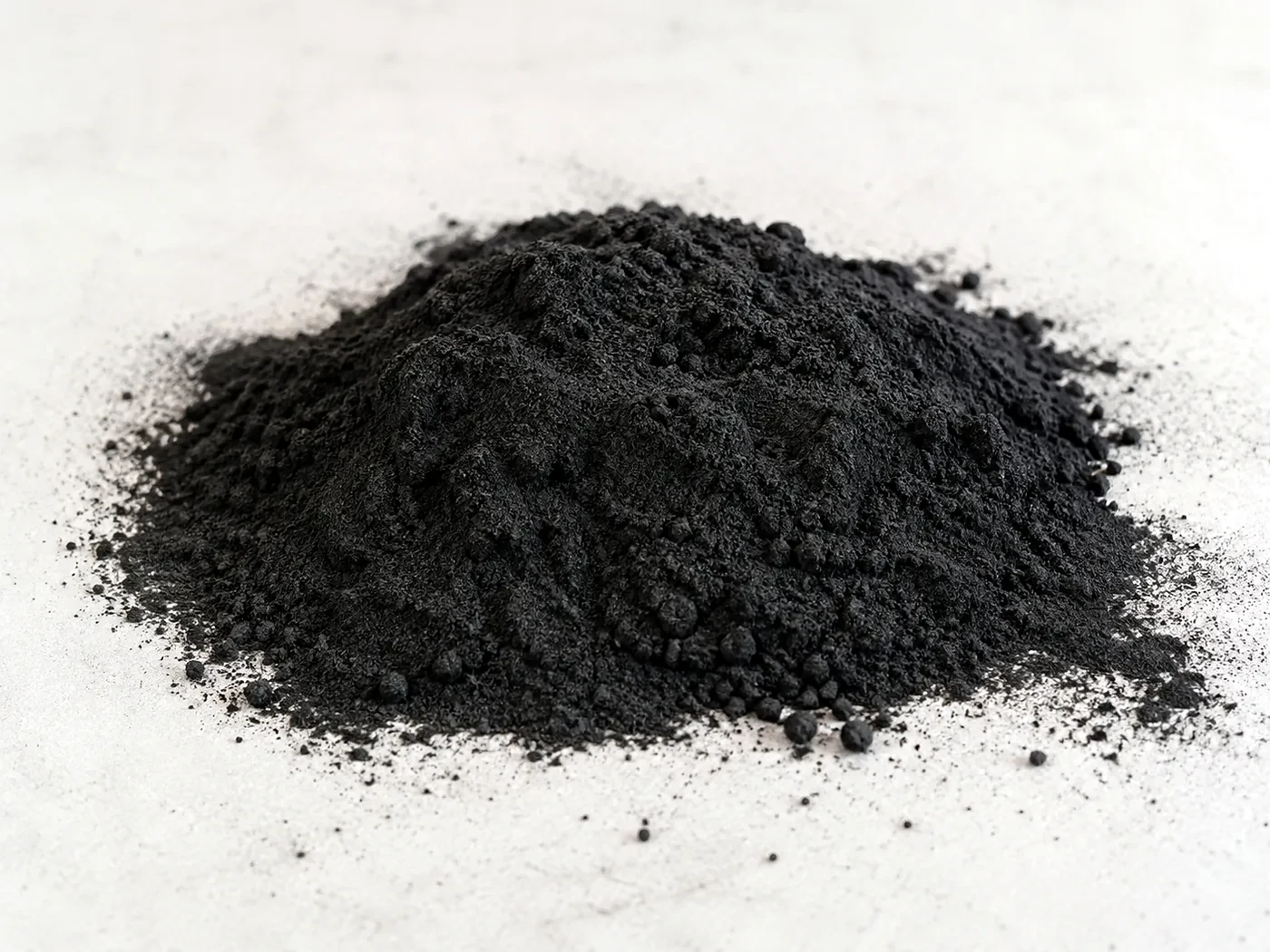
Our wood-based powdered activated carbon replaces Norit Darco G-60 and KB-G, Jacobi ColorSorb G5, and Calgon WPH in API synthesis, citric acid, and oil PAH4 refining. Check full brand mappings in our Calgon, Norit, and Jacobi cross-reference guide. We ship from a 1.0 MT MOQ in 20 to 25 kg PE-lined kraft bags or 500 kg FIBC bulk sacks. Review our PAC dosing and selection criteria guide or contact our engineering desk for a batch COA and 500 g jar-test sample.
| Bulk Manufacturing Grade | International Brand Cross-Reference | Mesh Fineness (ASTM D5158) | Methylene Blue | Caramel A-Grade | pH & Soluble Iron | Primary Industrial Decolorization Use |
|---|---|---|---|---|---|---|
| Phosphoric-Acid Wood PAC (200 Mesh) | Norit Darco S-51 & CA1 / Jacobi ColorSorb 620 / Calgon Cane Cal | 95% < 200 Mesh (75 um) | 180 to 220 mg/g | >= 95% to 98.5% | pH 3.5 to 5.5; Fe <= 0.05% | Cane & beet sugar, molasses, MSG, dark fermentation syrups |
| Acid-Washed Steam Wood PAC (325 Mesh) | Norit Darco G-60 & KB-G / Jacobi ColorSorb G5 | 95% < 325 Mesh (45 um) | 160 to 195 mg/g | >= 90% to 95% | pH 5.5 to 7.0; Fe <= 0.02% | Pharmaceutical APIs, citric & lactic acid, amino acids |
| Controlled-PSD Edible Oil & Glycerin PAC | Edible Oil & USP Glycerin Controlled-PSD Grade | Custom 20 to 80 um PSD | 150 to 180 mg/g | >= 90% | pH 5.5 to 7.5; Ash <= 4% | Palm, fish & soybean oil PAH4 (BaP) and chlorophyll removal |
| Municipal & Process Water Dosing PAC | Calgon WPH / Jacobi AquaSorb PAC | 90% to 95% < 200 Mesh | 120 to 160 mg/g | Standard | pH 6.0 to 9.0; Ash <= 8% | Process water MIB/Geosmin, algal toxins & wastewater COD |